What Is Sadaqah Jariyah?
If you have ever wondered what is sadaqah jariyah, the simple answer is ongoing charity that continues to benefit people over time. The idea is that a charitable act can keep producing benefit beyond the moment when the donation is made.
The Prophet Muhammad ﷺ taught that when a person dies, their deeds come to an end except for three, including ongoing charity, beneficial knowledge and a righteous child who prays for them.
This is why sadaqah jariyah in Islam is so meaningful. Rather than helping someone only once, it can support a source of benefit that continues for months, years or even longer.
Examples may include supporting a water project, helping establish a place of learning, providing Qurans for people to read, planting beneficial trees or contributing towards a facility that serves a community.
What Is Waqf in Islam?
So, what is waqf?
Waqf is an Islamic endowment in which an asset is dedicated for a specific charitable or beneficial purpose. Traditionally, the original asset is preserved while its benefits or income are used to help others.
For example, a person could dedicate land as waqf, with the income from that land being used to support people in need. A building, property or other valuable asset may also be placed into a waqf for an ongoing charitable purpose.
Waqf has played an important role in Muslim communities throughout history. Endowments have supported mosques, schools, hospitals, water facilities and other community services.
This makes waqf charity a powerful way of creating a lasting source of benefit.
Sadaqah Jariyah vs Waqf: What Is the Difference?
The terms are closely connected, which is why waqf vs sadaqah jariyah can sometimes be confusing.
In simple terms, sadaqah jariyah describes the ongoing benefit of a charitable act, while waqf is a more specific Islamic legal structure involving the dedication and preservation of an asset.
Some scholars use the terms very closely, even describing ongoing charity as waqf. Other explanations make a distinction between the broader idea of continuous charity and the specific structure of an endowment.
So, when considering the difference between waqf and sadaqah jariyah, it can help to think about them this way:
- Sadaqah jariyah focuses on continuing charitable benefit.
- Waqf focuses on dedicating an asset or its benefits for an ongoing purpose.
- A waqf can therefore be a form of sadaqah jariyah.
- Not every charitable donation is necessarily a waqf.
- Both can provide lasting benefit when properly established and maintained.
The exact legal details can vary by school of Islamic jurisprudence and the type of asset involved.
Sadaqah Jariyah Examples You Can Consider
Many practical sadaqah jariyah ideas are available today. The best option depends on your circumstances and the needs of the people you want to support.
1. Providing clean water
A water pump or well can provide a community with access to water for a long period. This is one reason water-related projects are often considered when people look for sadaqah jariyah projects.
2. Supporting Islamic education
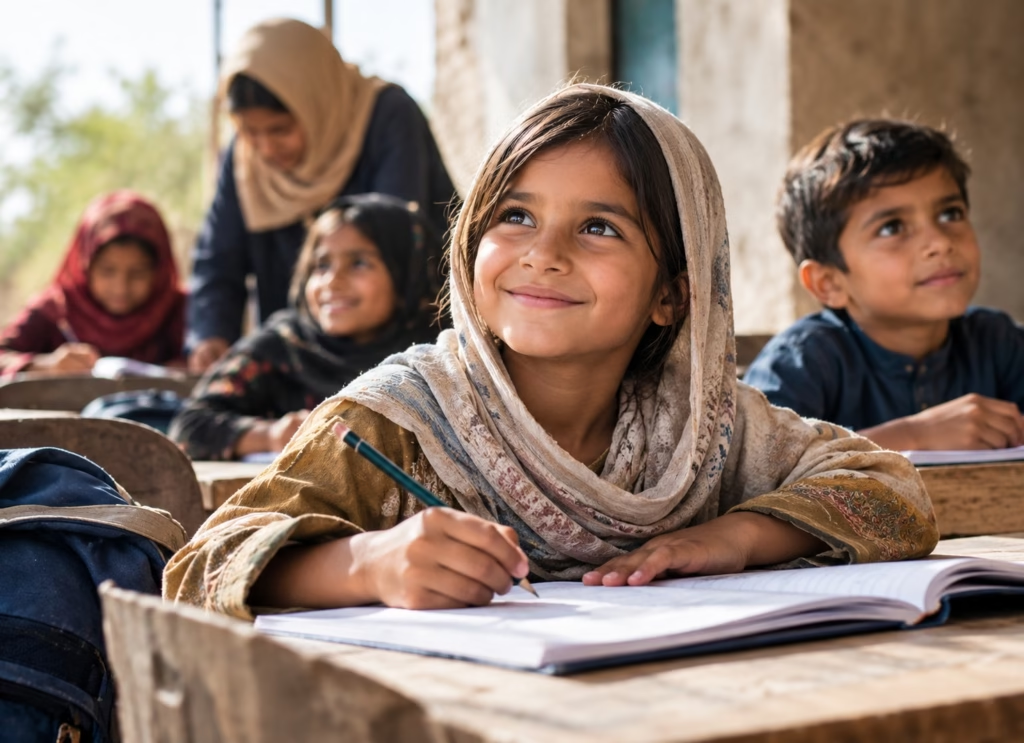
Helping provide useful Islamic learning materials or supporting a place where people can gain beneficial knowledge can create benefits beyond the original donation.
3. Providing Qurans
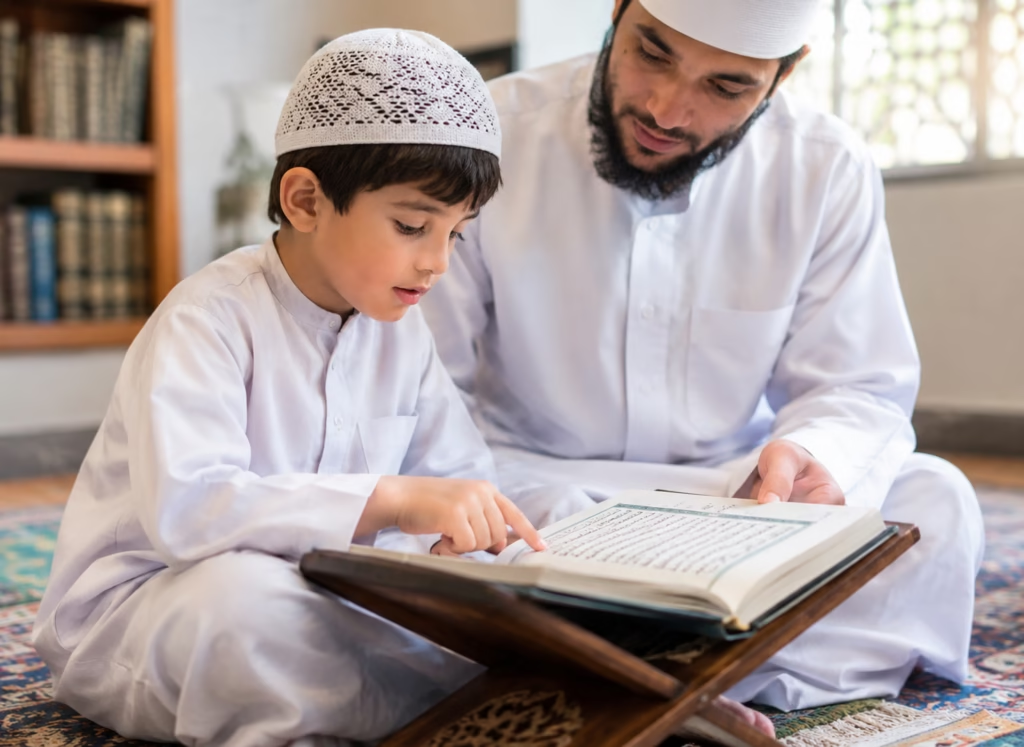
Donating copies of the Quran for people to read and learn from is another commonly cited example of ongoing charity.
4. Planting useful trees
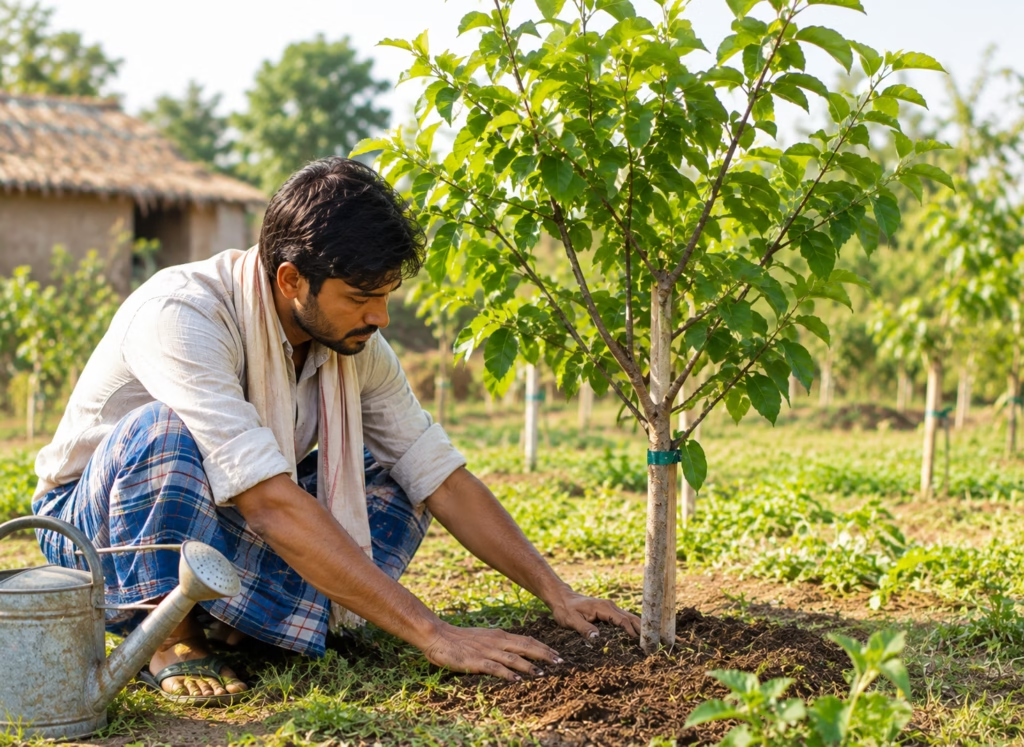
A tree can continue to provide shade, fruit or other benefits after it has been planted. Beneficial planting is therefore another example often associated with continuous charity.
5. Supporting lasting community facilities
Contributing towards a mosque, school, healthcare facility or other useful community project may create benefits for many people over time.
These examples show why sadaqah jariyah charity is not limited to one particular type of donation. The central idea is lasting benefit.
Can You Give Sadaqah Jariyah for Parents?
Yes, many Muslims choose to make a sadaqah jariyah for parents as a way of honouring them and seeking reward from Allah.
People may choose an ongoing charity while their parents are alive, or make a sadaqah jariyah for deceased parents as part of remembering them and continuing to do good.
For example, someone might contribute towards a water project in a parent’s name or support another lasting charitable cause. The important point is to understand the religious guidance around the specific act and its intended reward.
The concept of continuing charity after death is particularly significant because of the well-known hadith concerning ongoing charity, beneficial knowledge and a righteous child who prays for their parent.
Is Sadaqah Jariyah the Same as Regular Sadaqah?
Not exactly.
Sadaqah is a broad term for voluntary charity and acts of generosity. You can give sadaqah by helping someone financially, providing food, supporting a person in difficulty or performing other charitable acts.
Sadaqah jariyah has the additional idea of continuing benefit.
For example, giving someone a meal may meet an immediate need. Supporting a water facility that continues serving a community may provide benefit for much longer.
Both forms of charity are valuable. You do not have to choose only one.
Regular sadaqah donation can respond to urgent needs, while ongoing charity can help create longer-term benefits.
How Does Waqf Create Continuous Charity?
One of the main features of waqf in Islam is the preservation of the underlying asset.
Imagine someone owns a property and dedicates it as waqf. Instead of simply giving the property away for immediate use, the property is retained under the conditions of the waqf, while its income or benefit is directed towards a chosen purpose.
This structure can allow charitable support to continue over a long period.
Historically, waqf has been used to support education, healthcare, mosques, public services and people in need.
This is also where the idea of ongoing charity and waqf becomes closely connected.
How Can You Start a Sadaqah Jariyah?
Starting does not have to be complicated.
First, consider the type of lasting benefit you would like to create. Think about practical needs such as water, education, religious resources or community facilities.
Next, choose a trustworthy organisation or project and understand how your donation will be used.
If you are considering sadaqah online, check that the organisation clearly explains the project, its purpose and how donations are handled.
You can also make your intention clear when making a sadaqah jariyah donation, especially if you are giving on behalf of someone else.
The amount does not have to be large. What matters is sincere giving and choosing a beneficial cause that can create lasting value.
Is Waqf Better Than Sadaqah Jariyah?
It is not helpful to think of one as automatically better than the other.
A waqf may be particularly suitable when someone wants to dedicate an asset or establish a structured source of long-term benefit. Other forms of sadaqah jariyah may be more accessible for someone who wants to contribute to an existing project.
The most suitable choice depends on your financial circumstances, intention and the needs of the community.
Rather than focusing only on which option sounds better, consider where your contribution can create genuine and lasting benefit.
Choosing the Best Sadaqah Jariyah for Your Circumstances
The best sadaqah jariyah is not necessarily the most expensive project. A smaller contribution towards a genuine need can also be meaningful.
Before donating, consider:
- Does the project provide a lasting benefit?
- Is there a genuine community need?
- Is the organisation transparent about the project?
- Do you understand where your donation will go?
- Can the project realistically continue providing benefits?
- Are you giving within your means?
Whether you choose sadaqah online, a local project or another form of Muslim charity, thoughtful giving can help make your contribution more meaningful.
A Lasting Way to Give Through Children of Adam
If you are looking for a practical way to support sadaqah jariyah projects, Children of Adam provides charitable projects designed to support communities facing poverty and hardship. Its work includes areas such as clean water, food, education, healthcare and sustainable development.
You can explore its Sadaqah Jariyah appeal to find an opportunity to contribute towards lasting charitable benefit and make your donation with a clear intention.
Frequently Asked Questions (FAQs)
Is sadaqah jariyah the same as waqf?
They are closely connected, but the terms can have different meanings. Sadaqah jariyah refers to continuing charitable benefit, while waqf is a specific form of Islamic endowment in which an asset is dedicated for an ongoing purpose. Some scholars use the concepts almost interchangeably.
What is an example of sadaqah jariyah?
Examples include providing water through a well or pump, supporting beneficial education, providing Qurans, planting useful trees and contributing towards facilities that continue helping people.
Can I make sadaqah jariyah for a deceased parent?
Many Muslims choose to make ongoing charitable contributions on behalf of deceased parents. The question of reward and specific forms of charity should be understood according to reliable Islamic guidance.
Can sadaqah jariyah be given online?
Yes. You can make sadaqah online through a trustworthy organisation supporting suitable ongoing projects. Always check how the donation will be used before giving.
What is the difference between sadaqah and sadaqah jariyah?
Sadaqah is a broad term for voluntary charity. Sadaqah jariyah refers to charity that continues to provide benefit over time.
Is waqf an Islamic endowment?
Yes. Waqf is commonly described as an Islamic endowment where an asset is dedicated and its benefit or income is directed towards a specified purpose.
What are some sadaqah jariyah ideas?
Common ideas include supporting water projects, education, Quran distribution, tree planting, mosques and other facilities that provide lasting benefits.
Is sadaqah jariyah obligatory?
No. Sadaqah jariyah is voluntary charity. It is different from zakat, which is an obligatory form of giving for Muslims who meet the relevant conditions.