
Introduction
Sadaqah jariyah is a form of charity in Islam whose reward continues long after the act of giving is complete. Unlike a one-off donation, sadaqah jariyah funds something that keeps benefiting people over time a water well, a Quran, a tree, an orphan’s education and the donor keeps earning reward for as long as that benefit continues.
The concept comes from a hadith narrated by Abu Hurairah, in which the Prophet Muhammad (ﷺ) said that when a person dies, their deeds stop except for three things: ongoing charity (sadaqah jariyah), beneficial knowledge, and a righteous child who prays for them (Sahih Muslim). That single hadith is the foundation for how Muslims understand and practise this type of giving today.
This guide explains exactly what sadaqah jariyah is, how it differs from regular sadaqah, real examples you can act on, and how to choose a project that matches your intention.
What Is Sadaqah Jariyah?
Sadaqah jariyah literally translates to “flowing” or “continuous” charity. In practice, it refers to any charitable contribution that creates a lasting source of benefit for others, rather than a single moment of relief.
The key feature that separates sadaqah jariyah from other giving is durability. A meal feeds someone for a day. A water well provides clean water for years, sometimes decades. Because the benefit keeps flowing, so does the reward for the person who funded it even after their death.
In short: sadaqah jariyah is charity that keeps giving, and keeps rewarding, long after the transaction is done.
Sadaqah Jariyah vs Sadaqah: Key Differences
People often use “sadaqah” and “sadaqah jariyah” interchangeably, but they aren’t the same thing.
| Factor | Sadaqah | Sadaqah Jariyah |
| Duration of impact | One-time | Ongoing, often years |
| Example | Giving food to someone in need today | Funding a water well used for 20+ years |
| Reward timeline | Reward recorded once, at the time of giving | Reward continues as long as the benefit continues |
| Typical use | Immediate relief | Long-term infrastructure or support |
Why this matters: all sadaqah jariyah is sadaqah, but not all sadaqah is sadaqah jariyah. If you’re choosing where to give, this distinction helps you decide whether you want to provide immediate relief (e.g., an emergency food parcel) or build something that lasts (e.g., a well or an orphan sponsorship).
Ongoing Charity in Islam Explained
The idea of ongoing charity is rooted in the belief that good deeds are rewarded based on their impact, not just the moment they’re performed. This is different from how many people initially think about charity as a single act that’s “finished” once the money changes hands.
In Islamic teaching, three things are highlighted as continuing after death:
- Sadaqah jariyah ongoing charitable works
- Beneficial knowledge teaching something that continues to help others
- A righteous child who prays for their parent
This is why sadaqah jariyah is frequently chosen as a way to honour deceased parents or relatives. Donating a water well or sponsoring an orphan in a parent’s name is a common practice, because the reward is believed to continue reaching them even after they’ve passed.
Sadaqah Jariyah Examples in Islam
Real examples make this concept easier to apply. Some of the most common and effective sadaqah jariyah projects include:
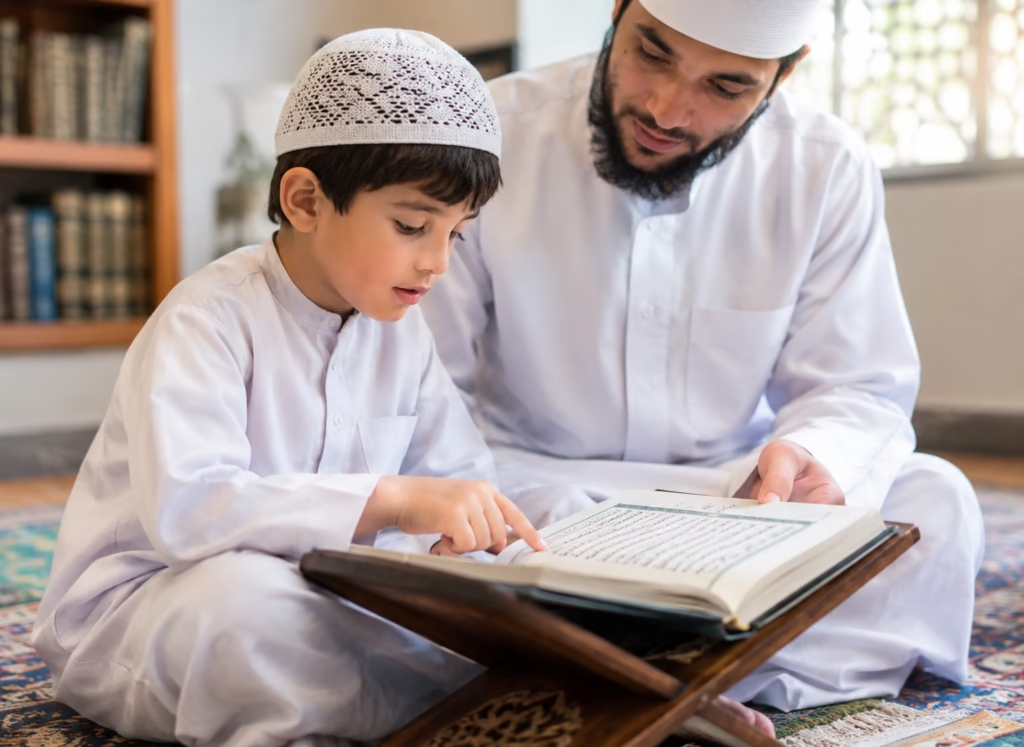
- Donating a Quran printed or distributed copies that are read and used by multiple people over years
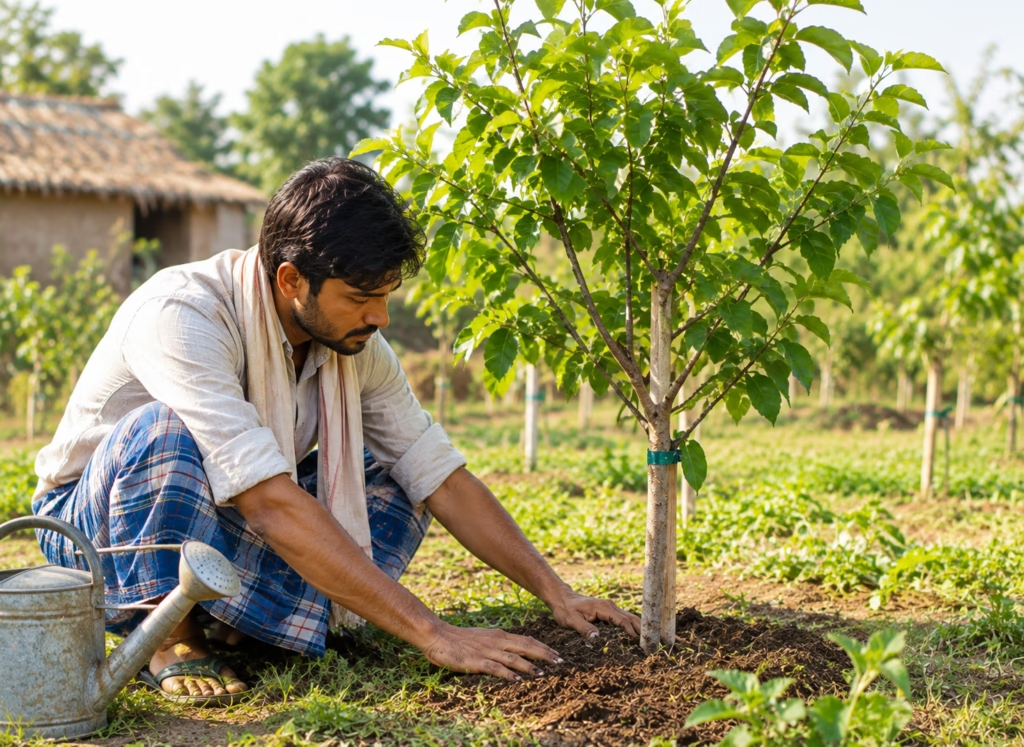
- Planting a fruit tree provides food, shade, and environmental benefit for as long as it grows
- Sponsoring an orphan ongoing support for a child’s food, education, and care over months or years
- Donating a water hand pump gives an entire community reliable access to clean water
- Donating solar panels and fans provides sustainable power and relief from heat for families, for example in regions like Pakistan where electricity access is unreliable
Each of these shares the same core trait: the initial donation triggers a benefit that keeps running without needing further input from the donor.
How to Choose the Right Sadaqah Jariyah Project
If you’re deciding between options, consider:
- Who you want to benefit a specific community, orphans, or the “most needed” fund
- How long you want the impact to last a tree or well lasts years; a Quran can be used indefinitely by many readers
- Whether it’s in memory of someone many donors dedicate sadaqah jariyah to a deceased parent or relative
- Your budget projects range from smaller individual contributions (like a Quran) to larger shared projects (like a well)
Types of Sadaqah Jariyah Projects
Sadaqah jariyah generally falls into a few broad categories:
- Water projects wells, hand pumps, water systems for villages
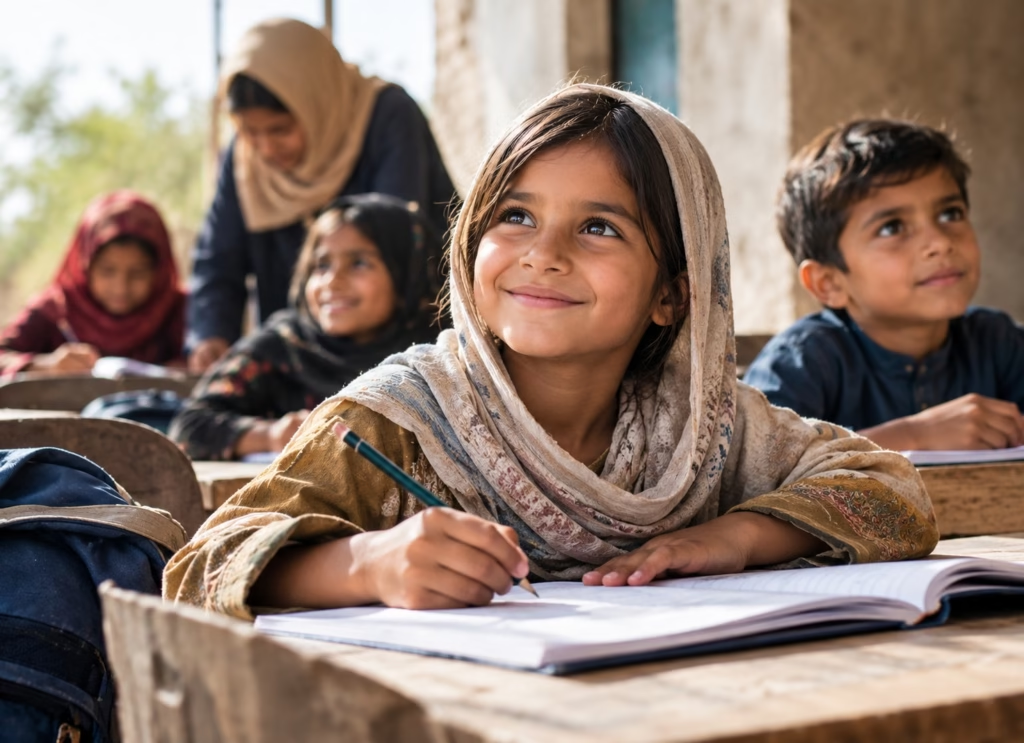
- Education Quran distribution, school sponsorship, Hifz (Quran memorisation) sponsorship
- Shelter and infrastructure mosques, shelter homes, prayer spaces
- Sustenance fruit trees, farmland support
- Ongoing human support orphan sponsorship, family sponsorship
- Energy access solar panels and fans for families without reliable electricity
Charities such as Children of Adam offer several of these as ready-made options, meaning you don’t need to organise the project yourself your donation is pooled with others’ to fund a well, a Quran distribution run, or an orphan’s ongoing care.
Sadaqah Jariyah for Deceased Parents
One of the most common reasons people give sadaqah jariyah is on behalf of a parent who has passed away. Because the reward of ongoing charity is believed to keep flowing to the person it’s dedicated to, this has become a widely practised way to seek continued reward for a loved one separate from inheritance or a will.
Common choices for this include:
- Donating a well or water pump in the parent’s name
- Sponsoring an orphan as a dedication
- Contributing to a mosque build or maintenance fund
About Children of Adam
Children of Adam is a UK-registered Islamic charity providing food, water, medical aid, shelter, and sadaqah jariyah projects to vulnerable communities worldwide, distributing donations in line with Shariah principles.
Conclusion
Sadaqah jariyah is charity built to last. Instead of a single moment of help, it funds something a well, a tree, an education, a home that keeps giving benefit long after the donation is made, and keeps earning reward for the person who gave it. Whether you’re looking to support a community, honour a deceased parent, or simply give in a way that has lasting impact, choosing a sadaqah jariyah project is one of the most enduring forms of giving in Islam.
Frequently Asked Questions (FAQs)
What is sadaqah jariyah in simple terms?
It’s charity that keeps benefiting people over time like a well, a tree, or an orphan sponsorship so the reward for the giver continues for as long as the benefit lasts.
What is the difference between sadaqah and sadaqah jariyah?
Sadaqah is any voluntary charitable act, often a one-time gift. Sadaqah jariyah is specifically charity that creates a lasting, ongoing benefit, so all sadaqah jariyah is sadaqah, but not all sadaqah is sadaqah jariyah.
Can I give sadaqah jariyah on behalf of a deceased parent?
Yes. It’s a common practice to donate a well, sponsor an orphan, or fund another ongoing project in memory of a deceased parent, with the intention that the reward continues to reach them.
What are good examples of sadaqah jariyah?
Common examples include donating a Quran, planting a fruit tree, sponsoring an orphan, funding a water hand pump, and donating solar panels for families without reliable electricity.
How much do I need to give for sadaqah jariyah?
There’s no fixed minimum. Some projects, like donating a Quran, can start from a small amount, while larger projects like water wells are usually funded collectively by multiple donors.
Is sadaqah jariyah the same as Zakat?
No. Zakat is an obligatory annual payment calculated on eligible wealth, with specific rules on who can receive it. Sadaqah jariyah is voluntary and can be given at any time, to a wider range of causes.
Does the reward really continue after death?
According to Islamic teaching (Sahih Muslim), yes ongoing charity is one of three things whose reward is believed to continue reaching a person after death, alongside beneficial knowledge and a righteous child’s prayers.