What Is Water Scarcity in Pakistan?
Water is essential for life, health, education and livelihoods. Yet many communities in Pakistan continue to face difficulties accessing reliable and safe drinking water.
Water scarcity in Pakistan is not simply about having too little water. It can also mean that people cannot access safe water when and where they need it. Poor infrastructure, contamination, climate change, population growth and inefficient water management can all make the problem worse.
According to UNICEF data, around 91% of Pakistan’s population used at least basic drinking water services in the latest available internationally comparable data, while only around 45% had access to safely managed drinking water services.
This difference matters. Having a water source nearby does not always mean that the water is safe to drink.
For families living in vulnerable or rural communities, the consequences can affect almost every part of daily life.
Why Is Pakistan Facing Water Scarcity?
There is no single reason for the country’s water challenges. Several problems come together to create pressure on water supplies.
Climate change and changing rainfall
Climate change is making water management more difficult in many parts of the world. Changes in rainfall patterns, droughts, extreme heat and flooding can all affect the availability and safety of water.
Pakistan is also vulnerable to major floods. In 2025, severe monsoon rains and flash floods affected millions of people and created significant humanitarian needs, including for water, sanitation and hygiene services.
Flooding may seem like the opposite of water scarcity, but too much water at the wrong time does not guarantee safe drinking water. Floods can damage infrastructure and contaminate existing water sources.
Groundwater pressure
Groundwater is an important source of water for households, agriculture and businesses in Pakistan. However, excessive extraction can put pressure on underground supplies.
When groundwater is taken faster than it can naturally be replenished, communities may face greater difficulty accessing reliable sources in the future.
Poor or ageing infrastructure
Water needs to be collected, treated and transported before it reaches many households.
Where infrastructure is weak or damaged, water can be lost or become contaminated. This means that improving access is not only about finding water—it is also about creating reliable systems that can deliver safe water to people.
Pollution and contamination
A water source may exist but still be unsafe to drink.
Poor sanitation, waste, agricultural pollution and other contaminants can affect water quality. UNICEF notes that water scarcity can also be linked with contamination and failing infrastructure, increasing risks to health and hygiene.
How Water Scarcity Affects Communities
The effects of water scarcity in Pakistan go far beyond thirst.
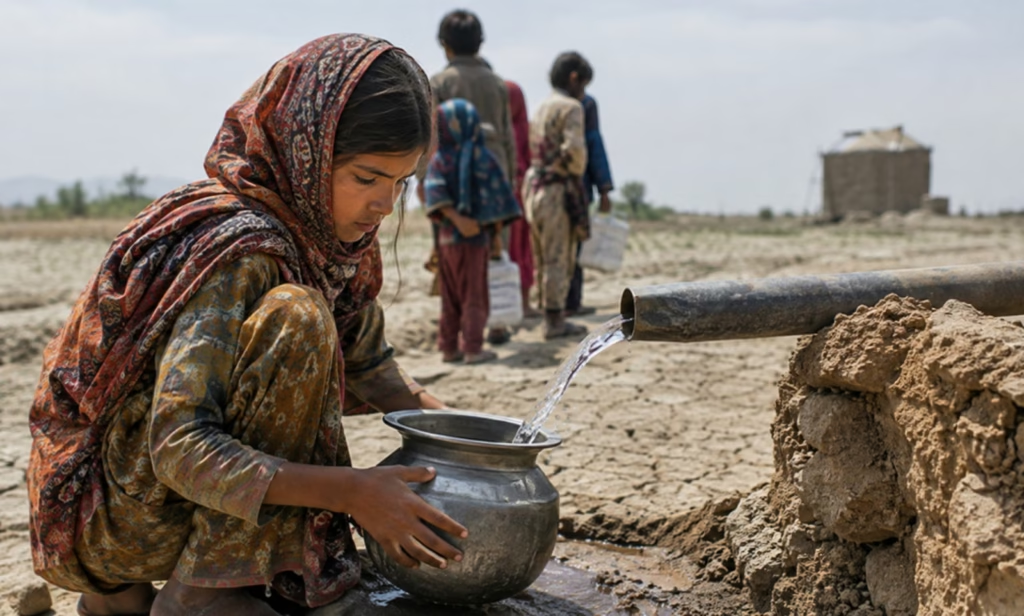
When people cannot easily access clean water, they may have to spend hours collecting it. Women and children often carry much of this responsibility in communities where water sources are far from home.
UNICEF highlights that long journeys to collect water can take time away from school and work, while carrying heavy loads can create physical and safety risks.
Health problems
Unsafe water can contribute to waterborne diseases, including diarrhoeal illnesses.
Children are particularly vulnerable when poor water quality combines with inadequate sanitation and hygiene. Safe water is therefore an important part of protecting community health.
Missed education
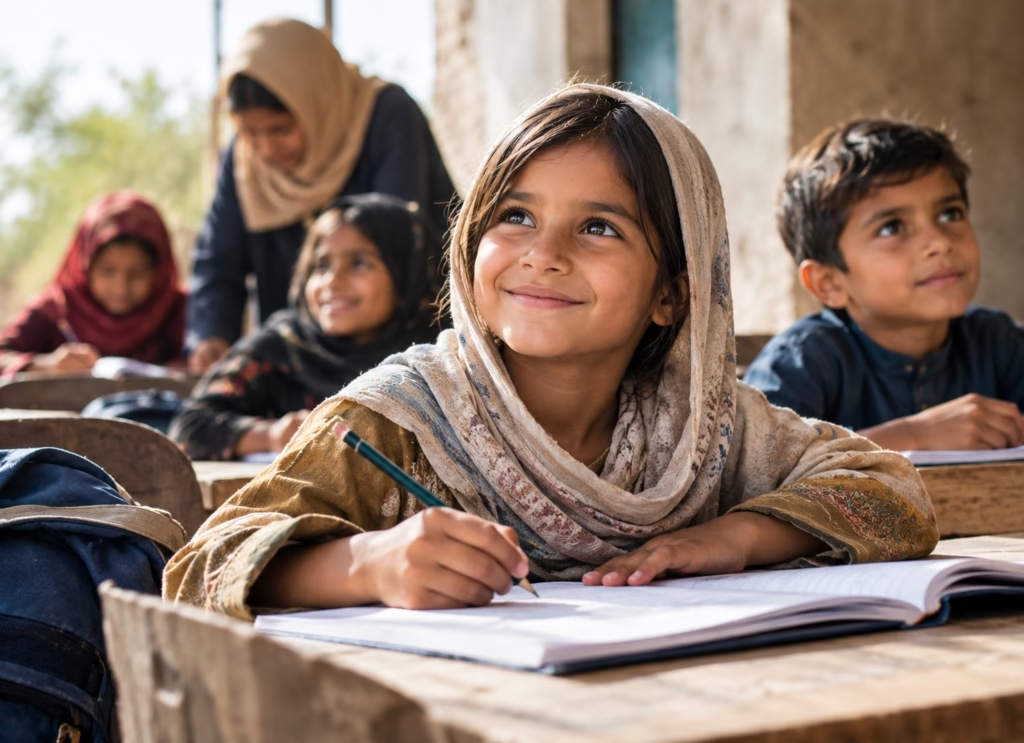
A child who spends part of the day collecting water has less time available for school.
Girls can be particularly affected when water has to be collected over long distances. Improving access to a nearby water source can therefore support education as well as health.
Lost economic opportunities
Water collection also takes time away from work and other productive activities.
For parents and other adults, easier access to water can mean more time for employment, farming, small businesses and caring for their families.
This is why a water project can have benefits that extend far beyond the water itself.
Why Clean Drinking Water Matters
It is important to distinguish between having water and having safe drinking water.
People need water that is suitable for drinking, cooking and basic hygiene. If a community relies on a contaminated source, families may face illness even though water is technically available.
Access to safe water can help people protect their health and spend less time searching for suitable sources.
UNICEF reported that in 2025 its work in Pakistan helped 865,000 people gain access to durable basic safe water services, showing the importance of sustained investment in water and sanitation systems.
Long-term solutions therefore need to focus on reliability, safety and community needs rather than simply providing temporary supplies.
How Can Charity Help With Water Scarcity?
Charity cannot solve every part of Pakistan’s water challenge, but targeted support can make a real difference to communities that lack reliable access.
A water charity may support projects such as:
- installing hand pumps
- developing wells
- improving local water infrastructure
- providing safe drinking water during emergencies
- supporting water and sanitation programmes
- helping communities access sustainable water sources
A well-planned water project donation can therefore help address a practical need at community level.
The key is to support projects that are suitable for the local environment and designed around the needs of the people who will use them.
Ways You Can Support Clean Water
If you want to help, there are several ways to contribute.
Donate clean water
A direct charity water donation can support organisations working to provide safe water to people experiencing hardship.
Even when an individual donation is small, many donations combined can help fund larger projects.
Donate a water well
In communities where groundwater can be accessed safely, a well may provide a longer-term source of water.
If you are considering whether to donate water well infrastructure, check how the project is planned, where it will be installed and who will maintain it.
Donate a water pump
A hand pump can be a practical solution in some rural communities.
People searching for ways to donate a water pump in Pakistan should look for a transparent organisation that explains the project, its location and the expected community benefit.
Support a wider water project
Instead of funding one specific item, you may choose to sponsor a water project that includes several elements of water access and community support.
This can be useful when a local water challenge requires more than one intervention.
Water Charity in Islam
Water has a special place in Islamic charity.
Providing water is widely recognised as a valuable charitable act, and there is a well-known hadith in which providing water is identified as a particularly virtuous form of charity. Children of Adam also references this narration on its water hand pump appeal.
For Muslims, this makes water allowing combining practical help with spiritual intention.
Some people choose to donate water in Islam as ordinary sadaqah, while others support water projects as sadaqah jariyah, where the benefit can continue for a longer period.
A water pump or well that continues serving people may therefore be considered by donors when looking for a form of water pump sadaqah jariyah.
What Makes a Good Water Project?
Not every water project is the same. Before making a donation, it is worth asking a few simple questions.
Is there a genuine local need?
A project should respond to an actual water problem rather than installing infrastructure where it is unnecessary.
Is the water source safe?
Access to water is not enough if the source is contaminated or unsuitable for drinking.
Who will maintain it?
Long-term maintenance is important. A pump or water system is only useful if the community can continue using it.
Is the organisation transparent?
Look for clear information about how donations are used, where projects take place and what happens after installation.
Does the project have a lasting benefit?
A strong clean water charity should consider sustainability rather than focusing only on short-term results.
Can a Water Donation Really Make a Difference?
Yes, particularly when a donation is directed towards a genuine need and forms part of a well-planned project.
A nearby water source can reduce the time families spend collecting water. It can also support hygiene, reduce exposure to unsafe sources and give children more time for school.
Research and development programmes in Pakistan continue to show that improvements in water, sanitation and hygiene can produce wider benefits for health and communities. A World Bank project, for example, reported that by mid-2025, 218,000 people in 180 villages had access to safe water through its programme.
The wider lesson is simple: water access is connected to many other areas of life.
A Practical Way to Help Communities in Pakistan
If you want to support communities affected by water scarcity in Pakistan, Children of Adam has a dedicated water programme focused on installing water hand pumps and wells in areas where safe water access is limited.
Its current water appeal offers options including a water hand pump and a community pump for Pakistan, allowing donors to contribute towards practical clean-water infrastructure.
For someone looking to donate clean drinking water, support a water appeal or contribute towards water pump sadaqah jariyah, this provides a direct way to support people facing water access challenges.
Frequently Asked Questions (FAQs)
What causes water scarcity in Pakistan?
Major factors include climate change, changing rainfall patterns, groundwater depletion, population growth, pollution, inefficient water use and inadequate or ageing infrastructure.
How does water scarcity affect children?
Children may face health risks from unsafe water and may also spend time collecting water instead of attending school. Water shortages can therefore affect both their health and education.
How can I help with water scarcity in Pakistan?
You can support a reputable water charity, make a water aid donation, contribute towards a water project or donate a water pump in Pakistan where there is a genuine local need.
Can I donate clean drinking water to Pakistan?
Yes. You can support organisations working on clean-water projects or emergency water assistance. Before donating, check how the organisation delivers and monitors its water projects.
Is donating a water pump sadaqah jariyah?
A water pump that continues providing a beneficial service may be considered a form of ongoing charity. Muslims considering water pump sadaqah jariyah should also seek appropriate Islamic guidance regarding their specific intention.
Why is clean water important?
Clean water is essential for drinking, cooking, hygiene, and health. Reliable access can also reduce the time families spend collecting water and create opportunities for education and work.
What is the difference between water scarcity and lack of safe water?
Water scarcity refers to insufficient available water to meet needs. Lack of safe water means that water may be available but is not suitable for drinking or safe household use. A community can experience one or both problems.
How can a water project help a community?
A suitable water project can provide a reliable local source, reduce the distance people travel for water, support better hygiene and create more time for education and livelihoods.
What should I check before making a water project donation?
Check whether the organisation explains the location, purpose, expected beneficiaries, type of water system and how the project will be maintained. Transparency is important when choosing where to donate.