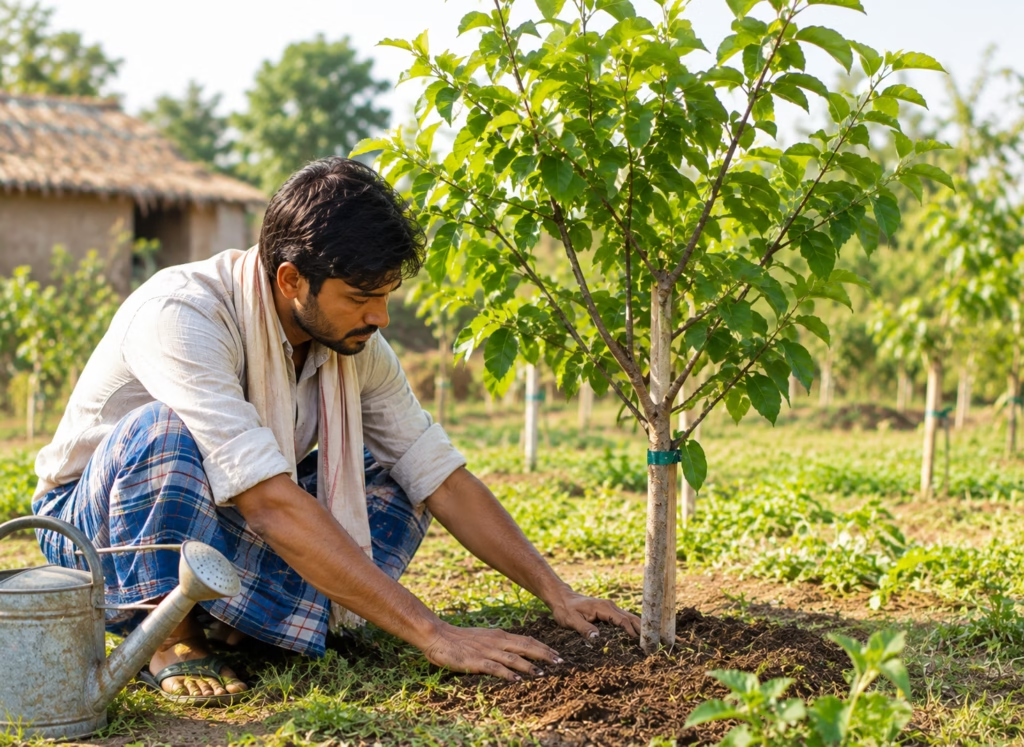
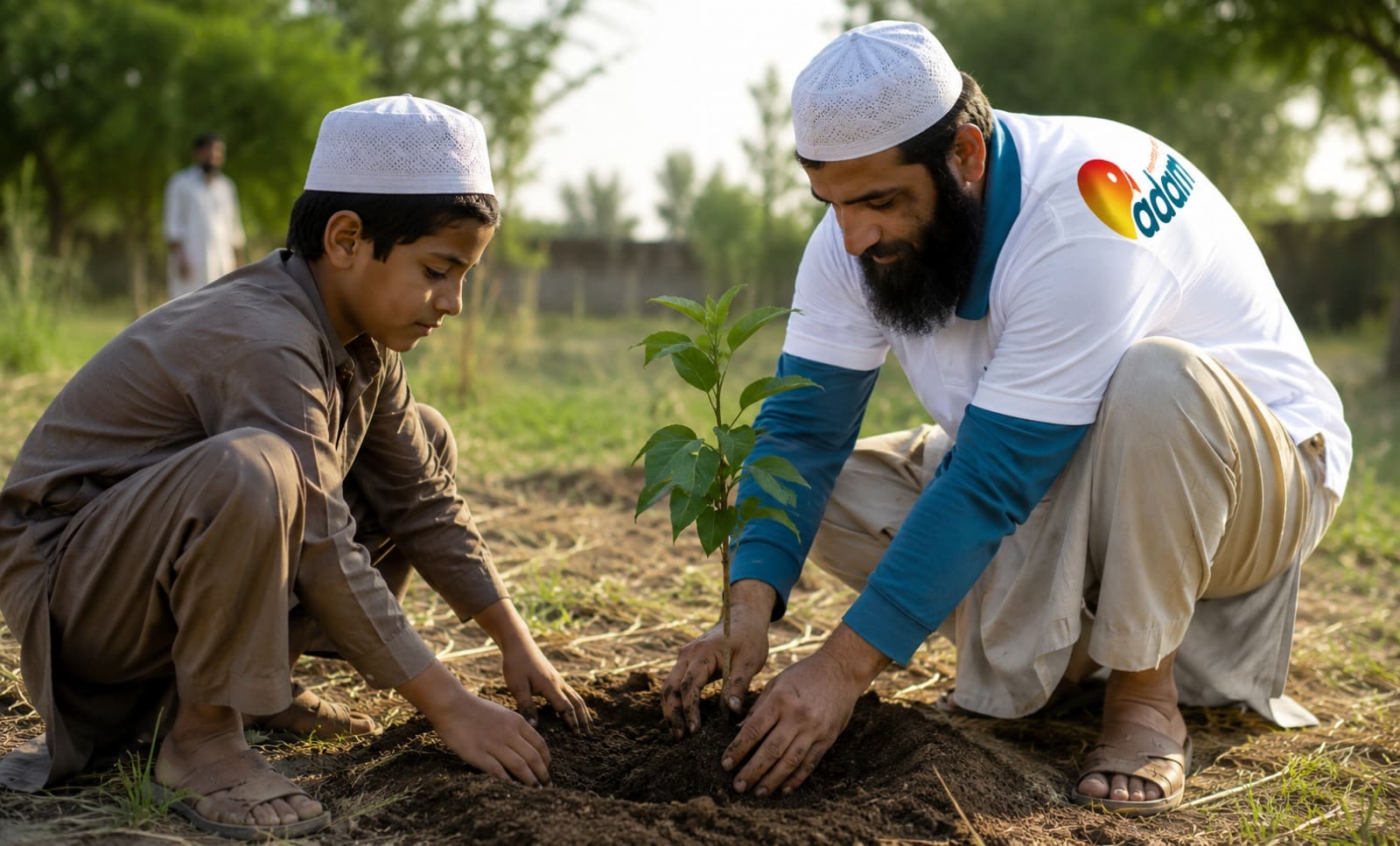
Protecting the natural environment and nurturing living things hold a high place in Islamic teachings. Among the many ways a believer can care for the earth and support surrounding communities, planting trees is widely recognised as a deeply rewarding act of worship.
When you plant a fruit tree, you create a natural source of food, shade, and fresh air that serves humans, birds, and animals for decades. Beyond the immediate physical benefits to the environment, establishing a sadaqah jariyah tree yields continuous spiritual blessings (thawab) that flow to the donor long after the tree is planted.
Is Planting a Fruit Tree a Good Deed in Islam?
Yes, planting a fruit tree is considered a noble and highly virtuous deed in Islam. Environmental care is closely tied to the concept of stewardship (Khilafah), where humans are entrusted with taking care of the earth and its resources responsibly.
The Prophet Muhammad (peace be upon him) frequently highlighted the direct spiritual rewards connected to agriculture, gardening, and environmental conservation. When a person plants a tree, every single fruit picked from it, every creature that rests in its shade, and every breeze it freshens counts as an ongoing act of charity on behalf of the planter.
What Does Islam Say About Planting Trees?
Islamic tradition contains numerous authentic teachings that emphasize the continuous value of caring for nature and cultivating fertile land.
The Prophet Muhammad (peace be upon him) explicitly stated the spiritual weight of planting trees in a well-known narration:
“There is no Muslim who plants a tree or sows seeds, and then a bird, or a person, or an animal eats from it, but it is regarded as a charity (Sadaqah) for him.” (Sahih Bukhari)
Even during moments of severe crisis or societal change, Islam teaches believers to remain focused on productive, positive actions. The Prophet (peace be upon him) famously advised:
“If the Final Hour comes while one of you has a palm seedling in his hand, if he can plant it before standing up, let him do so.” (Musnad Ahmad)
These teachings show that nurturing life through a fruit tree charity project is not merely a social or environmental initiative, but an intentional act of worship with lasting value.
Can Planting a Tree Be Sadaqah Jariyah?
Yes, when you plant a tree sadaqah jariyah, it serves as an ongoing charity in Islam.
Unlike short-term assistance, such as distributing a single pre-cooked meal, a fruit tree matures and continues to bear fresh, nutritious produce season after season, year after year. As long as the tree remains standing and continues to benefit living creatures, the spiritual rewards continue to accumulate for the donor.
Key Aspects of Ongoing Tree Charity:
- Continuous Food Supply: Provides fresh fruit to local families, children, and passing travellers for decades.
- Environmental Protection: Helps purify local air, prevents soil erosion, and provides shade in hot regions.
- Habitat Creation: Offers nesting space, protection, and nourishment for local wildlife and birds.
How Does a Fruit Tree Benefit Others?
In many impoverished rural regions across the developing world, access to fresh produce is extremely limited. Families facing severe food insecurity often suffer from nutrient deficiencies and poor health due to diets lacking essential vitamins.
A community fruit orchard or village tree planting initiative delivers real, tangible benefits:
- Nutritional Health: Trees like olive, mango, orange, fig, and date palms yield nutrient-dense fruits that improve family diets and boost immune health.
- Economic Support: Families can sell surplus fruit at local markets, generating small, sustainable incomes to pay for household supplies or medical expenses.
- Shade and Climate Relief: Trees lower local ground temperatures, providing essential shaded rest areas for villagers and livestock in extreme desert heat.
┌─────────────────────────────────────────┐
│ TRIPLE IMPACT OF FRUIT TREES │
└────────────────────┬────────────────────┘
│
┌─────────────────────────────────┼─────────────────────────────────┐
▼ ▼ ▼
┌──────────────┐ ┌──────────────┐ ┌──────────────┐
│ Health & Food│ │ Financial │ │ Climate & │
│ Security │ │ Independence │ │ Environment │
└──────────────┘ └──────────────┘ └──────────────┘
Supporting a plant a tree charity enables vulnerable communities to become more self-reliant while preserving local ecosystems.
Is Planting a Tree for Someone Else Allowed in Islam?
Yes, you can certainly donate a tree on behalf of another person. In Islamic practice, performing voluntary acts of charity on behalf of loved ones—whether to honor living parents, celebrate family milestones, or send spiritual rewards to those who have passed away—is fully permitted.
When you make a tree donation dedicated to a specific individual, you set the intention (niyyah) that the resulting spiritual blessings reach their record of good deeds.
Arranging a plant a tree for charity project in memory of a late parent or relative provides comfort to grieving families, knowing that every fruit produced sends light and blessings to their loved ones in the afterlife.
Can You Donate a Fruit Tree as Sadaqah?
Yes, choosing to donate a tree through an established humanitarian platform is a simple, effective way to participate in environmental and social relief.
Many donors choose to support a tree planting charity because it provides a practical alternative to standard financial gifts. Through organized field programs, local agricultural teams handle soil preparation, seedling selection, planting, and ongoing care to ensure the trees grow strong and remain productive for years to come.
Why Fruit Trees Can Create Long-Term Charity
A fruit tree represents one of the most reliable forms of long-term giving because of its natural lifespan and regenerative properties.
| Feature | Fruit Tree Charity | Short-Term Relief |
| Lifespan | Decades to centuries (e.g., olive and date trees) | Immediate / single use |
| Yield Frequency | Seasonal, recurring fruit harvests | One-time consumption |
| Environmental Impact | Improves local soil, air quality, and shade | Neutral environmental impact |
| Economic Value | Generates ongoing income for families | Temporary relief |
By choosing to plant a fruit tree, you establish a renewable resource that continues to feed households and generate blessings for generations.
Planting Trees vs Other Forms of Sadaqah Jariyah
There are many ways to support long-term charitable causes in Islam, including building water wells, funding educational programs, and building mosques. Each option serves a distinct purpose in helping communities in need.
Comparing Popular Sadaqah Jariyah Projects:
- Water Hand Pumps & Wells: Address immediate, life-saving hydration and sanitation needs in drought-prone villages.
- Education & Orphan Sponsorship: Provide literacy, school tuition, and life skills to break generational cycles of poverty.
- Fruit Tree Planting: Focuses on long-term food security, agricultural sustainability, environmental health, and community income generation.
Combining water access with agricultural tree planting creates a powerful, complete development model that helps impoverished rural communities build lasting independence.
How to Plant a Fruit Tree as Charity
Establishing a continuous charity through tree planting is fast, secure, and straightforward:
- Select a Verified Platform: Choose a registered charity with active agricultural projects in water-scarce or low-income regions.
- Choose the Tree Type & Quantity: Select your preferred fruit trees—such as olive, mango, citrus, or date palms—and determine how many seedlings you wish to sponsor.
- Set Your Intention (Niyyah): Specify whether the donation is made on your own behalf or as a gift dedicated to a living or deceased loved one.
- Complete Your Online Donation: Securely finalize your payment through digital giving portals.
- Receive Field Updates: Get official completion reports showing where your trees were planted and how they benefit the local community.
Grow Lasting Rewards with Children of Adam
When you are ready to plant a tree sadaqah jariyah, Children of Adam offers a trusted platform to carry out your continuous charity. As a UK-registered humanitarian charity, Children of Adam is committed to environmental relief, food security, and poverty reduction in vulnerable regions across the globe.
Through our international tree planting campaigns, Children of Adam distributes healthy fruit tree saplings—including olive, mango, and citrus trees—to poor farming families, orphanages, and rural communities across Asia, Africa, and the Middle East.
Why Choose Children of Adam for Your Tree Donation?
- High-Grade Seedlings: We plant durable, climate-resilient fruit trees suited to local soil and environmental conditions.
- Community Empowerment: Local families receive training and equipment to care for their trees, ensuring long-term crop productivity.
- 100% Donation Policy: Your eligible contribution goes directly toward field purchasing, planting, and agricultural setup.
- Clear Reporting: Donors receive field reports outlining the location and impact of their continuous charity project.
Plant a seed of hope today. Visit Children of Adam online to donate a tree and build a lasting legacy of environmental care, food security, and continuous spiritual rewards.
Frequently Asked Questions (FAQs)
How long does a fruit tree last as Sadaqah Jariyah?
Depending on the tree species, fruit trees can live and produce crops for anywhere from 30 years to several centuries. Olive trees, for example, can bear fruit for over a hundred years, providing ongoing blessings for generations.
Will I receive rewards even if an animal or bird eats the fruit?
Yes. As explicitly stated in authentic Hadith, any fruit or leaves eaten by birds, animals, or humans count as a direct act of charity (Sadaqah) credited to the person who planted the tree.
Can I dedicate a fruit tree donation in memory of a deceased parent?
Yes. You can dedicate your tree planting contribution to a late parent or relative. The spiritual rewards generated every time the tree yields fruit or offers shade will be credited to their record of good deeds.
Which types of trees are best for charity planting?
Fruit-bearing trees such as olive, date palm, mango, and citrus trees are ideal because they provide nutritious food, economic value, and shade all at once.
Can I donate fruit trees using Zakat?
Fruit tree planting projects are generally funded through voluntary Sadaqah, Lillah, or general charitable gifts, as they represent ongoing development infrastructure rather than direct short-term cash assistance to individuals.