
Why Sustainable Support Matters
When people think about charity, they often picture immediate help such as food parcels, clothing or emergency supplies. This kind of support is important, especially when families are facing a crisis. However, some forms of giving can also help people meet their needs for years to come.
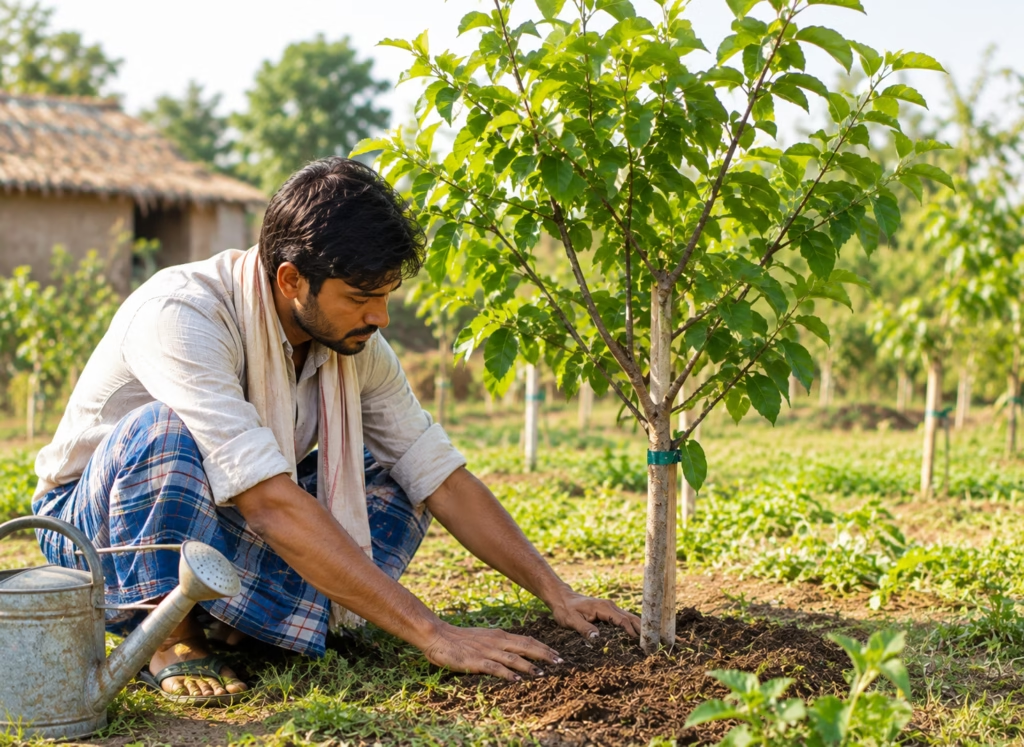
Planting a fruit tree is one example. A healthy fruit tree can provide food, shade and useful produce over a long period. Depending on the type of tree and local conditions, its fruit may also be sold or exchanged for other essentials.
This is one reason a fruit tree charity can have an impact that goes beyond a single moment of assistance. Instead of providing only something that is used once, a tree has the potential to keep producing benefits as it grows.
How Fruit Trees Can Support Families
A fruit tree may look like a small contribution at first, but its value can grow over time. Once established, it can become a useful resource for a household or wider community.
1. Providing Fresh Food
Fruit trees can help families access fresh food close to home. This can be especially valuable in communities where food prices are high or markets are far away.
Depending on the variety, trees may provide fruits that can be eaten fresh, dried or used in meals. Having access to locally grown food can also add variety to a family’s diet.
For a household facing financial pressure, producing some food locally can reduce the need to purchase everything from a market.
2. Creating an Opportunity to Earn
Fruit can have value beyond the family table. When a tree produces more fruit than a household needs, the surplus may be sold locally.
This can create a modest source of income. Families may use that income for everyday expenses such as school materials, food, transport or other household needs.
The idea is simple: a tree can become a productive asset rather than a one-time resource.
This is where tree donation can take on a wider meaning. A donation may help provide something that continues to produce value rather than disappearing after it is used.
3. Supporting Local Food Security
Food security is not only about having enough food today. It is also about having reliable access to food in the future.
Fruit trees can contribute to this by giving communities a renewable source of produce. When several families grow trees, the benefit can extend beyond individual households.
A community with more productive trees may have more locally available food and greater resilience when food prices rise or supplies become difficult to access.
Why Fruit Trees Can Be a Long-Term Form of Giving
Many charitable gifts meet an immediate need. A food parcel, for example, can provide valuable support to a family at a difficult time.
Trees work differently.
After planting and proper care, a fruit tree can continue to grow and produce. Its benefits can therefore extend across seasons and, depending on the tree’s lifespan, over many years.
This long-term quality makes donated fruit trees an interesting option for people who want their charitable giving to have an ongoing practical benefit.
It does not mean that tree planting replaces emergency assistance. Both types of support have an important place. Emergency aid helps people through immediate hardship, while sustainable projects can help communities build greater resilience over time.
The Environmental Benefits of Planting Fruit Trees
The value of fruit trees is not limited to food and income.
Trees also play an important role in the natural environment. They can provide shade, support wildlife and contribute to healthier local surroundings. Their roots can help hold soil in place, while their leaves and branches become part of a wider ecosystem.
Fruit trees can therefore connect several forms of benefit:
- food for people
- potential income for families
- habitats for wildlife
- shade and greener surroundings
- healthier local environments
- a productive resource for communities
This makes plant a fruit tree an idea that combines humanitarian and environmental benefits.
How Tree Sponsorship Can Create Community Benefits
One tree can help a household, but planting several trees can create a wider community effect.
When trees are planted across a local area, families may benefit from increased access to fruit and greener spaces. Communities can also gain knowledge about caring for plants, managing crops and making productive use of available land.
This is why tree sponsorship can be about more than planting a single tree. It can support a broader approach to sustainable development where communities have useful resources that can continue to provide value.
The exact results will depend on the location, tree variety, climate, soil and level of care. Good planning is therefore important. Trees need suitable conditions and ongoing attention if they are to thrive.
What Makes Fruit Tree Giving Different?
There are many ways to support people in need. So why consider a fruit tree?
One reason is the combination of practical and lasting benefits.
A fruit tree has the potential to provide food while also creating an opportunity for income. At the same time, it can contribute to the local environment.
This makes donate a tree more than a symbolic gesture. When planting is carried out in a suitable community and the tree is cared for properly, it can become part of someone’s everyday life.
It is also a reminder that effective charity does not always have to be about solving a problem for one day. Sometimes, the most meaningful support helps people build resources that can serve them again and again.
How to Make Your Tree Donation Meaningful
If you are considering supporting a tree planting initiative, it is worth thinking about the wider impact rather than simply the number of trees planted.
Look for projects that consider:
Suitable Tree Varieties
The right tree should suit the local climate, soil and growing conditions. A variety that grows well in one region may not perform well somewhere else.
Long-Term Care
Planting is only the beginning. Young trees need appropriate care and protection while they become established.
Community Involvement
Projects are more likely to create lasting value when local communities understand the purpose of the planting and are involved in caring for the trees.
Practical Benefits
Consider how the trees can help local families. Food production, household use and potential income can all contribute to long-term value.
Can Tree Planting Be Part of Islamic Charity?
Islam encourages Muslims to care for others and to use the blessings they have been given responsibly. Planting trees can also connect charity with care for creation.
A tree that provides food or other benefits to people and animals can become a source of goodness beyond the moment it is planted.
For Muslims looking for different ways to give, planting trees charity initiatives can therefore offer a practical way to support communities while contributing to the natural environment.
The intention behind giving matters, and Muslims may choose different forms of charity depending on their circumstances and goals.
A Simple Way to Support Sustainable Change
Charity does not always need to be complicated. A small contribution towards a productive resource can become part of a much larger effort to improve people’s lives.
Fruit trees are a good example because their potential benefits can develop over time. They can provide food, support livelihoods and contribute to greener communities.
For someone considering a fruit tree charity donation, the most important thing is to look beyond the act of planting itself. The real value comes from what happens afterwards: whether the tree grows, whether it is cared for and whether people can benefit from what it produces.
Support Fruit Tree Planting With Children of Adam
Children of Adam works to support vulnerable communities through humanitarian aid, community development and long-term solutions. Its wider charitable work includes support for basic needs such as food, clean water, shelter and education.
If you would like to turn the ideas in this article into practical action, you can support the Plant a fruit tree appeal from Children of Adam. Your contribution can help support tree planting as part of a wider approach to sustainable community support.
Explore the Plant a Fruit Tree appeal from Children of Adam
Frequently Asked Questions (FAQs)
What is a fruit tree charity?
A fruit tree charity supports the planting of fruit-bearing trees for communities or families who may benefit from the food, environmental value and potential income that the trees can provide.
How can I donate fruit trees?
You can support a suitable tree-planting charity through a tree donation or sponsorship programme. The organisation may arrange planting and local support on behalf of donors.
What are the benefits of planting a fruit tree?
Fruit trees can provide food, potential income, shade and environmental benefits. When planted in suitable locations, they may continue providing value for many years.
Is tree sponsorship a good form of charity?
Tree sponsorship can be a meaningful form of giving because a tree has the potential to provide ongoing practical benefits. Its impact depends on the location, tree variety and long-term care.
Can planting a tree be Sadaqah Jariyah?
Planting a tree may be considered a form of ongoing charity when people or animals continue to benefit from it. Muslims should consider their intention and seek appropriate Islamic guidance where needed.
Why should I plant a fruit tree instead of donating other types of aid?
Different forms of charity serve different purposes. Emergency donations can meet urgent needs, while fruit trees can contribute to longer-term food production, environmental benefits and potential livelihood support.
How does a tree donation help a community?
A tree donation can help provide a productive resource. Fruit may be consumed by families or, where appropriate, surplus produce may contribute to household income. Multiple trees can also create wider environmental benefits.
Can I donate a tree on behalf of someone else?
Some tree planting programmes allow donors to dedicate a donation in another person’s name. If this is important to you, check the specific charity’s current arrangements before donating.