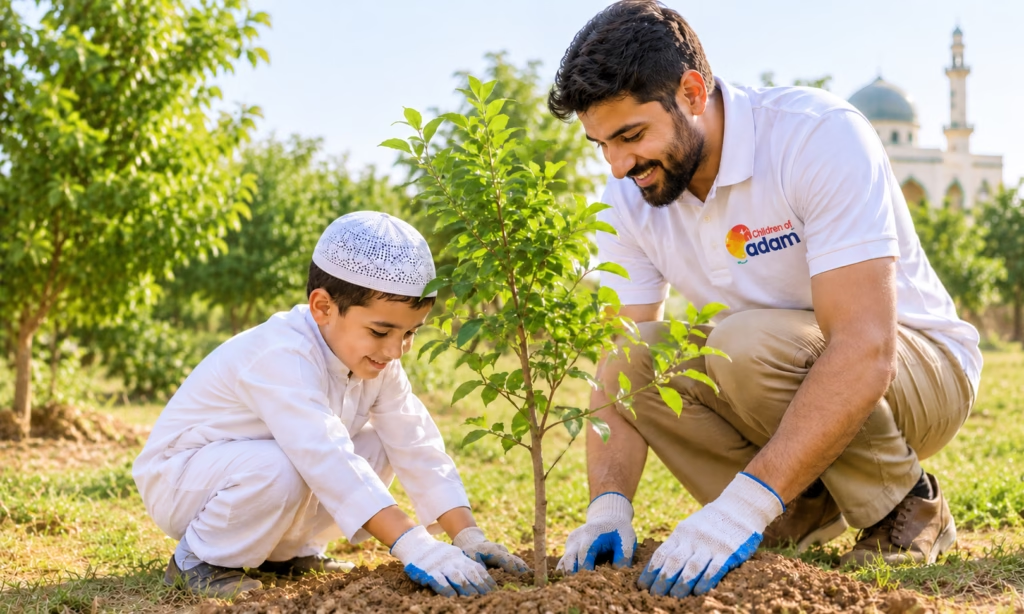
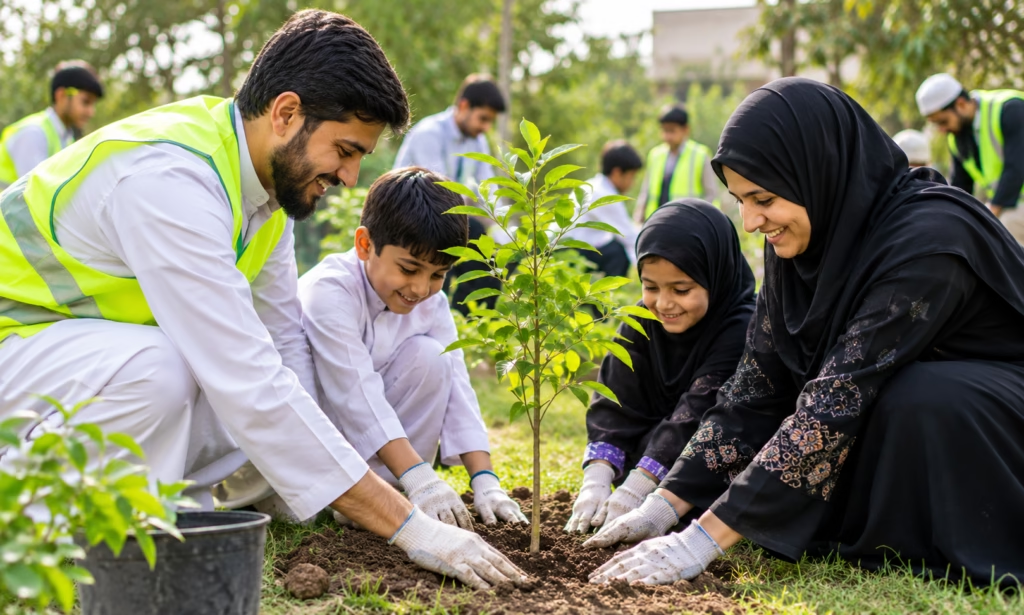
One fruit tree can give food for many years. Imagine what a whole group could do. If you want to plant a tree for charity with other people, a group campaign is a simple and happy way to begin. Families, school classes and mosque communities can all take part, and you do not need a big budget.
This guide gives you easy ideas, a five-step plan and the questions to ask before you give.
Why Groups Choose to Plant a Tree for Charity Together
Giving as a group feels special. Children learn by watching adults, friends encourage each other, and small amounts add up quickly. A fruit tree gives food and shade for years, and families can sell any extra fruit to earn a little money.
Islam also teaches that when a person, bird or animal eats from a tree you planted, it counts as charity. This is recorded in Sahih al-Bukhari and Sahih Muslim. Because the reward can carry on, many Muslims see a tree donation as a form of sadaqah jariyah, which means ongoing charity.
Ideas for Families, Schools and Mosques
Every group is different, so here are ideas for three of them.
For Families
- Start a tree jar. Each child adds pocket money for a month. Set a target together, then give as a family when the jar is full.
- Choose a special day. Birthdays, Eid and Ramadan are good times to plant a tree for charity as a family and talk about why it matters.
- Share the job. Let one child count the money, another make a poster, and another tell relatives about the plan.
For Schools
- Hold a green week. Classes can run a bake sale, a quiz or an art competition about trees and food.
- Teach as you raise money. A short assembly can explain how trees help people, animals and the planet.
- Follow school rules. Always ask a teacher or head first, and make sure two adults count and record any cash.
For Mosques
- Use a collection box after Jummah. Place a clearly labelled box and announce the target.
- Ask the youth group to lead. Young people can sell refreshments, make posters and share updates.
- Make it a community goal. Many mosques enjoy a shared target, such as “20 trees by the end of the term”.
How to Plan Your Campaign in Five Simple Steps
A tree campaign can last a week or a whole term. Pick the length that suits your group.
- Set a goal and a date. Choose how many trees you want and when you will give. Keep it realistic.
- Pick a charity. Choose one that explains clearly where the trees go and who looks after them.
- Spread the word. Use posters, group chats and social media to tell people what you are doing.
- Collect money safely. An online fundraising page is easiest. If you collect cash, count it with two people and write it down.
- Give and share the news. When you reach your target, donate as one group, then tell everyone who helped.
What to Ask Before You Choose a Tree Charity
Not every group does the same work. Whether you pick a tree planting charity or a wider environmental one, a few questions help you decide.
- Is it registered? You can check the charity number on the Charity Commission register.
- Which trees are planted? Fruit trees give food. Other trees give shade or protect the soil. Ask which kind your money pays for.
- Who looks after the trees? Young trees need watering and protection, so ask about aftercare.
- Where are they planted? A good charity can explain who benefits from the trees.
- Will you get updates? Many donors like to hear what happened after they gave.
A clear tree appeal will explain its costs and goals in plain words. If a plant trees charity cannot answer these questions, it is fine to ask again or choose another.
Understanding Tree Sponsorship
Tree sponsorship means giving money to pay for a tree to be planted and, usually, looked after in its early life. It is a simple way for groups to give, because the target is easy to understand. Ask what each sponsorship covers, so everyone knows what their money is paying for.
Mistakes to Avoid
- Setting the target too high. A goal you can reach keeps everyone motivated.
- Skipping permission. Check with your school, mosque committee or parents first.
- Losing track of the money. Write down every amount and who counted it.
- Making promises the charity has not made. Do not tell supporters they can visit a tree or name it unless the charity offers this.
- Mixing up Zakat and Sadaqah. Keep any Zakat separate and ask a scholar if you are unsure.
Final Thoughts
You do not need to be a large organisation to make a difference. A jar on the kitchen table, a bake sale or a collection box at the mosque can all grow into something lasting. Start small, stay organised and share the story.
Ready to Start Your Own Tree Campaign?
Picture a school hall or mosque in a few months’ time, with a poster on the wall and a target that has just been reached. Everyone who helped can say, “We did that together.”
You can make that day happen. Children of Adam is a UK-registered charity (number 1153244), based in Peterborough and a member of the Fundraising Regulator. We work with communities in places such as Gaza, Nepal, Sudan and Pakistan, and our fruit tree appeal lets groups give together. We follow a 100% donation policy for Sadaqah, Zakat and Lillah. Call us on 0300 321 0032 or get in touch with any questions. May Allah accept your efforts.
Frequently Asked Questions
Can a group plant a tree for charity together?
Yes. Families, classes and mosque groups can pool their money and give as one. It helps to choose one person to handle the donation and share the update.
How much does a tree donation cost?
Prices differ between charities and may change. Check the appeal page for the current amount before you set your target.
Where are the trees planted?
This depends on the charity. Ask where the trees go and who benefits from them.
Can Zakat be used to plant trees?
Zakat must reach people who are eligible to receive it, so scholars may differ on whether a tree project qualifies. Ask a qualified scholar. Sadaqah is open to everyone and is the usual choice.
Is planting a tree sadaqah jariyah?
Many scholars say yes, based on the hadith about food eaten from a tree you planted. The reward can continue while people or animals benefit from it.