
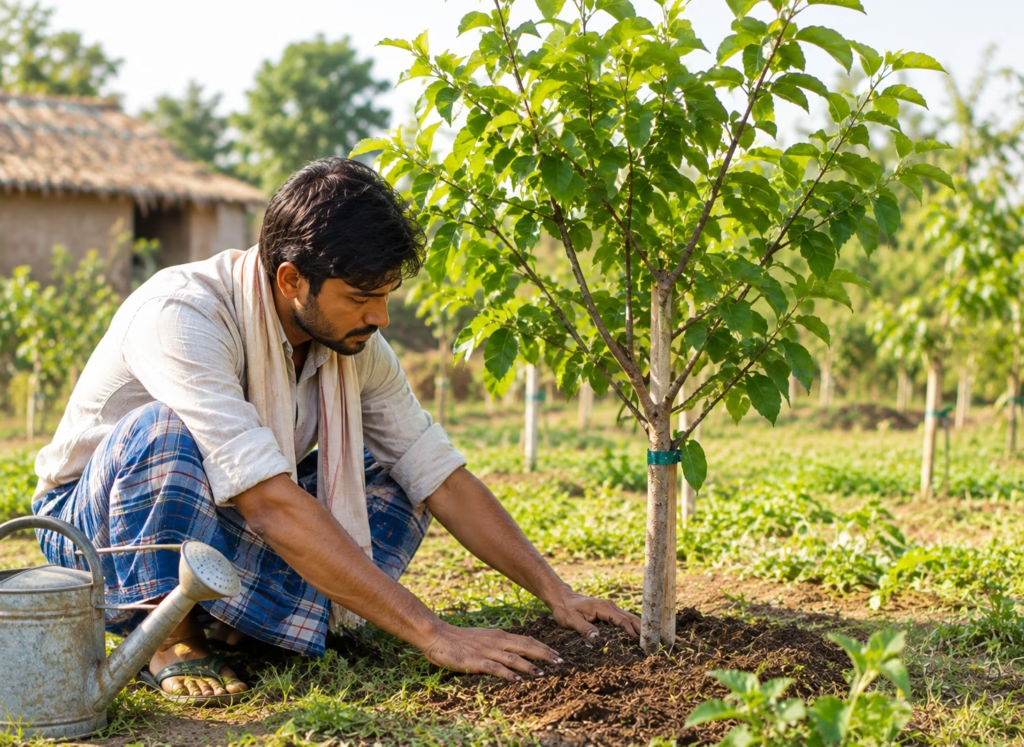
Planting a fruit tree is an exciting first step towards growing fresh food. But what happens after you plant the tree? Like any young plant, a fruit tree needs the right care to grow strong, develop healthy roots and produce fruit in the years ahead.
Good fruit tree care does not have to be difficult. A little attention to water, soil, sunlight and pruning can make a big difference. The exact needs of a tree depend on its type and local climate, but a few simple rules apply to most fruit trees.
Whether you have planted a tree in your garden, help look after a family orchard or are learning about sustainable fruit farming, this guide explains how to give young trees a healthy start.
Why the Early Years Matter
A young fruit tree has a lot of growing to do. It needs to build a strong root system, develop a sturdy trunk and produce healthy branches. Until its roots spread into the surrounding soil, it may struggle to find enough water during hot or dry weather.
The first few growing seasons are especially important. Poor watering, damaged roots, weeds or pests can slow growth and, in serious cases, cause a young tree to die.
Healthy trees are more likely to survive changing weather and produce fruit when they mature. However, not every tree grows at the same speed. Some varieties begin fruiting within a few years, while others take longer.
The aim of early care is to help the tree establish itself. Patience is important because strong roots and branches are the foundation for future harvests.
1. Choose the Right Place to Plant a Fruit Tree
Good care begins before planting. A tree has a better chance of growing well when it is placed in a suitable spot.
Check sunlight and space
Most fruit trees need plenty of sunlight to grow well and produce fruit. Many do best with around six to eight hours of direct sunlight each day, although needs vary by species and climate.
Check how large the tree may become when fully grown. If trees are planted too close together, their branches can compete for light and air. Crowded trees may also be harder to prune and inspect.
Understand the soil
Soil provides roots with water, air and nutrients. Most fruit trees prefer soil that drains well, because roots can suffer if they remain in waterlogged ground for long periods.
If the soil is very heavy or holds water, ask a local gardening expert about suitable planting methods. Adding organic matter, such as well-rotted compost, may improve soil structure, depending on the soil type.
It is also useful to choose a fruit tree suited to the local climate. A variety that thrives in a warm, dry region may struggle in a cold or wet one.
2. Get Watering Right
Watering fruit trees is one of the most important jobs during the early stages of growth. Young roots cannot reach as far into the soil as the roots of established trees, so they depend more on the moisture nearby.
Water deeply, not just a little
Instead of giving a young tree a tiny splash of water every day, aim to thoroughly moisten the soil around its root zone. Water slowly so it can soak in instead of running away across the surface.
The right amount depends on the tree species, soil, temperature, rainfall and drainage. Check the soil before watering. If it feels dry below the surface, the tree may need more water. If it is already wet, wait and check again later.
Adjust watering to the weather
Hot, windy weather can dry the soil quickly. During rainy periods, less extra water may be needed. Newly planted trees often need closer attention than trees that have been growing for several seasons.
Avoid both extremes. Too little water can cause wilting and slow growth, while too much can reduce the air available to roots and encourage root problems.
3. Protect the Soil Around the Tree
Healthy soil helps a young tree grow strong. One useful step is to keep the area around the trunk free from grass and weeds, which compete with the tree for water and nutrients.
Use mulch carefully
Mulch is a layer of material placed on the soil surface. Suitable organic mulch, such as wood chips or straw, can help the soil hold moisture, reduce weed growth and protect roots from sudden changes in temperature.
Spread mulch in a broad ring around the tree, but keep it away from the trunk itself. Piling mulch against the bark can trap moisture and encourage damage.
Check the layer from time to time and top it up when needed. Local advice can help you choose a mulch that suits the tree and growing conditions.
Feed only when needed
Fruit trees need nutrients, but more fertiliser does not always mean better growth. Too much can damage roots or encourage lots of soft leafy growth at the expense of a balanced tree.
A soil test can help identify nutrient shortages. If feeding is needed, use a suitable product and follow the instructions on its label. Compost may also help improve soil health when used correctly.
4. Prune for Healthy Growth
Pruning means removing selected branches to help a tree develop a good shape and stay healthy. It can improve airflow, remove damaged growth and make future harvesting easier.
However, young trees do not need heavy pruning without a clear reason. Cutting away too much can slow their development.
Remove damaged or crossing branches
Look for branches that are broken, dead or rubbing against each other. These may need to be removed with clean, sharp tools.
The best pruning method and time of year depend on the type of fruit tree. Apples, pears, stone fruits and citrus trees can have different needs. If you are unsure, seek advice from a local grower or gardening service.
Always use safe tools and avoid climbing unstable ladders. Good pruning should support the tree’s natural growth, not leave it stripped of most of its branches.
5. Watch for Pests and Disease
Insects, fungi and other problems can affect young trees. Regular checks help you notice changes before they become severe.
Look at the leaves, branches and trunk. Yellowing leaves, unusual spots, holes, sticky residue or sudden wilting may signal a problem. These signs do not always have the same cause, so avoid treating a tree without checking what is wrong.
Where possible, choose practical prevention first:
- Keep the area around the tree tidy.
- Remove fallen or diseased plant material when appropriate.
- Check leaves and branches regularly.
- Protect young trunks from animals and accidental damage.
- Ask a local expert to identify unfamiliar pests or symptoms.
Use pesticides only when needed and follow the product instructions carefully. The right approach will depend on the pest, tree type and local rules.
6. Give Young Trees Time to Grow
It can be tempting to expect fruit soon after planting, but a young tree needs time to establish itself. During the early years, healthy roots, a sturdy trunk and balanced branches matter more than a large harvest.
Some trees may produce a small amount of fruit while they are still young. In certain cases, removing some of this early fruit can help the tree direct more energy towards growth. The best approach depends on the species and the tree’s condition.
Keep simple notes about watering, pruning, flowering and any problems you notice. This makes it easier to understand what works and spot changes from one season to the next.
Good fruit tree maintenance is built on regular checks rather than occasional major efforts. Small tasks carried out at the right time can help improve fruit tree survival and support healthy growth over the long term.
7. Why Caring for Fruit Trees Benefits Communities
Fruit trees can offer benefits beyond the garden. When they grow well, they can provide fresh produce for families, shade for outdoor spaces and an additional source of income where fruit is sold.
In farming communities, healthy trees may form part of a wider approach to sustainable fruit farming. But planting alone is not enough. Trees need suitable land, access to water, local knowledge and continued care to reach their potential.
This is why long-term planning matters in any tree-growing effort. A tree that matches the local climate and receives suitable aftercare has a better chance of surviving than one planted without considering its needs.
For people interested in a fruit tree charity or a tree planting charity, it is worth asking how the trees are selected, who will care for them and what support is available after planting. Responsible planning helps make sure that a planting effort has a realistic chance of creating lasting benefits.
Help Grow Lasting Benefits with Children of Adam
Healthy fruit trees can provide food and support family livelihoods for years when they are planted in suitable places and cared for properly. Children of Adam is a UK-registered Islamic charity that supports vulnerable people through humanitarian and long-term aid projects.
Fruit trees can provide families with fresh food and a potential source of income for years to come. Help vulnerable farmers and families build a more sustainable future by supporting Children of Adam’s Plant a Fruit Tree appeal. In Islam, planting a tree that continues to benefit others may also be a form of sadaqah jariyah — ongoing charity whose benefits can last beyond the initial act of giving.
Frequently Asked Questions
How often should I water a young fruit tree?
There is no single schedule for every tree. Check the soil around the root area and water when it begins to dry. Hot weather, sandy soil and low rainfall may mean more frequent watering, while rainy weather or heavy soil may mean less is needed.
What is the best soil for fruit trees?
Most fruit trees grow well in soil that holds enough moisture but drains properly. The ideal soil type and pH depend on the species. A soil test or advice from a local gardening expert can help you understand what your tree needs.
Should I use fertiliser on a newly planted fruit tree?
Not always. First, make sure the tree has suitable soil, water and sunlight. Excess fertiliser can harm roots or encourage unbalanced growth. Use a soil test and follow local advice before adding extra nutrients.
When should I prune a young fruit tree?
The best time depends on the type of tree and the reason for pruning. Remove damaged growth when appropriate, but learn the recommended pruning season for your specific variety before making larger cuts.
How can I help a young fruit tree survive hot weather?
Check soil moisture regularly, water deeply when needed and use suitable mulch to reduce moisture loss. Keep mulch away from the trunk and protect the tree from damage. Newly planted trees may need more frequent checks during heatwaves.
How long does a fruit tree take to produce fruit?
This depends on the species, variety, growing conditions and whether the tree was grown from seed or supplied as a grafted sapling. Some trees may fruit within a few years, while others take longer. Healthy care can support growth, but it cannot guarantee a particular harvest date.