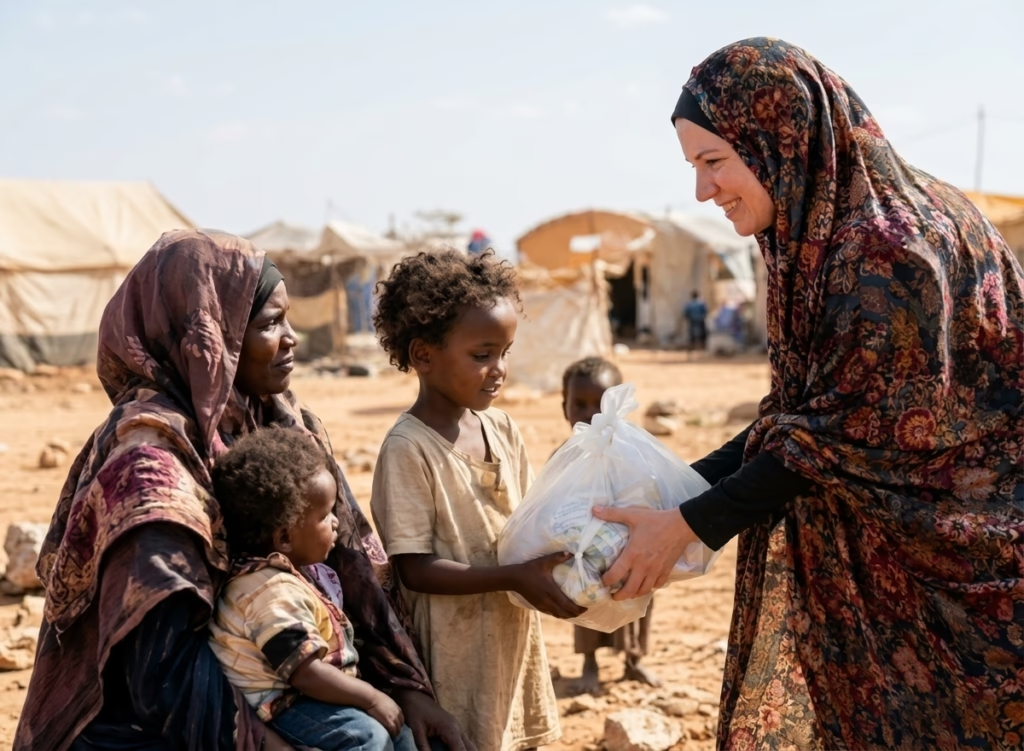
Humanitarian crises can last for months or even years. When families are forced from their homes, lose their income or struggle to access food and clean water, their needs do not disappear after one emergency response.
This is where monthly donations for Sudan can play an important role. Regular giving gives charities a more consistent funding source, helping them plan support and respond to changing needs.
For people who want to help vulnerable families over time, a monthly donation can be a simple way to turn occasional giving into a regular act of charity.
What Are Monthly Donations?
A monthly donation is a recurring contribution given to a charity on a regular basis, usually once each month.
Instead of making a single payment, a donor chooses an amount that is manageable for them. The payment is then repeated according to the selected schedule.
For humanitarian organisations, regular donations can provide greater financial continuity. This can be useful when a crisis continues beyond the initial emergency period.
Monthly giving does not have to mean giving a large amount. A small, regular contribution can become meaningful when maintained over time.
Why Regular Giving Matters During a Crisis
A humanitarian crisis can create many different needs.
Families may need food today, clean water tomorrow and medical support at another point. Displaced people may also need help for longer periods while they try to find safety and rebuild their lives.
This makes flexibility important for humanitarian organisations.
Children of Adam describes its work as including both emergency relief and long-term programmes. Its wider mission focuses on easing suffering, fighting poverty and protecting dignity through humanitarian and development work.
Regular donations can support this type of ongoing approach by giving charities a more predictable stream of charitable funds.
How Monthly Donations Can Help Families in Sudan
The value of recurring giving is not only about the amount donated each month. It is also about continuity.
When donations continue, humanitarian organisations can plan their response around available resources rather than relying only on occasional fundraising.
Depending on the needs identified on the ground, humanitarian assistance may include areas such as:
- Food and essential household supplies
- Clean drinking water
- Medical assistance
- Emergency relief
- Support for displaced families
- Longer-term community programmes
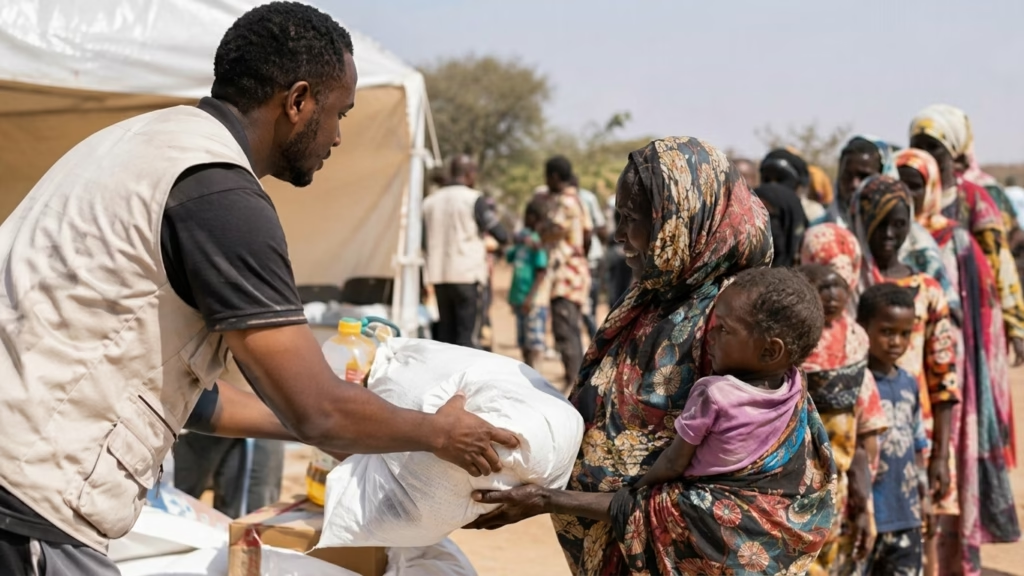
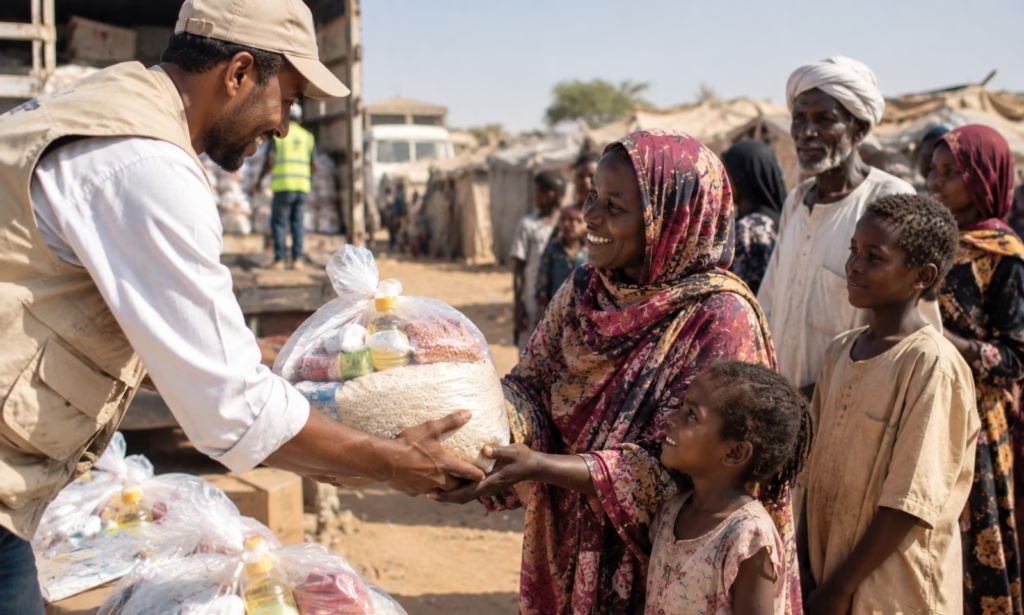
Children of Adam’s published information about Sudan has previously highlighted food parcels, clean drinking water and medical support among emergency needs.
The exact type of support can change as circumstances develop. This is one reason flexible charitable giving can be useful during a prolonged crisis.
Monthly Giving and Islamic Charity
Regular charitable giving has an important place in Islamic tradition.
Sadaqah is voluntary charity and can be given at different times and in different amounts. Unlike Zakat, it does not have the same fixed annual requirements.
Children of Adam explains that it accepts different forms of Islamic giving, including Zakat, Sadaqah and Lillah. It also states that its Zakat processes are designed around Shariah requirements and are carried out in consultation with trusted scholars.
For someone who wants to give Sadaqah regularly, setting up a monthly contribution can make charitable giving part of their routine.
Consistency Can Make Giving Easier
It can be difficult to remember to donate every month when life is busy.
A recurring donation removes the need to make a new decision each time. Once arranged, the chosen amount can be given automatically according to the donor’s selected schedule.
This can make regular Sadaqah easier to maintain.
The Children of Adam website itself highlights the value of consistency in charitable deeds when discussing its monthly giving programme.
Monthly Donations Versus One-Off Donations
Both one-off and recurring donations can provide valuable support.
A one-off donation can be particularly useful when an emergency needs an immediate response. It allows someone to give when they see an urgent appeal or have funds available.
A monthly donation works differently. It provides continued support over a longer period.
For example, someone may choose to give a smaller amount every month rather than waiting until they have enough money to make a larger one-off donation.
There is no need to choose one approach for every situation. Some donors may give a regular amount and make additional donations when a major emergency occurs.
Choosing an Amount You Can Maintain
One of the most important parts of regular giving is choosing an amount that is realistic.
Charity should not create unnecessary financial pressure. A sustainable monthly contribution is often easier to maintain than an amount that becomes difficult to afford.
Before setting up a recurring donation, consider:
- Your monthly budget – Choose an amount that fits comfortably within your finances.
- Your other charitable commitments – Consider Zakat and other regular giving separately.
- How long you want to give – Think about whether the amount will remain manageable over time.
- Your preferred type of giving – Make sure you understand whether your donation is intended as Sadaqah, Zakat or another form of charity.
A smaller contribution that you can continue making may be more practical for you than an amount that is difficult to maintain.
The Importance of Trust When Giving Regularly
When making recurring donations, it is sensible to understand the organisation you are supporting.
Donors may want to look at a charity’s mission, programmes, registration information and approach to handling donations.
Children of Adam is a UK-registered charity with Charity Commission registration number 1153244. It says that its work covers emergency response and long-term programmes across multiple regions.
The organisation also states that it follows a 100% donation policy for contributions including Zakat, Sadaqah and Lillah.
Understanding these details can help donors make informed decisions about their charitable giving.
How Regular Giving Can Support Long-Term Humanitarian Work
Emergency relief is essential when people face immediate danger, hunger or displacement. However, some crises continue long after the first emergency response.
Longer-term support can help communities address problems that remain after the immediate crisis.
Children of Adam’s wider programmes include clean water, livelihoods, education, shelter and orphan support. Its stated aim includes helping vulnerable families and communities become more self-sufficient.
This combination of emergency assistance and development work shows why humanitarian support can have both immediate and longer-term elements.
A monthly donation can therefore be part of a wider approach to charitable giving rather than simply responding to one moment of crisis.
What Should You Consider Before Donating to Sudan?
If you are thinking about giving to a humanitarian cause, take a moment to understand where and how the organisation works.
You may want to consider:
Is the donation affordable?
Choose an amount that fits your own circumstances.
Is the charity transparent?
Look for clear information about the organisation, its registration, programmes and donation policies.
Does the charity understand the local situation?
Local knowledge and delivery networks can be important when providing humanitarian assistance in difficult environments.
Can the donation remain flexible?
In a changing crisis, the most urgent needs can change. Flexible funds can allow humanitarian organisations to respond to different priorities.
These questions can help you approach charitable giving thoughtfully.
Turning Regular Giving Into a Habit
One advantage of recurring charity is that it can become part of your normal monthly routine.
You might choose a particular day of the month to give, or arrange an automatic payment so you do not have to remember each time.
The key is consistency.
Even when a donation is modest, giving regularly can help create a long-term habit of supporting people facing hardship.
For Muslims, this can also provide an opportunity to make Sadaqah part of everyday life rather than limiting charitable giving to particular occasions.
Monthly Donations for Sudan: A Simple Way to Keep Giving
Monthly donations for Sudan can provide a practical way to maintain support for people affected by a prolonged humanitarian crisis.
Regular giving can help charities plan their work, respond to changing needs and maintain support beyond the first emergency response. For donors, it can make charitable giving easier to manage by turning an occasional contribution into a regular habit.
Whether you give through Sadaqah or another suitable form of charity, the most important step is to choose an amount that is appropriate for your circumstances and a charitable organisation you trust.
Support Children of Adam’s Humanitarian Work
Children of Adam is a UK-registered charity working in the UK and internationally to provide emergency relief and longer-term support for vulnerable communities. Its programmes include food assistance, clean water, healthcare, shelter, education, orphan support and livelihoods.
If you want to provide ongoing support to families affected by the crisis, you can consider setting up monthly donations for Sudan through Children of Adam. Regular giving can help contribute to continuing humanitarian assistance while allowing you to make charity part of your monthly routine.
Frequently Asked Questions (FAQs)
What are monthly donations for Sudan?
Monthly donations are recurring charitable contributions made regularly to support humanitarian assistance for people affected by the crisis in Sudan. The donor chooses an amount and payment schedule that suits them.
How can a monthly donation help during a humanitarian crisis?
Regular donations can give charities a more consistent source of funding. This can help with planning and responding to needs that continue over an extended period.
Can I give Sadaqah every month?
Yes. Sadaqah is voluntary charity and can be given regularly. A donor can choose an amount that is affordable and suitable for their circumstances.
Is monthly Sadaqah the same as Zakat?
No. Sadaqah is voluntary charity, while Zakat is an obligatory form of Islamic charity for eligible Muslims who meet the relevant conditions. Children of Adam provides separate options for Zakat and other forms of charitable giving.
Can a small monthly donation make a difference?
A regular donation does not need to be large. Giving an amount that you can comfortably maintain can help you build a consistent habit of charitable giving over time.
What types of humanitarian support can donations provide in Sudan?
Humanitarian support can include food, clean water and medical assistance, depending on needs on the ground. Children of Adam’s published Sudan information has highlighted these areas as examples of emergency support.
How do I set up a recurring donation?
You can use the monthly giving option provided by Children of Adam to choose a suitable contribution and arrange regular payments. The charity’s website has a dedicated monthly giving section.
Can I change or stop my monthly donation?
If your financial circumstances change, contact the charity directly to ask about changing or cancelling your recurring contribution. It is sensible to check the charity’s current terms before setting up a regular payment.