Qurbani is a deeply spiritual act of worship that requires more than just a financial contribution. To ensure your sacrifice is accepted and fulfills the religious obligation, you must adhere to specific qurbani rules and requirements. From selecting the right animal to the final distribution of meat, every step is guided by the Sunnah of the Prophet Muhammad (SAW).
In this comprehensive guide, we break down the essential qurbani rules in islam to help you perform your sacrifice with confidence and sincerity.
Introduction: The Essence of the Sacrifice
The word “Qurbani” is derived from the Arabic word Qurban, meaning “closeness.” In a religious context, it refers to the act of sacrificing a livestock animal to seek closeness to Allah (SWT). While the physical act involves the slaughter of an animal, the spiritual heart of the rules of qurbani lies in Taqwa (piety).
As we prepare for the festive days, understanding the qurbani requirements ensures that our devotion is channeled correctly. It is a time for the Ummah to unite in gratitude, mirroring the submission of Prophet Ibrahim (AS) and providing a vital source of nutrition for those in need across the globe.
Who is Qurbani Wajib On? Understanding Eligibility
The first of the qurbani rules involves determining who is religiously obligated to perform the sacrifice. According to the Hanafi school of thought, Qurbani is Wajib (obligatory) for individuals who meet the following qurbani criteria:
- Sane and Mature: You must be a Muslim of sound mind who has reached the age of puberty.
- Non-Traveler: You must be a resident. Those currently traveling (beyond 77km from home) are generally exempt, though they may still participate voluntarily.
- Financial Stability (Nisab): You must possess wealth equal to or greater than the Nisab threshold (the value of 52.5 tolas of silver). This includes surplus wealth beyond your basic necessities like housing and food.
The “One Per Person” Rule
In the Hanafi school, if both a husband and wife independently meet the qurbani requirements, both must provide a sacrifice. It is not a “one per household” rule if multiple members are financially eligible. However, in other schools of thought, one sacrifice from the head of the household may suffice for the entire family.
Qurbani Animal Selection: Age and Health Requirements
Not every animal is suitable for sacrifice. To follow the qurbani requirements correctly, the animal must meet specific standards regarding its species, age, and physical condition.
Minimum Age Requirements
Each animal must have reached a specific maturity level to be valid for sacrifice:
- Sheep/Goat: Must be at least 1 year old. (One sheep/goat equals 1 share).
- Cow/Buffalo: Must be at least 2 years old. (One cow/buffalo equals 7 shares).
- Camel: Must be at least 5 years old. (One camel equals 7 shares).
Health and Physical Condition
The qurbani criteria are strict regarding the animal’s wellbeing. Allah (SWT) deserves the best of what we have. An animal is disqualified if it has any of the following major defects:
- Blindness: If the animal has lost more than one-third of its sight.
- Lameness: If the animal cannot walk to the place of slaughter on its own.
- Extreme Weakness: If the animal is emaciated or severely thin.
- Missing Parts: If more than one-third of the ear or tail is missing, or if a horn is broken off from the root.
The “Share” System and Qurbani Name Rules
The qurbani name rules and intention (Niyyah) are vital for a valid sacrifice. If you are participating in a group sacrifice, such as a cow or camel, the following rules apply:
- Maximum Shares: A large animal can have a maximum of seven shares. If an eighth person is added, the Qurbani of all participants becomes invalid.
- Intention of All Parties: Every person involved in the share must have the intention of Qurbani or Aqeeqa. If even one person joins simply to buy meat for a feast, the sacrifice is not valid for anyone in the group.
- Naming the Person: While it is not strictly necessary to verbally say the name at the exact moment of slaughter (provided the intention is clear in the heart), the qurbani name rules state that the slaughterer should ideally know or specify on whose behalf the sacrifice is being made.
Rules of the Sacrifice: Timing and Method
Understanding when to give qurbani and the qurbani time window is essential for your sacrifice to count as Udhiya rather than regular charity.
When to Give Qurbani
The qurbani time begins on the 10th of Dhul Hijjah and lasts for three days (until sunset on the 12th). Some schools of thought extend this to the 13th.
- The Eid Prayer Rule: The sacrifice can only be performed after the Eid-ul-Adha prayer. If an animal is slaughtered before the prayer concludes, it is considered regular meat and does not fulfill the religious requirement.
- Preferred Days: While all three days are valid, the most preferred time is as early as possible on the first day.
The Ritual and Ethics
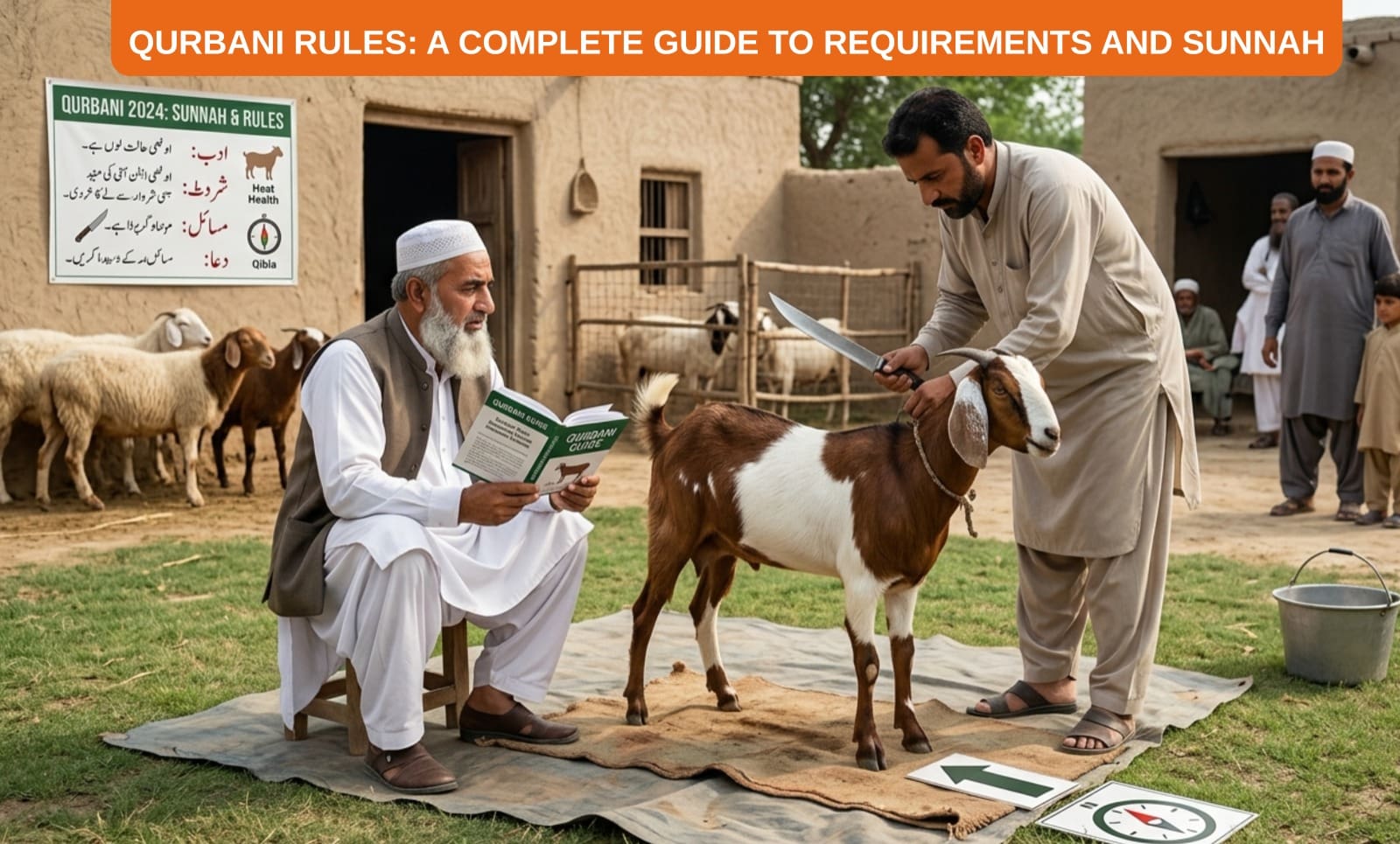
The rules of qurbani emphasize mercy. The knife must be sharpened away from the animal, and the animal should be handled gently. The slaughterer must recite:
“Bismillahi Allahu Akbar” (In the name of Allah, Allah is the Greatest).
The 1/3 Meat Distribution Rule
One of the most rewarding qurbani requirements is the fair distribution of meat. It is highly recommended to divide the meat into three equal portions:
- One-Third for You: To be enjoyed by your immediate household.
- One-Third for Friends/Neighbors: To be given as a gift to strengthen community ties.
- One-Third for the Needy: This is the portion for the poor and vulnerable.
If you are donating through Children of Adam, we often distribute the entire animal to the most impoverished communities, ensuring your sacrifice provides a lifeline to those who rarely eat meat.
Sunnah Acts for the Donor: Hair and Nails
A frequently asked question regarding qurbani rules in islam concerns personal grooming. It is a Sunnah for the person intending to sacrifice to refrain from cutting their hair and nails from the first day of Dhul Hijjah until their sacrifice is completed. This practice is a way of showing devotion and aligning oneself spiritually with the pilgrims performing Hajj.
Conclusion: Performing Your Duty with Integrity
Fulfilling the qurbani rules is a beautiful way to show your commitment to the Sunnah and your compassion for the Ummah. By ensuring your animal meets the qurbani criteria and following the qurbani time guidelines, you maximize the spiritual rewards of this blessed act.
Trust Children of Adam to handle your sacrifice with the highest standards of Shariah compliance. We ensure that every qurbani name rule and requirement is met, delivering your mercy to the most vulnerable.
Frequently Asked Questions (FAQs)
Is Qurbani Wajib on children?
No, it is only required for those who have reached maturity (puberty) and meet the financial qurbani criteria.
Can I give my Qurbani money as cash instead?
The obligation is specifically to spill the blood of a sacrificial animal. Giving cash is considered Sadaqah but does not fulfill the specific Wajib of Qurbani.
What if I missed my Qurbani last year?
If it was Wajib on you and you missed it, you should pay the value of one sheep or goat as Sadaqah to make up for the missed year.
Can I keep all the meat?
Yes, it is permissible to keep all the meat if you have a very large family or a high need, but the Sunnah of sharing is highly encouraged.
Can I use the animal’s skin to pay the butcher?
No. The butcher’s fee must be paid separately. The skin can be kept for personal use or its value donated to charity.