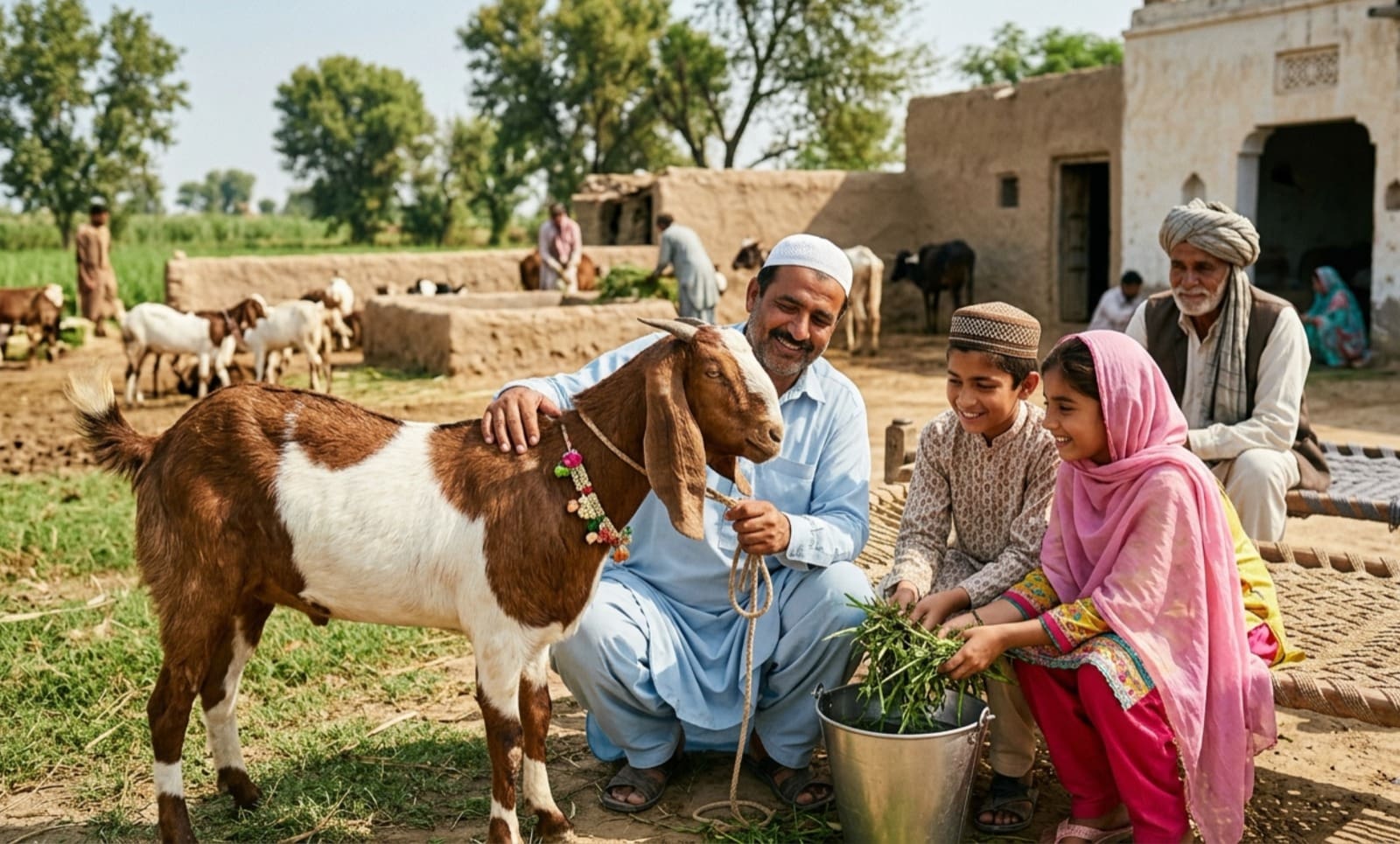
As the Islamic month of Dhul Hijjah approaches, the global Muslim community prepares for a time of profound reflection and generosity. Central to this period is the act of sacrifice. Whether you are new to the faith or looking for a deeper understanding, asking “what is qurbani?” is the first step toward a fulfilling Eid experience.
Qurbani is more than just a tradition; it is a sacred bridge between our devotion to Allah and our duty to humanity. It is an act that transcends simple ritual, touching the lives of both the giver and the receiver in ways that are both spiritually and physically nourishing. This guide provides a comprehensive look at the practice, ensuring you are fully prepared for the blessed days of Eid ul Adha.
What is Qurbani? A Complete Guide to the Sacred Sacrifice
To understand the core of this ritual, we must start with the qurbani meaning in english. The word is derived from the Arabic word Qurban, which shares the same root as Qurb, meaning “closeness.” Therefore, the literal qurbani in english translation refers to an act performed specifically to draw closer to Allah.
What is qurbani in Islam? It is the ritual slaughter of a livestock animal—such as a goat, sheep, cow, or camel—performed during the days of Eid ul Adha. This act is done to please Allah and to provide food for the poor. It serves as a reminder that everything we own belongs to the Creator and that we must be willing to give back from our blessings to support those in need.
In the context of modern global challenges, Qurbani has become one of the most effective ways to combat food insecurity. While the spiritual rewards are personal, the physical impact is communal. By sacrificing an animal, a Muslim ensures that the joy of Eid reaches the tables of those who often struggle to find a single meal.
The History and Meaning Behind the Act of Giving
The qurbani meaning is deeply intertwined with the history of the Prophets. While we most commonly associate it with Prophet Ibrahim (AS), the tradition of sacrifice dates back to the very beginning of humanity.
The act of sacrifice has always been about the intention behind the deed rather than the deed itself. In the Quran, Allah (SWT) says: “Their meat will not reach Allah, nor will their blood, but what reaches Him is piety from you.” (Quran 22:37). This verse is the cornerstone of the qurbani meaning, highlighting that the physical act is a vessel for spiritual transformation.
The Ultimate Test of Faith
The modern practice of Qurbani commemorates the unwavering faith of Prophet Ibrahim (AS). In a series of dreams, Ibrahim (AS) was commanded to sacrifice his beloved son, Ismail (AS). Both father and son showed complete submission to the Will of Allah, proving that their love for the Divine surpassed all worldly attachments.
This history teaches us that Qurbani is about proving our loyalty and our readiness to put Allah first in all aspects of our lives. It is a testament to the fact that when a believer is willing to let go of what they love for the sake of God, they are rewarded with something much greater: spiritual peace and proximity to their Creator.
Reviving the Beautiful Legacy of Prophet Ibrahim (AS)
Every year, we have the opportunity to revive the beautiful legacy of Prophet Ibrahim (AS). This is not merely a historical reenactment; it is a living Sunnah that defines the character of a believer.
Reviving this legacy means cultivating the same spirit of devotion that Ibrahim (AS) possessed. It is an annual “spiritual reset” that humbles the heart and shifts our focus from material accumulation to spiritual growth and communal service. When we sacrifice, we are standing in the footsteps of the Prophets, declaring our commitment to a life of purpose and piety.
Furthermore, this legacy includes the “Prophetic Qurbani.” The Prophet Muhammad (SAW) often sacrificed an extra animal on behalf of the poor in his community who could not afford to perform the act themselves. By doing so, he ensured that no one was left out of the blessings of Eid. Many donors today choose to follow this example by providing an extra share for the global Ummah.
Understanding the Rules, Rewards, and Rituals
For a sacrifice to be valid, it must adhere to strict Shariah guidelines. These rules ensure that the animal is treated with dignity and that the act is performed with full legal and spiritual integrity.
1. Who is Qurbani Wajib on?
According to the Hanafi school of thought, Qurbani is Wajib (obligatory) for every sane, adult Muslim who reaches the Nisab threshold.
- The Threshold: If you possess wealth (cash, gold, silver, or business assets) equal to or greater than the value of 52.5 tolas of silver on the days of Eid, you must provide a sacrifice.
- Adult & Sane: The person must be of sound mind and have reached the age of puberty.
- Residents: The obligation generally applies to those who are residents and not traveling more than 77km from home. However, travelers often choose to give out of their own will to gain the reward.
2. The Timing of the Sacrifice
The timing is critical. The sacrifice must take place after the Eid prayer on the 10th of Dhul Hijjah. Any animal slaughtered before the prayer is considered general charity and does not fulfill the religious requirement. The window remains open until sunset on the 12th of Dhul Hijjah.
3. Animal Selection and Health
Islam places high importance on animal welfare. The animal cannot be blind, lame, or severely thin. It must be at least:
- Goat/Sheep: 1 year old.
- Cow/Buffalo: 2 years old.
- Camel: 5 years old.
The slaughter itself must be done humanely, using a sharp knife to ensure the animal does not suffer, and it should not be done in front of other animals.
The “Share” System: How It Works
One of the most practical ways to fulfill your duty is through the share system. This ensures that the tradition is accessible to as many people as possible, regardless of their financial status.
- Small Animals: A goat or a sheep represents one full Qurbani for one person.
- Large Animals: A cow or camel is split into seven shares. You can purchase one share or multiple shares within a larger animal.
- Group Participation: Families often pool their resources to purchase a large animal together, with each member taking one of the seven shares.
By using the share system, donors can also choose to distribute their sacrifice across different countries. For example, one might provide a share in their home country and another share in a crisis-hit region like Gaza or Yemen.
Exploring the Deep Spiritual Rewards of the Sacrifice
The spiritual rewards of this act are immense. The Prophet Muhammad (SAW) said, “For every hair of the Qurbani, you will receive a reward from Allah.” (Tirmidhi).
Purification and Intercession
Beyond the individual blessings, Qurbani provides a unique form of purification. Just as Zakat cleanses our savings, Qurbani purifies our material blessings by detaching us from them. It is also believed that the sacrificed animal acts as a witness to your charity on the Day of Judgment.
Empathy and Unity
The act of sacrifice allows us to feel the hunger that millions face daily. It bridges the gap between the wealthy and the poor, reminding us that we are one body. When one part of the Ummah hurts, the rest should feel the pain. Sharing the meat is the physical manifestation of this unity.
More Than a Ritual—A Lifeline for the Ummah
In the modern world, Qurbani is a critical humanitarian tool. In conflict zones and drought-stricken regions, meat is an impossible luxury. For many families, the meat they receive during Eid is the only time they will eat high-quality protein all year.
At Children of Adam, we utilize a 100% Zakat policy to deliver your sacrifice. We prioritize “Protecting People, Property, and Productivity” by sourcing animals from local farmers in high-need areas. This does not just feed the hungry; it supports the local economy, helping farmers sustain their families while providing fresh, healthy meat to those in absolute poverty.
Reaching the Forgotten
We focus our efforts on regions that are often overlooked by larger organizations. From the remote mountains of Nepal to the rural villages of Malawi, our mission is to ensure that the spirit of Eid reaches every corner of the globe. Your donation ensures that widows, orphans, and the elderly can smile on the day of Eid.
How Your Devotion Feeds the Hungry
The meat from your sacrifice is distributed according to the Sunnah. Traditionally, it is split into three parts: one for your family, one for friends, and one for the poor. However, when you donate through a charity, the entire animal is typically given to those in need.
This distribution is a massive logistical undertaking. It requires vetting families, sourcing healthy livestock, and ensuring that the meat is processed and delivered within the three days of Eid. By trusting a professional organization, you ensure that your sacrifice is handled with the technical precision and care it deserves.
The Impact on Health
Meat is a vital source of iron, B vitamins, and protein. In many developing countries, “hidden hunger” or malnutrition is a silent killer. A single Qurbani can provide several days of nutritious meals for a large family, giving them the strength they need to work and learn.
Conclusion: Making Your Sacrifice Count
Qurbani is a time of unity, mercy, and devotion. It is a reminder that while our lives are filled with material things, our true value lies in our ability to sacrifice for the sake of others. As you prepare for Eid ul Adha, let us approach the sacrifice with the same sincerity that defined the lives of the Prophets.
By fulfilling this duty, you are not just providing a meal; you are joining a global movement of compassion. You are ensuring that the message of Islam—of peace, sharing, and mercy—is felt by those who need it most. Make your intention today and help bring the joy of Eid to every corner of the world. Through your sacrifice, you are “Protecting People, Property, and Productivity” and building a legacy that will last forever.
Frequently Asked Questions (FAQs)
What is Qurbani?
It is the religious sacrifice of a livestock animal for the sake of Allah during the days of Eid ul Adha.
What is Qurbani in Islam?
It is a “Wajib” (obligatory) or strongly recommended act that commemorates the devotion of the Prophets and fulfills the right of the poor to receive food.
What is Eid ul Adha Qurbani?
This is the specific sacrifice performed during the “Festival of Sacrifice,” which starts on the 10th day of the Islamic month of Dhul Hijjah.
What does Qurbani mean in English?
The qurbani meaning in english is “sacrifice,” signifying an act done to draw closer to the Divine.
Is Qurbani compulsory in Islam?
For those who meet the Nisab wealth threshold, it is considered compulsory (Wajib) in the Hanafi school and a Sunnah Mu’akkadah (highly emphasized) in others.
Who has to give Qurbani?
Any sane, adult Muslim who possesses wealth above the Nisab level is required to provide a sacrifice.
Who is Qurbani wajib on?
It is wajib on the “Sahib-un-Nisaab”—the owner of wealth that exceeds the silver or gold threshold.
At what age is Qurbani required?
It is required for every individual who has reached the age of puberty and meets the financial requirements.
Can I give Qurbani for a deceased relative?
Yes. Performing a sacrifice in the name of a loved one who has passed away is a beautiful form of Sadaqah Jariyah.
Can I give my sacrifice to a specific country?
Yes. Many charities allow you to choose high-need areas such as Pakistan, Yemen, or Palestine.
What happens to the skin of the animal?
The skin should be given to the poor or sold with the proceeds given to charity. It cannot be kept for personal use or used to pay the butcher.
Can I cut my hair before the sacrifice?
It is recommended (Sunnah) to avoid cutting your hair or nails from the first of Dhul Hijjah until your sacrifice is complete.
Is it better to give a sheep or a share in a cow?
Both are valid. A sheep is one full Qurbani, while a cow share is also one full Qurbani. The reward is based on your sincerity.
What if I can’t afford a full animal?
You can participate in a share program, which allows you to pay for one-seventh of a large animal, making it much more affordable.
Can I give Qurbani if I am in debt?
If the debt is immediate and paying it would bring your wealth below the Nisab, you are exempt. However, if the debt is long-term (like a mortgage), it does not exempt you.