As the holy month of Ramadan draws to a close, Muslims around the world prepare for the joyous celebration of Eid al-Fitr. This celebration isn’t just about feasting and new clothes; it’s also about fulfilling a critical act of charity known as Fitrana.
If you’re wondering, “What is Fitrana 2026?”, you’ve come to the right place. Fitrana is an obligatory charity that every Muslim must pay at the end of Ramadan. Its purpose is twofold: to purify the fasts of the giver and, most importantly, to ensure that every poor person has enough food donation to celebrate Eid with dignity and joy.
This guide will explain the sacred meaning, clarify the rules for payment, and help you understand exactly how to calculate and pay your contribution for 2026.
Fitrana Meaning 2026: The Charity That Cleanses the Fast
The formal name for this compulsory payment is Zakat aFitrl–, but it is commonly known as Fitrana.
The literal fitrana meaning 2026 relates to the Arabic word Fitr, which means “breaking the fast.” This charity is paid specifically to mark the breaking of the fasting period (Ramadan) and the return to eating and drinking during daylight hours.
The Purpose of Fitrana
Why is this charity so essential that it’s required of every single Muslim?
- Purification of the Fast: Fitrana acts as a final spiritual cleansing. The Prophet Muhammad (peace be upon him) described it as a purification for the fasting person from any indecent acts, irrelevant speech, or mistakes made during Ramadan. It polishes any blemishes that may have occurred during the fast.
- Feeding the Needy on Eid: The primary social purpose is to ensure that the poor and needy do not have to beg on the day of Eid al-Fitr. By giving this food before the festival prayer, everyone—rich and poor—is able to join in the celebration, enjoying a full and nutritious meal.
This spirit of communal care and shared joy makes Fitrana one of the most beautiful aspects of completing Ramadan.
Is Fitrana Same as Zakat? Understanding the Difference
A very common question people ask, especially those new to Islamic finance, is: is fitrana same as zakat? While both are compulsory acts of charity, they are fundamentally different in their calculation, timing, and requirement.
Fitrana (Zakat al-Fitr)
- When is it Paid? Once per year, specifically at the end of Ramadan, before the Eid prayer.
- Who Pays? Every single Muslim must pay this, regardless of age, gender, or income, provided they have food surplus to their needs for one day.
- How is it Calculated? It is a fixed, small amount traditionally equal to the cost of one Sa’ (roughly 2.5–3 kg) of the staple fitrana same as zakat in the local area.
Zakat (Zakat al-Mal)
- When is it Paid? Annually, on the day your wealth reaches one lunar year.
- Who Pays? Only Muslims whose wealth exceeds a specific minimum threshold known as the Nisab (the current market value of 87.48 grams of gold or 612.36 grams of silver).
- How is it Calculated? It is a fixed percentage of your total accumulated wealth (2.5% of eligible savings, assets, and investments).
In simple terms: Zakat is an annual tax on your accumulated wealth, paid to help reduce poverty year-round. Fitrana is a fixed food donation paid at the end of Ramadan to ensure everyone can celebrate Eid.
Who Must Pay Fitrana in 2026?
The rule for who must pay is very straightforward, yet often misunderstood. Fitrana is obligatory upon:
- Every Muslim: Whether young or old, male or female.
- Who is Alive: The obligation applies to everyone alive right up until the sunset on the last day of Ramadan. If a baby is born even minutes before that sunset, their Fitrana is due. If a person passes away after that sunset, their Fitrana is still due.
- Who is Solvent: The person must possess food or wealth beyond what is needed for themselves and their dependents for the day and night of Eid. Unlike Zakat al-Mal, this rule does not depend on hitting the high Nisab threshold. If you have enough food for the Eid celebration, you are obliged to pay for your family.
The head of the household (usually the father or husband) is responsible for paying Fitrana on behalf of all their dependents, including their children and wife (even if the wife has her own wealth).
If you are asking yourself What is Fitrana 2026 and whether you need to pay, the answer is almost certainly yes, as the threshold is very low.
The Rules of Fitrana: How Much and How to Calculate
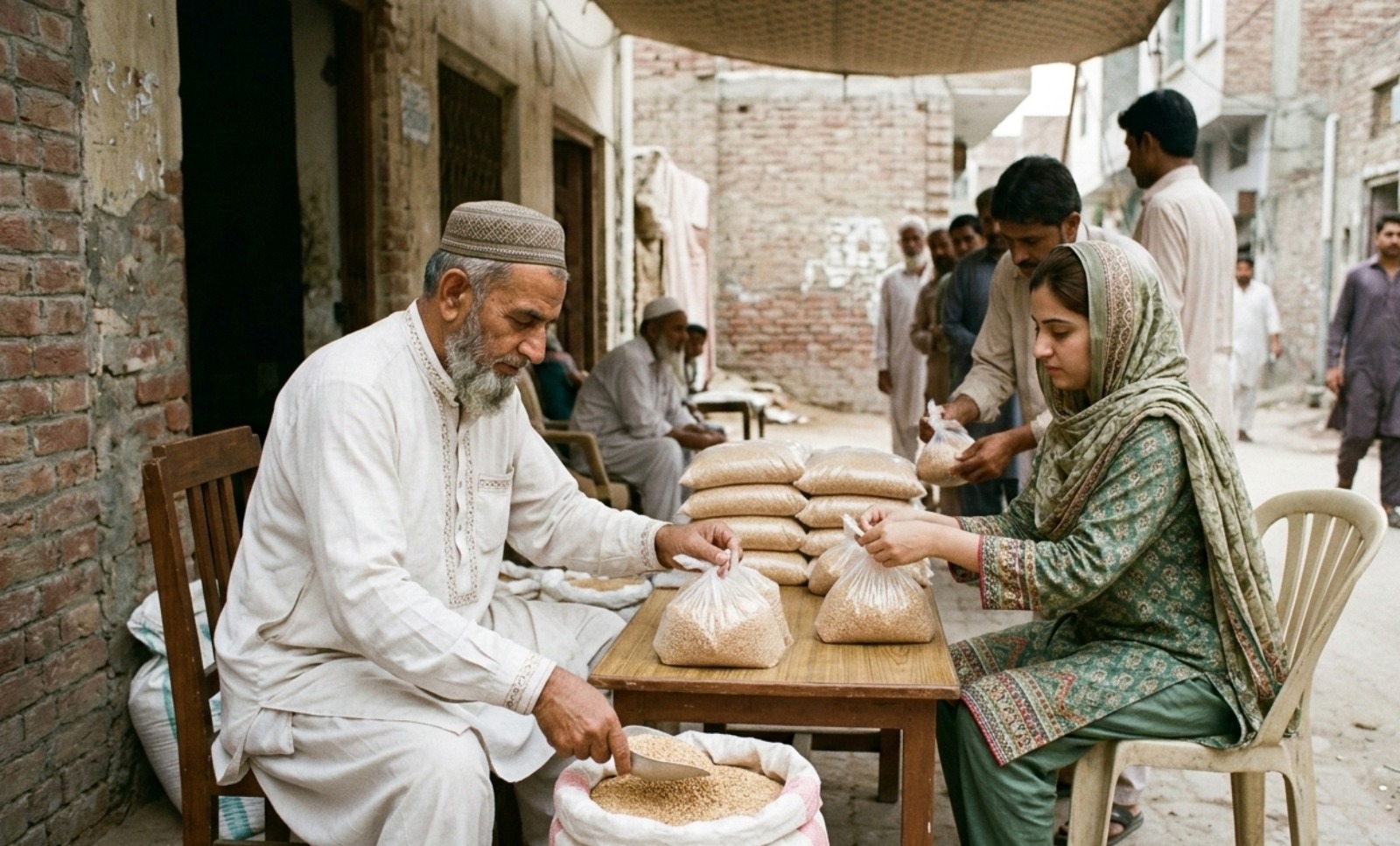
Historically, Fitrana was paid by physically handing over staple fitrana meaning 2026 to the poor. Today, it is mostly paid in cash, which makes logistics easier for charities and allows the recipient to buy whatever food they need.
The Measure: Sa’ and Food Types
The fixed amount of Fitrana is one Sa’ of the common staple food of the region.
- What is a Sa’? A Sa’ is an ancient measure of volume. Scholars have estimated that one Sa’ today is equivalent to approximately 2.5 to 3 kilograms (roughly 5–6 pounds) of dry food.
- Food Types: The types of food acceptable include things like rice, dates, wheat, barley, cheese, or raisins—whatever the common food of the local people is.
The Fitrana Amount 2026
Since most of us do not want to measure out rice ourselves, modern calculation converts the one Sa’ of food into its monetary value.
The Fitrana amount for 2026 will be calculated by charitable organisations based on the average cost of 2.5–3 kg of a staple food (like rice or flour) in the current market. Because the price of food changes, the specific amount is often announced closer to Ramadan each year.
- Example: If the cost of 2.5 kg of good quality flour or rice is £5.00, then the Fitrana payment is set at £5.00 per person.
- Key Takeaway: You must pay that set amount for every single person you are responsible for. A family of six would pay 6 x £5.00 = £30.00.
It is always advised to check with reputable UK-based Islamic charities, like Children of Adam, who will announce the officially recommended Fitrana payment amount closer to the date of Eid in 2026.
When is the Best Time to Pay What is Fitrana 2026?
Timing is one of the most critical aspects of paying Fitrana, as it has a strict deadline.
The Deadline: Before the Eid Prayer
The designated time for payment begins immediately after sunset on the last day of Ramadan and ends right before the Eid al-Fitr prayer on the morning of Eid.
- Ideal Time: The best time to pay is the morning of Eid, before the prayer. This ensures the poor have the funds or food ready for their celebration.
- Permissible Time: It is also permissible to pay one or two days before Eid, especially when paying through large charities, as this gives them the necessary time to convert the money into actual food and distribute it to needy families before the deadline.
- The Cut-Off: If the payment is made after the Eid prayer, it is generally considered a regular Sadaqah (voluntary charity) and does not fulfil the obligatory requirement of Zakat al-Fitr. This is why knowing exactly What is Fitrana 2026 and its timing is so important.
Paying early to a trusted charity is often the easiest and safest way to ensure the money reaches the poor exactly when it is needed most.
Where Does My Fitrana Go? The Recipients
Your Fitrana is specifically designated for the poor and needy (Fuqara and Masakin). It is not meant for general charitable projects like building a well or a mosque.
The money must be used to provide food or the means to purchase food for those who lack provisions for the day of Eid. When you pay your Fitrana through an organisation like Children of Adam, you ensure that families who have struggled throughout the year will receive the basic food items required to celebrate Eid with dignity and joy, just like everyone else.
Help Children of Adam Deliver Your Fitrana
Children of Adam is a UK-based charity dedicated to easing suffering, uplifting vulnerable communities, and creating long-term, sustainable solutions for those facing hardship. We blend compassion with practical action to ensure that everyone, especially the most vulnerable, can face the future with dignity.
Paying your Fitrana through Children of Adam is a guaranteed way to ensure your food donation reaches the hands of the poor and needy before the crucial Eid al-Fitr deadline. We handle the logistics, calculating the current market value of the staple food and delivering essential provisions to families who rely on this charity to celebrate Eid.
- Ensure Timeliness: We ensure your payment is converted into food and delivered to the most vulnerable families on time for Eid.
- Targeted Aid: Your Fitrana funds go straight to food aid for the poor and needy (Fuqara and Masakin), fulfilling the exact religious requirement.
- Trusted Delivery: Join thousands of donors who trust us to deliver emergency aid, food appeals, and support to families in places like Gaza, Sudan, and Palestine.
Don’t let the rush of Eid distract you from this final, beautiful duty. Fulfill the command of Fitrana with ease and confidence. If you wish to make your Fitrana payment, or have any questions about our appeals, you can Contact Children of Adam and reach the team here through our official channels.
Frequently Asked Questions (FAQs)
Q1. Is Fitrana required for a baby born right at the end of Ramadan?
Yes. Fitrana is compulsory for every Muslim who is alive right up until the moment of sunset on the final day of Ramadan. If a baby is born even minutes before that sunset, the head of the household must pay Fitrana on their behalf.
Q2. Can I pay Fitrana after the Eid prayer?
While charitable giving is always rewarded, paying after the Eid prayer does not fulfil the specific obligatory requirement of Zakat al-Fitr. The payment is then considered a general voluntary charity (Sadaqah) and not the mandatory Fitrana. It must be paid before the prayer to ensure the poor can celebrate Eid.
Q3. Can Fitrana be paid using money, or must it be food?
While the original Sunnah (Prophetic tradition) was to pay in staple food (like dates or wheat), paying the equivalent monetary value is widely accepted by most scholars and charities today. This method is often preferred because it allows the recipient to purchase the food they need most in their local market.
Q4. Do I still have to pay Fitrana if I missed some fasts during Ramadan?
Yes. The obligation to pay Fitrana is completely separate from your obligation to fast. Fitrana is due upon every Muslim, regardless of whether they fasted for the entire month, missed days due to illness, or were exempt (like children or travelers).
Q5. What is the official Fitrana amount for 2026?
The exact amount is not fixed worldwide. It is based on the current market price of one Sa’ (approx. 2.5–3 kg) of the staple food in the country where the charity is making the purchase. Trusted charities, like Children of Adam, will announce the recommended monetary value for 2026 closer to the date of Eid.