The Daily Routine When Sponsoring an Orphan
When you decide to sponsor an orphan, you are doing more than just making a donation. You are clicking a button that sets in motion a thousand tiny, beautiful moments. You are rewriting the daily story of a child’s life, changing it from one of fear and uncertainty to one of hope and stability.
It’s easy to see the donation, but it can be hard to picture the impact. What does that sponsorship actually do? What does a typical day look like for the child you are helping?
Let’s walk through 24 hours in the life of “Ali,” a 9-year-old boy in a small town in Pakistan. His life is made possible by a sponsor just like you.
6:00 AM: A Safe Awakening
The first call to prayer, the Fajr Adhan, echoes softly through the pre-dawn air. Ali stirs. He isn’t woken by the cold from a broken window or the noise of a crowded, unsafe street. He is in a warm bed, in a clean, shared room at a local partner orphanage, a place that Children of Adam supports.
He knows that today is not about finding food. It’s about getting ready for school.
His “Ami,” the name the children use for their house mother and caregiver, gently wakes him and the other boys in his room. “Time to get up, beta (son). Time for prayer and breakfast.”
6:30 AM: A Nutritious Breakfast
Ali and the other children wash their faces, perform wudu (ablution), and pray together. The feeling is one of family.
After prayer, they head to the communal dining hall. Breakfast is simple, but it is guaranteed. Because of your sponsorship, there is always food. Today, it’s a warm paratha (flatbread) with a boiled egg and a hot cup of milky tea.
This meal is his fuel. It’s the energy he needs to focus in class. He doesn’t have to go to school on an empty stomach, his mind distracted by hunger.
7:15 AM: Getting Ready with Pride
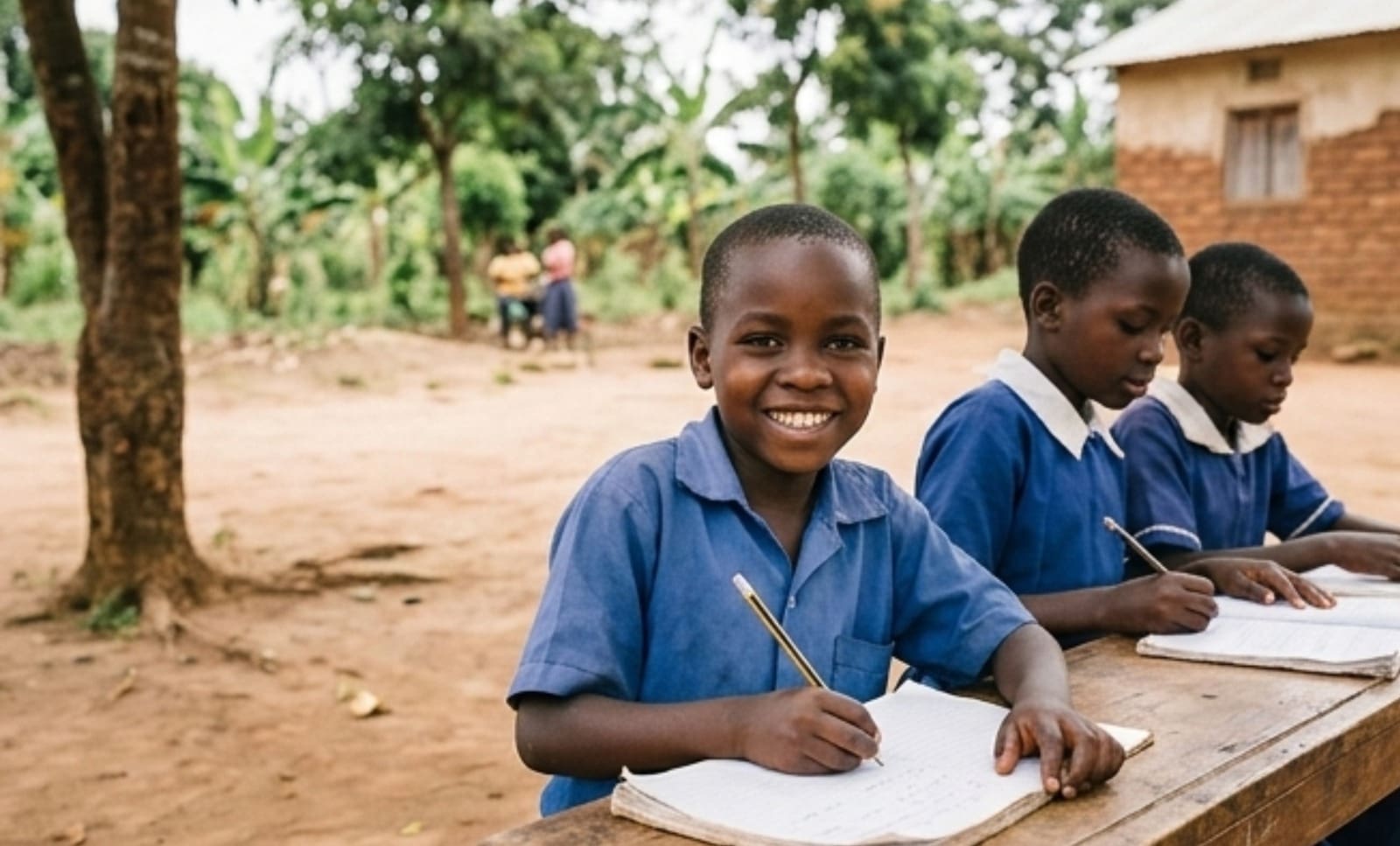
After breakfast, Ali rushes back to his room. He pulls his clean, crisp school uniform from a small cupboard. It’s a blue shirt and grey trousers. This uniform is one of the first things your sponsorship provided.
For Ali, this uniform is a suit of armour. It makes him feel like every other child. He’s not “the orphan boy” in torn clothes; he is a student, with a future. He brushes his hair, grabs his school bag—also provided by your sponsorship, filled with new notebooks and pencils—and puts on his polished black shoes.
7:45 AM: The Walk to School
Ali joins a group of other children, and they begin their 15-minute walk to the local school. The sponsorship covers his full school fees, so he can attend a good-quality private school, not the struggling, overcrowded government one.
He is safe. He is not walking to a factory, a workshop, or a busy market to beg. He is walking to a place of learning.
8:00 AM – 2:00 PM: A Day of Learning
Ali’s day is filled with reading, writing, and arithmetic. His favourite subject is science. He dreams of being a doctor.
A few weeks ago, he was feeling unwell, with a bad cough. Because of your sponsorship, he was taken to the local clinic for a full check-up and got the medicine he needed, all covered by the healthcare fund. He was back in school in two days.
His health is monitored. His education is paid for. He is not just surviving; he is learning and growing.
2:00 PM: The Return Home
School is over. Ali and his friends walk back, laughing and talking about the day. When they arrive, a hot lunch is waiting for them: a nutritious meal of daal (lentils) and rice.
This is the stability your sponsorship buys: the simple, profound comfort of knowing a warm meal is waiting for you at home.
4:00 PM: Homework and Play
After a short rest, it’s time for homework. A tutor, funded by the sponsorship program, sits with the children in a quiet study room to help them with their maths and English. Ali finishes his work and then runs outside to the small play area.
For an hour, he is just a child. He plays cricket with his friends, shouting and laughing, free from the worries of an adult.
6:00 PM: Chores and Community
As evening approaches, the children all have small chores. Ali’s job is to help set the tables in the dining hall for dinner. He does it with a sense of responsibility. This is his home, and he is part of a family.
7:30 PM: A Shared Dinner and Quranic Studies
The children eat dinner together tonight, it’s a simple chicken and vegetable curry with roti. After they’ve all helped clean up, they gather with a Quran teacher. They spend 45 minutes reciting the Quran and learning stories of the Prophets.
Your sponsorship isn’t just looking after a child’s body and mind; it’s nurturing their imaan (faith).
9:00 PM: A Secure and Peaceful Sleep
By 9 PM, it’s time for bed. Ali gets into his own bed, under a warm blanket. The building is secure. The doors are locked. He is safe.
He doesn’t fall asleep worried about tomorrow. He falls asleep dreaming of his science test, the cricket game, and his future as a doctor.
This is What Your Sponsorship Provides
When you put it all together, you can see that your monthly donation is not just one thing. It is a web of support that holds a child’s life together.
It provides food, healthcare, education, and safety. Your donation can sponsor an orphan in Pakistan and give a child like Ali the chance to have a childhood.
Your sponsorship becomes:
- The food that gives him energy.
- The uniform that gives him dignity.
- The books that give him a future.
- The medicine that gives him health.
- The roof that gives him safety.
- The caregivers that give him love.
This comprehensive care is why the virtues of sponsoring an orphan are so immense. You are not just saving a life; you are building one.
This is the daily, tangible reality of your charity. Your sponsorship provides daily essentials, but you can also make their celebration special by donating an Eid gift. You are giving a child the essentials to live, and then, on the most special day of the year, you are giving them the gift of joy.