When people think of Ramadan giving, a food parcel is often the first thing that comes to mind. It is simple and practical. But a good Ramadan food parcel is not just a box of food. It has to suit the family who receives it. A parcel that feeds two people will not stretch far in a home of ten. Food that needs a full kitchen is no use to a family with only a small fire. This article looks at what makes food support appropriate, so you can give with more confidence.
Why One Size Does Not Fit Every Family
Ramadan is a time when families want to share meals together. They break their fast at sunset and wake before dawn for suhoor. Their needs in this month are different from the rest of the year. Food support works best when it is planned around real households, not around one standard idea.
Aid workers often look at five things: household size, health and diet, local foods, cooking facilities, and people in the home who need extra care.
Household Size: Feeding the Whole Family
The first question is simple: how many people are eating? Some households have two or three people. In others, grandparents, parents, children and relatives share one home, and a family of nine or ten is not unusual. A parcel sized for a small family may run out within days.
Some charities therefore offer different sizes. You may see a Ramadan family food pack described for a smaller or larger household. Ask how a charity decides which size each family gets. Whether it uses local surveys, community leaders or home visits, the process should be fair and clear.
Local Foods and Dietary Needs
The best food is food that people know how to cook and enjoy eating. In one region, the main staple may be rice. In another, it may be flour, maize or millet. If a Ramadan food package includes things people do not normally eat, those items may be wasted or swapped. Buying food locally also helps, because it suits local taste and supports local traders.
Dietary needs matter too. Some people have diabetes, high blood pressure or allergies. Some babies and young children need softer foods. Food should always be halal and suitable for fasting families.
Cooking Facilities and Fuel
Not every home has a kitchen. Some families live in tents, shelters or damaged buildings. They may have one pot, little fuel and no fridge. Foods that need long cooking times, a lot of water or cold storage may not be practical.
In these places, quick-cook or ready-to-eat foods can be more useful. Fuel and clean water for cooking matter as much as the food itself. A Ramadan food box that ignores these things may look generous but may not help the family much.
Looking After Older People and Young Children
Older people may find it hard to carry heavy sacks, chew hard foods or cook for long. Babies and young children may need soft, nourishing foods. Families with someone who is ill or disabled may also need extra care.
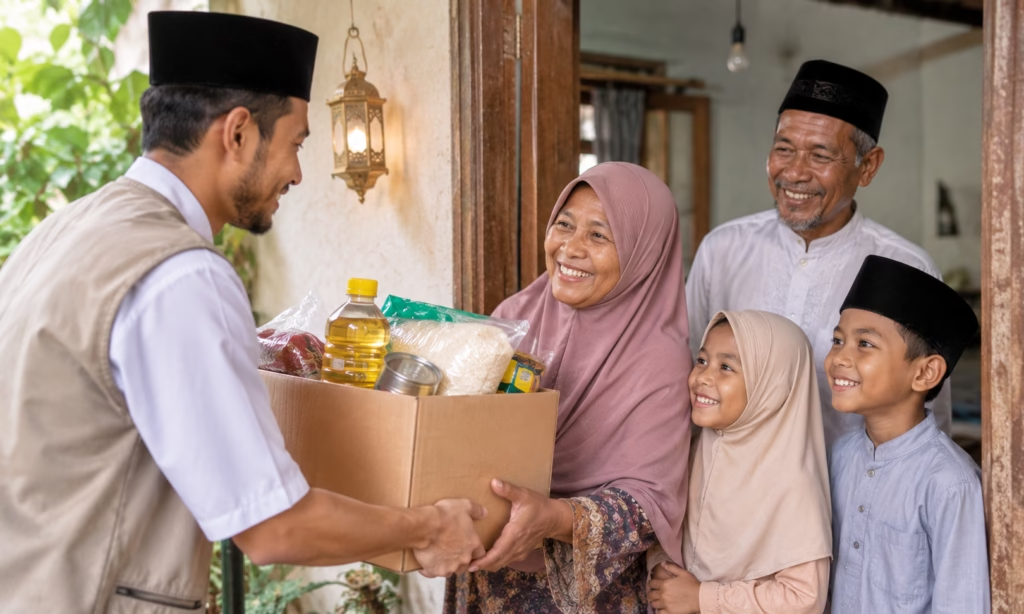
Good programmes think about how food reaches these homes. For example, they may deliver to the door instead of asking people to collect it. Dignity matters as well. People who are fasting should not have to queue for hours in the heat.
Timing and Dignity in Delivery
Timing counts. Food that arrives at the start of Ramadan helps far more than food that arrives in the last days. Charities should plan early, and donors can help by giving early. Clear records, trusted local partners and a respectful way of handing out aid all protect the people receiving it.
How to Judge a Ramadan Food Parcel Appeal
When you provide a Ramadan food pack, you are doing more than buying groceries. You are helping a family share meals during a special month. These questions can help you choose well:
- How does the charity choose the size of each parcel?
- Are foods bought locally and suited to local meals?
- Do families with special needs, such as older people or babies, get extra help?
- When will the food arrive?
- Will I receive an update afterwards?
You may also like our guides on where your donation goes and the difference between Zakat and Sadaqah.
Final Thoughts
A Ramadan food parcel does the most good when it matches the family who receives it, in size, taste, health needs and cooking ability. As a donor, you do not need to be an aid expert. A few thoughtful questions can help you give in a way that truly helps.
Before You Give: A Quick Checklist
- ✔ Do I know the size of household this will help?
- ✔ Have I asked how food suits local meals?
- ✔ Am I giving early enough for it to arrive on time?
Children of Adam is a registered UK charity based in Peterborough (charity number 1153244). If you are ready to provide a Ramadan food pack, you can read the details on our Ramadan page.
Frequently Asked Questions
How many people does a Ramadan food parcel feed?
It depends on the size of the parcel and the household. Ask the charity which sizes it offers and how it matches them to families.
Why do charities buy food locally?
Local food suits local meals, can be cheaper and supports local traders. It also cuts delays from long-distance transport.
Can a Ramadan food box meet special dietary needs?
It can if the charity plans for it. Ask whether health needs, such as diabetes or food for babies, are considered.
When is the best time to give?
Earlier is better. Food that arrives at the start of Ramadan helps families for the whole month.
Can I ask for an update after I give?
Yes. Many donors ask for a short report or photos, and a good charity will explain what it can share.