Sudan has been facing a severe humanitarian crisis since conflict broke out in April 2023. Millions of people have been forced to leave their homes, while access to food, clean water, healthcare and shelter remains difficult in many areas.
This raises an important question for people who want to help: Is humanitarian aid reaching Sudan?
The short answer is yes. Humanitarian organisations and local partners are delivering assistance to people affected by the crisis. However, getting aid to those who need it is not always straightforward.
Conflict, insecurity, damaged infrastructure, road closures, bureaucratic restrictions and changing conditions can all affect humanitarian access. This means some communities can be reached more easily than others, while deliveries to certain areas may be delayed or temporarily impossible.
Understanding how humanitarian aid reaches Sudan can help donors make informed decisions about where and how to give.
How Is Humanitarian Aid Reaching Sudan?
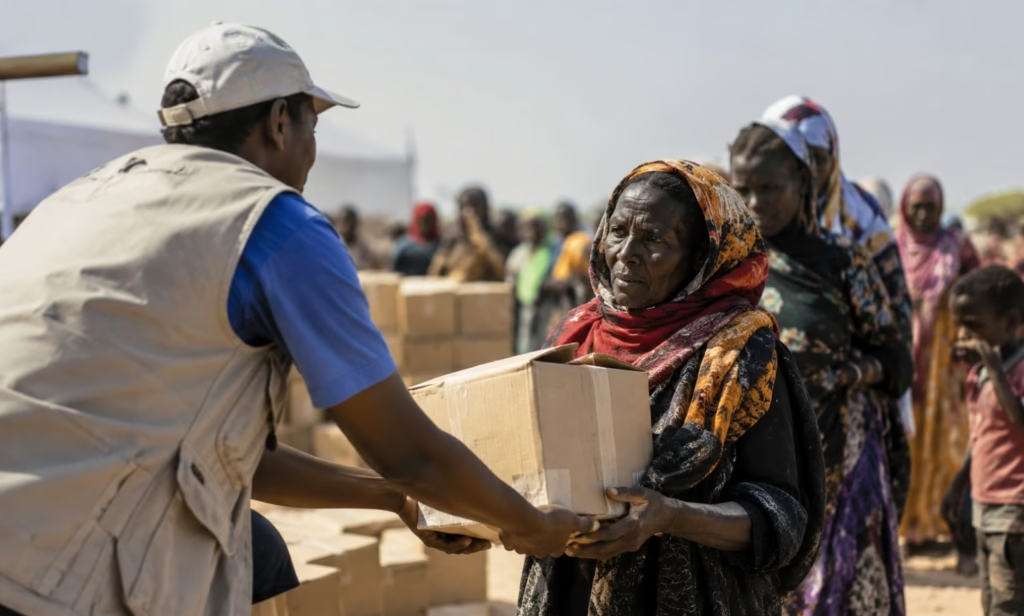
Humanitarian aid can reach people in Sudan through a combination of international organisations, local charities, humanitarian agencies and trusted local partners.
The type of assistance depends on what communities need and what can safely be delivered. Emergency support may include:
- Food and essential household supplies
- Clean drinking water
- Hygiene items
- Medical supplies
- Shelter materials
- Support for displaced families
- Assistance for vulnerable children and households
UNHCR reports that assistance is being provided to refugees and internally displaced people in Sudan, including shelter, healthcare, protection, cash assistance and essential non-food items, where security conditions allow.
This means humanitarian aid is reaching people, but access remains an important part of the picture.
Why Is It Difficult to Deliver Aid in Sudan?
Delivering humanitarian aid in an active conflict zone is very different from delivering assistance in a stable environment.
Aid workers need safe routes, functioning infrastructure and permission to operate. When any of these are disrupted, deliveries can become slower or more difficult.
UNHCR’s 2026 Sudan Situation Appeal identifies several barriers to humanitarian delivery, including ongoing insecurity, road closures, limited transport options, bureaucratic impediments and tighter security measures. Disrupted supply chains and communication problems can create further challenges.
These problems can affect everything from transporting food and water to communicating with communities and monitoring projects.
Conflict and Insecurity
Active fighting can make some areas inaccessible to humanitarian workers.
Aid organisations must consider the safety of staff, local partners and the people receiving assistance. If a particular route or location becomes unsafe, an organisation may need to delay delivery or find another way to reach people.
Damaged Infrastructure
Conflict has damaged or disrupted essential infrastructure in parts of Sudan.
Roads, health facilities, water systems and other services may not function normally. This creates additional logistical challenges for organisations trying to deliver emergency support.
Bureaucratic and Access Restrictions
Humanitarian access can also be affected by administrative requirements and restrictions.
OCHA explains that humanitarian access can be limited by factors including conflict, bureaucratic issues and attacks on humanitarian personnel.
These barriers can affect how quickly assistance reaches people in need.
Who Is Receiving Humanitarian Aid?
Humanitarian assistance is intended for people experiencing serious need as a result of the crisis.
This includes internally displaced families, refugees, children, older people, people with disabilities and other vulnerable households.
Sudan’s displacement crisis is enormous. UNHCR’s regional data recorded more than 11.3 million forcibly displaced people connected to the Sudan situation as of September 2026, including more than 6.4 million internally displaced people within Sudan.
The needs of these communities can vary considerably.
A displaced family may need food and shelter. Another household may urgently need clean water or medical support. This is why humanitarian organisations often need flexibility to adapt their response according to local conditions.
Does Humanitarian Aid Reach People in Remote Areas?
It can, but reaching remote and conflict-affected areas can be particularly challenging.
Some communities are far from major towns and established humanitarian hubs. Others may be cut off by fighting, damaged roads, insecurity or seasonal conditions.
This does not mean that aid cannot reach these areas. It means organisations may need to work through local networks and trusted partners or adjust their delivery methods.
Children of Adam’s Sudan Emergency Appeal states that access is complex and constantly changing. The organisation says it works through trusted partners and local networks, focusing on displaced families and other vulnerable groups while adapting its response as security and access conditions change.
This type of flexible approach can be important in a rapidly changing emergency.
What Kind of Humanitarian Aid Is Needed in Sudan?
The humanitarian response in Sudan covers many basic needs.
Food Aid
Conflict and displacement have disrupted livelihoods, markets and food supplies. Food assistance can help families facing hunger or struggling to afford basic necessities.
Clean Water
Safe drinking water is essential, particularly where water infrastructure has been damaged or communities have been displaced.
The Sudan emergency response can support access to clean drinking water through methods such as water trucking, filtration, or support for local water systems where feasible.
Medical Support
Healthcare facilities and medical services have also been affected by the crisis. Humanitarian organisations may provide medical supplies or support local healthcare services where access allows.
Shelter and Essential Items
Families who have been forced from their homes may need shelter materials, blankets, mats, hygiene supplies and other basic household items.
Humanitarian aid therefore goes far beyond food parcels. It can include the essentials needed to help families survive and maintain a degree of safety and dignity.
How Do Charities Make Sure Aid Reaches People?
There is no single method that works in every humanitarian emergency.
Charities may work with established partners and local organisations that understand the communities, routes and operating conditions.
Monitoring and reporting are also important. Organisations need to understand where assistance is going, what has been delivered and whether changing conditions require a different approach.
Charities may work with trusted partners that have local knowledge and experience. Due diligence and project monitoring can also help organisations understand where assistance is going, what has been delivered and whether changing conditions require a different approach. Where possible, donors may also receive updates and reports about how support is being delivered.
At the same time, humanitarian organisations cannot guarantee access to every location at every moment. Conditions on the ground can change quickly.
What Happens If Aid Cannot Reach a Specific Area?
This is one of the most important issues for donors to understand.
A donation may be intended to help people in a particular crisis, but it may not always be possible to deliver assistance to one specific location.
Children of Adam explains that if access to a particular area becomes impossible for reasons outside its control, donations may be redirected to other urgent projects of a similar nature, such as emergency food, water or medical support, in line with its charity policy.
This type of flexibility allows humanitarian organisations to respond when needs and access conditions change.
How Can You Help Sudan?
If you want to support families affected by the Sudan crisis, donating to an established humanitarian appeal is one way to contribute.
Children of Adam’s Sudan Emergency Appeal supports a range of urgent needs, including food, clean water, hygiene items, shelter and medical assistance through its response and partners.
You can choose to give a one-off donation or support the emergency response through regular giving.
For Muslim donors, eligible beneficiaries in Sudan can receive Zakat in line with the applicable Zakat policy. Sadaqah can also be used to support urgent needs.
If you have questions about your personal Zakat obligations or eligibility, it is best to speak with a qualified scholar.
Support the Sudan Emergency with Children of Adam
The humanitarian crisis in Sudan is not simple, and neither is delivering aid during an ongoing conflict.
Yet humanitarian support is reaching people. Organisations and local partners continue to work in difficult conditions to provide food, clean water, healthcare, shelter and other essential assistance where access allows.
If you want to help families affected by the crisis, you can support the Children of Adam Sudan Emergency Appeal and contribute towards essential humanitarian assistance.
Frequently Asked Questions (FAQs)
Is humanitarian aid reaching Sudan?
Yes. Humanitarian organisations are assisting people affected by the crisis, including internally displaced people and refugees. However, insecurity, damaged infrastructure, road closures and other access restrictions can make delivery difficult in some areas.
Why is it difficult to deliver aid in Sudan?
The ongoing conflict can make roads and communities unsafe to reach. Humanitarian organisations also face bureaucratic restrictions, transportation problems, damaged infrastructure and disrupted supply chains.
What humanitarian aid is needed in Sudan?
Needs include food, clean water, healthcare, shelter, hygiene supplies and other essential support. The priorities can vary between communities depending on their circumstances and access to services.
How does Children of Adam deliver aid in Sudan?
Children of Adam states that it works through trusted partners and local networks. It aims to focus on displaced families and other vulnerable groups while adapting its response as security and access conditions change.
What happens if a charity cannot reach a specific area?
Access can change quickly during a conflict. Children of Adam states that where it cannot deliver aid to a specific area, it may redirect donations to other urgent projects of a similar nature, in accordance with its charity policy.
Can I donate Zakat or Sadaqah to help Sudan?
Children of Adam states that eligible beneficiaries in Sudan can receive Zakat in line with its Zakat policy, while Sadaqah can support urgent humanitarian needs. Donors intending to give Zakat should select the Zakat option when donating.