
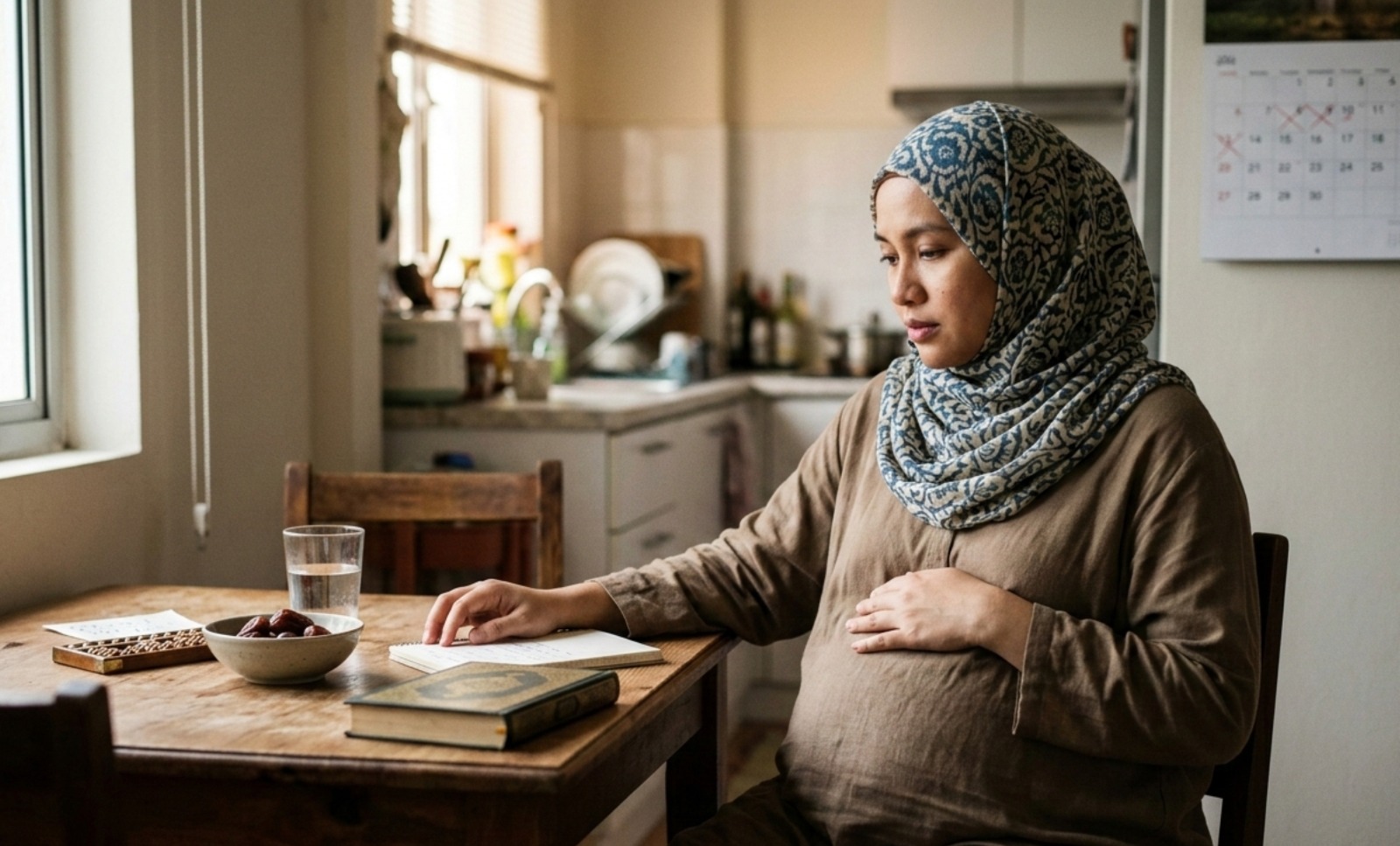
Ramadan is a time of incredible spiritual connection and blessing. But when you are expecting a baby, the joy of the month can also come with a lot of worry and questions. “Should I be fasting?” “Is it safe for my baby?” “If I miss my fasts, what do I do? Do I pay Fidya for pregnancy, or do I have to make them all up later?”
This is one of the most common and important questions expectant mothers ask. You want to fulfil your religious duty, but you also have a duty to protect your own health and the health of your unborn child.
First, let’s be very clear: Islam is a religion of mercy. Allah (SWT) tells us in the Quran, “Allah intends for you ease and does not intend for you hardship” (Quran 2:185).
Pregnancy is a beautiful and challenging journey, and it is absolutely a valid reason to be excused from fasting. You should never feel guilty for putting your health or your baby’s health first.
But what is the correct way to make up for these missed fasts? This clear, simple guide will walk you through the options.
The Core Question: Is Pregnancy a Temporary or Permanent Exemption?
To find the answer, we first need to understand the two different ways Islam allows us to make up for missed fasts.
- Qada (Making Up): This is for temporary exemptions. If you miss a fast for a short-term reason, like a temporary illness (e.g., the flu) or travel, you are simply required to “pay back” those fasts by fasting for the same number of days later. This is a one-for-one replacement.
- Fidya (Compensation): This is for permanent exemptions. If you have a long-term, chronic illness or are of an old age that makes you permanently unable to fast, you are excused. Instead of fasting, you must “compensate” by paying to feed a poor person for each fast you miss.
So, the whole question of Fidya for pregnancy comes down to this: Is pregnancy a temporary condition or a permanent one?
For the vast majority of women, pregnancy and breastfeeding are temporary conditions. The health challenge or concern is for a limited time. This means that, in most cases, the primary and required way to make up for these missed fasts is Qada (making them up).
The Standard Ruling: Making Up Fasts (Qada) is the Default
For most Muslim scholars and for most situations, the answer is simple:
If you miss your Ramadan fasts due to pregnancy or breastfeeding, you must make up these fasts at a later date, whenever you are healthy and able to do so.
You would simply count the number of days you missed (e.g., 30 days) and then, after your baby is born and you have finished breastfeeding and feel strong again, you can fast for 30 days to make them up. These days do not have to be consecutive; you can fast them on any days you choose (like Mondays and Thursdays) over the next year or two.
In this standard scenario, you do not have to pay Fidya. Your “payment” is simply to fast the days you missed, day for day.
When Does Fidya for Pregnancy Even Come Up?
This is where the confusion often starts, as there are different opinions among the Islamic schools of thought. These differences depend on why the mother missed the fast.
- Scenario A: Fear for Her Own Health (or Both)
If a pregnant woman feels that fasting will make her sick, overly weak, or harm her own health (as well as the baby’s), all scholars agree: she breaks her fast and simply makes up the Qada later. No Fidya is due. - Scenario B: Fear Only for the Baby’s Health
What if the mother feels perfectly fine? She’s strong and healthy, but her doctor has told her that fasting might risk the baby’s growth or, if breastfeeding, reduce her milk supply. Here, she is breaking the fast only out of fear for her child.
In this specific situation, some scholars (from the Shafi’i and Hanbali schools) have said that she must do both:
- Make up the fast (Qada) later.
- …AND pay Fidya for each day she missed.
However, the Hanafi view—which is followed by a majority of Muslims in the UK—is simpler. They believe that in all cases of pregnancy and breastfeeding, the mother only has to make up the Qada (missed fasts). She does not need to pay Fidya, regardless of her reason.
What you should do: This is a case where you should follow the opinion of the scholar or school of thought that you trust. For most people, the simplest and most common ruling is that you just make up the fasts later.
The Rare Exception: The “Constant Cycle”
There is one rare situation where Fidya for pregnancy becomes the main solution.
What about a woman who finds herself in a constant, unbroken cycle of pregnancy and breastfeeding for many, many years?
For example, she is pregnant during Ramadan. She then breastfeeds her baby for two years. Immediately after, she becomes pregnant again, missing a second Ramadan. She then breastfeeds that baby. This cycle continues for 8 or 10 years, leaving her with a “debt” of 200 or 300 fasts.
In this situation, it may become a practical impossibility for her to ever make up that huge number of fasts. Her condition has, in effect, become “like” a permanent one.
In this rare case, some scholars may advise her that she can, instead, pay Fidya for all the fasts she has missed and will miss, and she is then relieved of the duty of Qada.
This is a Valid Exemption, Not a Penalty
It is crucial to understand that being unable to fast due to pregnancy is a valid, merciful exemption from Allah. You are not “doing anything wrong.”
This is why you are only discussing Qada or Fidya. This is a valid exemption, completely different from the Kaffarah penalty. Kaffarah is a huge, serious penalty for someone who intentionally breaks a fast with no good reason. Your situation is the complete opposite; you have one of the best reasons, and Allah (SWT) has given you this easy way out.
So, What Should I Do? A Simple 3-Step Plan
If you are pregnant or breastfeeding this Ramadan, here is a simple plan:
- Talk to Your Doctor: First and foremost, speak to your GP or midwife. Ask them, “Is it medically safe for me and my baby to fast?” Your health comes first.
- Assess Your Feelings: If your doctor says it’s safe, you can try. If you feel dizzy, overly weak, or sick, you have a clear, valid reason to break your fast.
- Plan to Make Up the Fasts (Qada): The default, and safest, position for most Muslims is to assume you will make up the fasts later. Count the number of days you miss and make a plan to fast them when you are strong and healthy, even if it takes you the next two years.
Your Final Answer
So, do I pay or make up fasts for pregnancy?
For the vast majority of women, the answer is: You make up the fasts (Qada).
You only need to consider paying Fidya if you follow a school of thought that requires it in addition to Qada (if you feared for the baby only), or if you are in a rare, constant cycle of pregnancy/breastfeeding that makes it impossible for you to ever make up the missed days.
If you are advised that you need to pay, Children of Adam is here to help. Our programme provides a clear guide for expectant mothers on whether to pay Fidya for missed fasts or perform Qada, and we can help you fulfil your Fidya obligation by feeding the poor.
But for now, focus on your health and the health of your baby, knowing that Allah’s mercy is great and He has given you an easy way to fulfil your duty.