Eid al-Fitr marks the end of Ramadan and is a time for gratitude, family gatherings, prayer and celebration. For many children, Eid means wearing special clothes, enjoying favourite foods, spending time with loved ones and receiving a thoughtful gift.
Yet not every family can afford these small celebrations. Parents facing poverty, displacement or financial hardship may struggle to cover everyday essentials, let alone buy presents for their children. Some children may reach Eid without the treats, clothes or gifts that other families take for granted.
An Eid gifts charity appeal offers one way to help. By supporting suitable charitable programmes, donors can help children and families experience more of the happiness and togetherness associated with Eid.
As Eid approaches in 2027, thoughtful giving can turn the spirit of generosity into practical support. The aim is not to make every celebration look the same. It is to help children feel remembered, valued and included.
Why Eid gifts matter to children
A gift does not need to be expensive to make a child feel special. A new toy, a book, clothing or another suitable item can bring excitement and give a child something to look forward to.
For families under financial pressure, even a modest present may be difficult to afford. Parents may need to prioritise food, rent, heating, school supplies and other essentials. Buying Eid gifts can become an expense they simply cannot manage.
Charitable support can help ease some of this pressure. Depending on the programme, donations may fund gifts, clothing, food or other forms of assistance for children and their families.
The value of an Eid gift is not measured only by its price. A suitable gift can help a child feel included in a special occasion and remind them that people beyond their immediate community care about their wellbeing.
What can an Eid gift donation provide?
The most useful support depends on the child’s age, local needs and the way a charity runs its programme. There is no single gift that suits every child, so organisations should consider what recipients can use and enjoy.
Toys, games and creative activities
Age-appropriate toys, puzzles, colouring materials and games can give children something enjoyable to open and use. Creative items may also encourage imagination and shared play with siblings or friends.
When choosing toys, safety matters. Items should suit the child’s age and be appropriate for the local setting. A charity that purchases gifts locally may be better placed to understand which items are suitable and available.
Books and learning materials
Books, drawing supplies and other learning materials can be thoughtful gifts for children. They may support reading, creativity and learning while still offering the excitement of receiving something special for Eid.
The right choice depends on the child’s age, language and interests. A useful gift should be accessible and enjoyable, not simply something that looks appealing to a donor.
Clothing and practical essentials
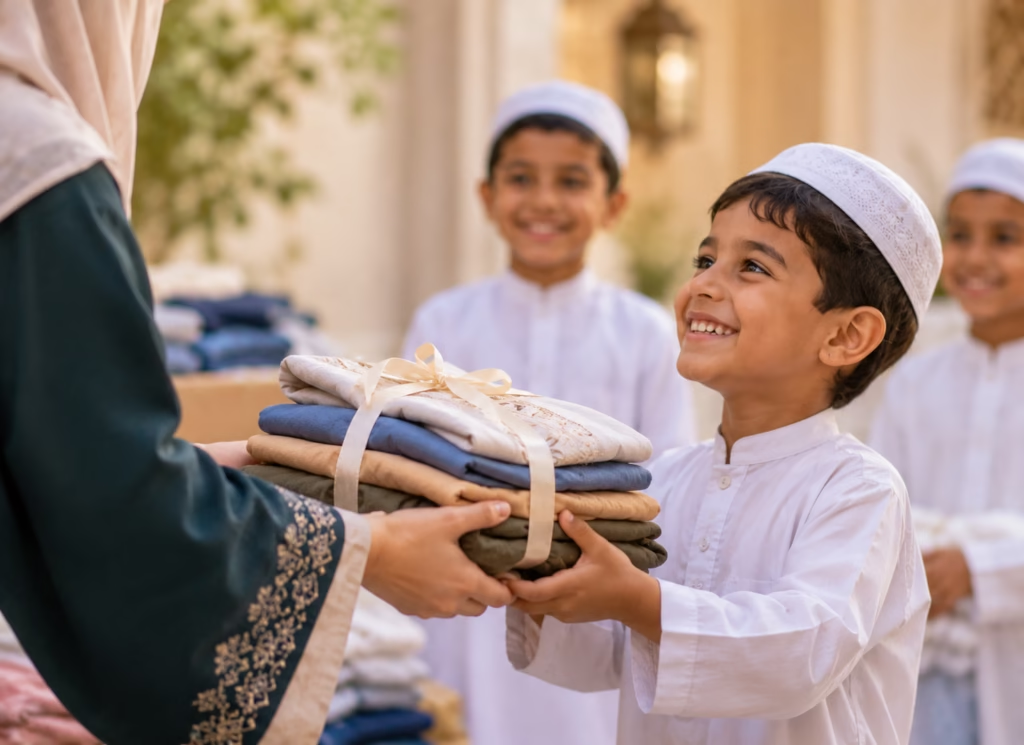
New clothes are part of Eid celebrations for many families. Where a charitable programme provides clothing, it may help parents prepare for the occasion without placing extra pressure on their budget.
Depending on local needs, practical items may also be appropriate. It is important to check what a specific appeal provides rather than assuming every donation funds clothing or toys.
Food and family support
For some households, the most urgent need may be food or other essential supplies rather than a wrapped present. Support with groceries or family necessities can help parents manage the costs of the celebration.
A well-planned Eid appeal recognises that children benefit when their wider household is supported too. A gift can bring immediate happiness, while practical assistance may ease some of the family’s financial stress.
How to choose an Eid gifts charity
If you want to donate for Eid in 2027, take a little time to understand the charity and the programme you are supporting.
- Check what the appeal provides. Some appeals focus on gifts for children, while others support families with food, clothing or wider assistance. Read the description carefully so you know what your donation is intended to fund.
- Look for clear information. A trustworthy charity should explain the purpose of its appeal and provide information about how donations are used. Look for updates or reporting where available.
- Consider local needs. Children’s ages, cultural preferences and practical circumstances vary. A suitable programme should consider these differences rather than treating every household as identical.
- Check the timing. Eid gifts are most useful when they arrive in time for the celebration. If timing is important to you, check the charity’s distribution plans and donation deadlines.
- Give within your means. You do not need to make a large donation to take part in charitable giving. A contribution that fits your budget can support a wider appeal, depending on the programme’s arrangements.
- Understand the type of donation. If you intend to give Zakat, check that the programme and recipients meet the relevant religious requirements. Do not assume that every gift or children’s project automatically qualifies as Zakat. Voluntary charity may be more appropriate for some appeals.
Eid gifts charity: ways to make your donation count
There are several ways to help children enjoy Eid without putting pressure on your own household budget.
Donate to a dedicated Eid appeal
A dedicated appeal may allow a charity to organise gifts or other support for children before Eid. Check what the appeal promises and whether donations are used for the stated purpose.
Contribute towards a shared donation
If you cannot fund a whole gift or family package, you may still be able to contribute to a shared appeal. Several smaller donations can help an organisation organise support, depending on how its fundraising programme works.
Give early
Leaving donations until the final days before Eid may limit the time available for purchasing, packing and distributing gifts. Giving early can help charities plan their work, particularly when they support families across several locations.
Encourage family and friends to take part
You could invite relatives or friends to contribute to a charitable appeal instead of exchanging additional presents among yourselves. Some families also choose to involve children in age-appropriate conversations about generosity and helping others.
This can make giving part of the Eid experience while helping children understand why kindness matters.
Check how the programme reports its work
After donating, look for updates about the appeal. Information about the locations served, the kind of support provided and the programme’s progress can help you understand the work your donation supports.
Charities may have different ways of reporting their activities, and not every programme can provide individual updates for each donor. The important thing is to look for clear, credible information.
Helping children feel included at Eid
Children experience celebrations in different ways. Some may be excited about presents, while others may value a family meal, new clothes or time with people they love.
When supporting an Eid gifts appeal, it helps to focus on dignity and inclusion rather than comparison. Children should not be made to feel that they are receiving charity because they are less deserving than others. Support should be offered respectfully and with attention to their needs.
Charities can help by working with local communities, selecting suitable items and organising distribution in a considerate way. Donors can help by choosing organisations that explain their work clearly and respect the people they support.
The purpose of Eid giving is not simply to hand over a present. It is to share kindness and help more children take part in a meaningful occasion.
Help share the happiness of Eid in 2027
Eid is a time to celebrate, give thanks and remember others. A thoughtful donation can help a child receive a suitable gift or help a family manage some of the costs associated with the celebration.
Frequently asked questions
What is an Eid gifts charity?
An Eid gifts charity is a charitable organisation or appeal that helps provide gifts or related support for people in need during Eid. Programmes vary, so check whether the appeal provides presents, clothing, food or other assistance.
How can I donate Eid gifts for children in need in 2027?
You can look for a charity running an Eid appeal, review what it provides and follow its donation instructions. If you want to give physical items, check whether the organisation accepts them. Some appeals may accept monetary donations instead.
What are suitable Eid gifts for children?
Suitable gifts depend on age, interests and local needs. Toys, books, creative materials and clothing may be appropriate options. The best choice is something safe, useful and suitable for the child receiving it.
Can I donate to an Eid gifts charity in the UK?
Yes, you can look for UK charities that organise Eid appeals locally or provide support internationally. Check where the programme operates, how donations are used and when support is expected to reach recipients.
Is an Eid gift donation the same as Zakat?
Not automatically. Zakat has specific rules about eligible recipients and how funds may be used. A general gift appeal may be better suited to voluntary charity. Confirm eligibility with a qualified scholar and the charity before making a donation as Zakat.
When should I donate for Eid?
Giving early is often helpful because charities need time to organise purchases and distribution. Check the appeal’s deadline if you want your contribution to support a particular Eid programme.
Can a small Eid donation make a difference?
A smaller donation can contribute to a wider charitable appeal, depending on the programme. If you cannot fund an entire gift, check whether the charity accepts contributions towards a shared fund.
Are Eid gifts only for orphans?
No. Charitable Eid programmes may support children and families facing different forms of hardship. The people eligible for support depend on the particular appeal and its criteria.