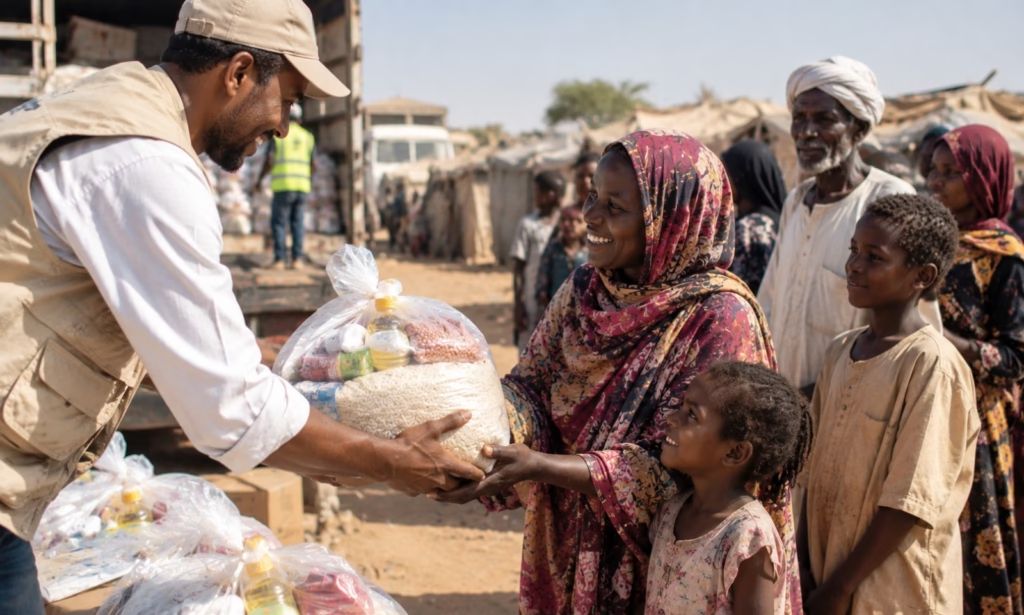

We all want our children to be successful, happy, and healthy. But if you ask most parents what matters most, the answer is usually simpler: we want them to be kind.
In a world that often encourages us to accumulate more—more toys, more gadgets, more “stuff”—teaching children the value of letting go can be a challenge. Empathy isn’t a skill that children are born with; it is a muscle that needs to be exercised.
Raising empathetic kids who understand that the world is bigger than their own living room requires practice, patience, and a little bit of creativity. It’s not just about telling them to “share”; it’s about showing them the joy that comes from lifting others up.
Here are five fun, practical, and hands-on ways to start teaching children generosity right at home.
1. The “One In, One Out” Rule
Children naturally form attachments to their possessions. The “mine!” phase is a normal part of development, but it’s also the perfect opportunity to introduce the concept of passing things on.
Establish a “One In, One Out” rule for toys and clothes. Before a birthday, Eid, or a holiday where they might receive new gifts, ask your child to go through their toy box. For every new toy they hope to get, they should choose one gently used toy to give away to a child who might not have any.
Why it works: This moves the focus away from simply accumulating more things. It teaches the importance of giving for children by helping them understand that their “old” items can be someone else’s “new” treasure. Take them with you to the charity shop or donation drop-off so they can see the full cycle of giving.
2. The “Kindness Jar”
Generosity isn’t just about big donations; it’s about small, consistent habits. A “Kindness Jar” or a “Sadaqah Jar” is a brilliant visual tool for younger children.
Get a clear glass jar and let your children decorate it. Every time they receive pocket money or a cash gift, encourage them to put a small portion (even just 10p or 50p) into the jar.
Why it works: Visualizing the money growing makes the abstract concept of charity real. Once the jar is full, sit down as a family and decide where the money should go. Let them choose the cause—whether it’s feeding a hungry person or helping an animal shelter. This empowers them and gives them ownership over their generosity.
3. Kitchen Philanthropy: Baking for Neighbours
Charity doesn’t always require a wallet. Sometimes, the most valuable thing we can give is our time and effort.
Spend a Saturday afternoon baking cookies, cakes, or a savoury dish with your children. Once it’s ready, package it up and have your children deliver it to an elderly neighbour, a local fire station, or a family friend who has been unwell.
Why it works: This teaches children that generosity is an action. It requires effort. The smile on the neighbour’s face when they receive the food provides immediate positive reinforcement, showing your child that their actions can brighten someone else’s day.
4. Hands-On Family Volunteering
Children learn best by doing. While writing a cheque is helpful, it can be hard for a child to understand what that money actually does.
Look for family volunteering ideas in your local area. This could be:
- Spending a morning picking up litter in the local park.
- Helping to pack boxes at a food bank.
- Visiting a care home to chat with the residents.
Why it works: These charity activities for families expose children to realities outside their own bubble. It sparks conversations about why some people need help and how we can be part of the solution. It shifts their perspective from “what do I want?” to “how can I help?”
5. The “Secret Gift” Mission
One of the most beautiful ways to teach empathy is to ask your child to imagine life in someone else’s shoes.
Sit down with your child and tell them about children in other parts of the world—children who perhaps don’t have parents, or whose families can’t afford to buy them presents for special occasions like Eid.
Turn it into a mission: ask your child to help you pick a gift for one of these children.
You can browse charity appeals together. Show them that a small amount of money can buy a whole gift pack containing clothes, sweets, and toys for an orphan. Ask your child, “If you were that boy or girl, what would make you smile?”
Why it works: This connects your child directly to another child. It’s not just an abstract donation; it’s a gift from one friend to another. You can donate an Eid gift online together, letting your child click the button to send the gift.
Building a Legacy of Kindness
Teaching children generosity is a long-term project. There will be days when they don’t want to share, and that’s okay. The goal is to weave these moments of empathy into their daily lives until kindness becomes their second nature.
By involving them in the process—whether it’s through a jar of coins, a tray of cookies, or choosing a gift for an orphan—you are raising children who don’t just live in the world, but who actively work to make it better.