Ramadan is a month when many Muslims think about giving. If you are asking who can receive Zakat, you are in good company. Zakat is not an ordinary gift. It is a duty, and the Quran explains clearly where it should go.
This guide explains the eight groups named in the Quran who cannot receive Zakat, and how to give with confidence. We have kept things simple. If your own situation is complicated, please speak to a qualified scholar.
Why Many Muslims Pay Zakat During Ramadan
Zakat is one of the five pillars of Islam. It becomes due when your wealth stays above the nisab, the minimum amount, for one full lunar year. This means you do not have to pay in Ramadan. Your Zakat date could fall in any month.
Even so, many Muslims choose to pay Zakat during Ramadan. It is a time of extra prayer, fasting and kindness, so families often review their wealth and give. Paying early in the month also helps people in need prepare before Eid.
Who Can Receive Zakat? The Eight Categories From the Quran
Surah At-Tawbah (9:60) names eight groups of Zakat recipients. Here they are in plain language.
1. The Poor (Fuqara)
These are people with very little money, or none at all. They struggle to afford food, clothing and shelter.
2. The Needy (Masakin)
The needy may have some income, but it does not cover their basic needs. A parent in low-paid work who still cannot feed the family is one example.
3. Zakat Collectors
Some people are appointed to collect and share out Zakat. Scholars have different views on how this applies to modern charities, so it is fair to ask how a charity covers its costs.
4. Those Whose Hearts Are Being Reconciled
This group includes new Muslims who may need support. It can also include cases where kindness helps build trust and unity.
5. Freeing People From Bondage
In early times, Zakat helped to free enslaved people. Some scholars today link this to helping those trapped in unjust bondage or forced labour.
6. People in Debt
Zakat can help people who owe lawful debts they cannot repay, such as unpaid medical bills or rent after losing a job.
7. In the Way of Allah (Fi Sabilillah)
Scholars explain this category in different ways. Because opinions vary, please ask a qualified scholar before using Zakat here.
8. The Stranded Traveller (Ibn al-Sabil)
A traveller cut off from their money can receive Zakat, even if they are well off at home. Some scholars also include refugees and displaced families.
These eight groups explain who can receive Zakat. If someone does not fit one of them, Sadaqah is the better way to help, because it is open to everyone.
Who Cannot Receive Zakat?
Zakat eligibility has limits too. In general, you cannot give your Zakat to:
- people who are well off and do not fit any of the eight groups
- your parents and grandparents
- your children and grandchildren
- your husband or wife, according to most scholars
- the family of the Prophet ﷺ (Banu Hashim), according to many scholars
You are already responsible for supporting your parents, children and spouse. Zakat is not meant to replace that duty.
Can You Give Zakat to Relatives?
Often, yes. If a brother, sister, aunt or cousin is poor and you are not responsible for supporting them, they may qualify. Many scholars say this is especially rewarding, because you are giving charity and keeping family ties at the same time. Be honest about their need, and never use Zakat to gain praise or repay a favour.
How Zakat Reaches the Right People Through a Charity
Not everyone knows people in need nearby, and getting it right alone can be hard. This is why many Muslims give through a Zakat charity UK that follows clear rules.
What to Look for in a Trusted Zakat Charity UK
A trusted Zakat charity UK should be happy to answer these questions:
- Is it registered? Check the charity number on the Charity Commission register.
- Is it open about fundraising? Membership of the Fundraising Regulator is a good sign.
- Does it have a clear Zakat policy that keeps Zakat apart from other funds?
- Does it take advice from trusted scholars?
- Does it share updates on where donations go?
Giving in the UK or Overseas
Zakat recipients can live near you or far away. Many donors give overseas because need is often greater in places hit by conflict, floods or hunger, and their money can go further. Others split their Zakat between the two. Both can be valid if the person fits one of the eight groups, though some scholars prefer local needs first. Ask for advice if you are unsure.
A Simple Way to Give Your Zakat This Ramadan
- Work out what you owe. Add up your savings, gold, silver, investments and business stock, then take away debts that are due. If the total is above the nisab, Zakat is usually 2.5 per cent.
- Choose who it is for. Check that they fit one of the eight groups, or pick a charity that checks for you.
- Give and keep a record. Note the date and amount, so next year is easier.
Give Your Zakat With Confidence
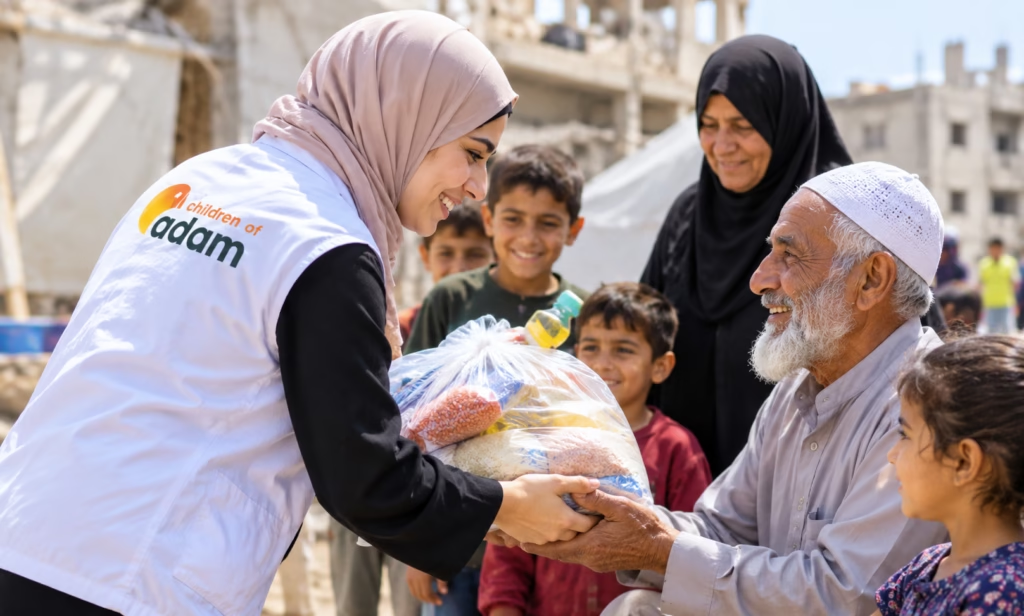
If you are ready to give, you do not have to work it all out alone. Children of Adam is a UK-registered charity (number 1153244) that follows a 100% donation policy for Zakat, Sadaqah and Lillah. It works with trusted local and national scholars (Ulema) to help make sure Zakat is handled correctly. Your Zakat can help families in places such as Gaza, Nepal, Sudan and Pakistan with food, clean water, medical aid and shelter.
You can donate online, call 0300 321 0032, or get in touch with any questions about your Zakat. Whatever you give this Ramadan, may Allah accept it from you.
Frequently Asked Questions
Who can receive Zakat in the UK?
The same eight groups apply everywhere. In the UK, this can include low-income families, people in debt and those with little or no income. Many Muslims also send Zakat abroad. If you are unsure, ask a scholar.
Do I have to pay Zakat in Ramadan?
No. You pay when your Zakat year is complete. Many people choose Ramadan because it is a month of extra giving and reflection.
Can I give Zakat to my parents or children?
No, not if you are responsible for supporting them. The rules differ for poor relatives you do not support, such as siblings.
Can Zakat be used to build a mosque or school?
Many scholars say Zakat should reach eligible people directly, so building projects are usually funded from Sadaqah. Ask a qualified scholar about your case.
How can I tell if a charity handles Zakat properly?
Look for a registered charity number, a clear Zakat policy, scholar guidance and regular updates on how money is spent.