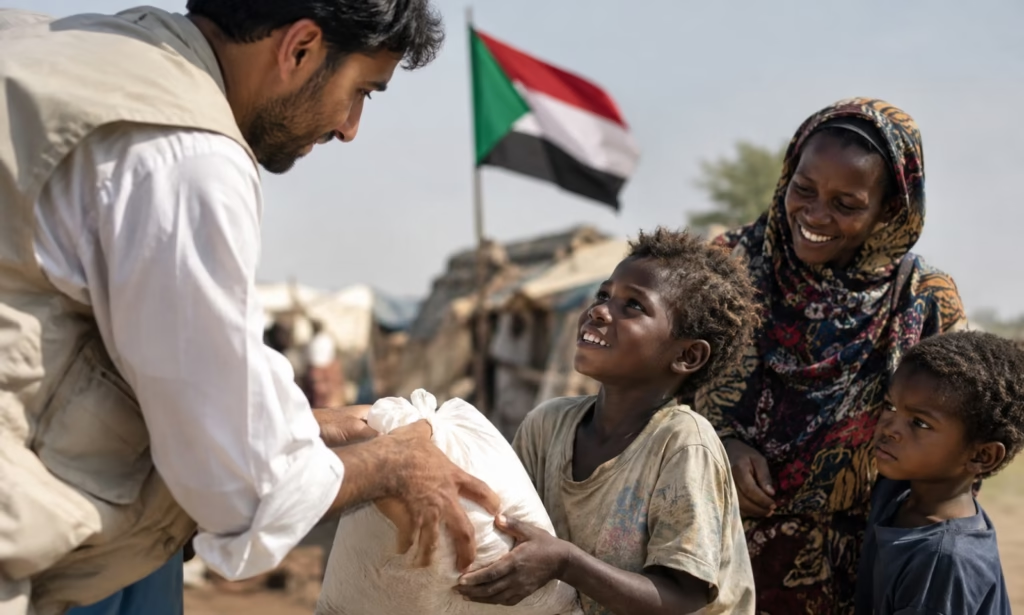
Yes, you can give Zakat to eligible people affected by the crisis in Sudan. Islamic teachings specify categories of people who may receive Zakat, including those who are poor, needy, in debt or otherwise fall within the categories outlined in the Qur’an.
Sudan has experienced a prolonged humanitarian crisis, with conflict, displacement and disruption to essential services leaving many people in need of assistance. For Muslims who are looking for ways to fulfil their Zakat obligation while supporting people affected by the crisis, donating through an established charity can be one way to help eligible beneficiaries.
However, Zakat should be given only to recipients and for purposes that meet the relevant Islamic requirements.
Can Zakat be given to people in Sudan?
Yes, Zakat may be given to people in Sudan when the intended beneficiaries are eligible to receive Zakat.
The Qur’an identifies eight categories of Zakat recipients in Surah At-Tawbah (9:60), including the poor, the needy, those in debt and travellers in need. The National Zakat Foundation explains these categories and notes that people experiencing emergencies may fall within the categories of the poor or needy, depending on their circumstances.
This means the fact that someone lives in Sudan does not automatically make them eligible for Zakat. Rather, their circumstances and whether they meet one of the recognised categories need to be considered.
For humanitarian appeals, this distinction is important. A charity collecting Zakat should have an appropriate process for identifying or assessing eligible recipients.
Why is Zakat relevant to the Sudan crisis?
The conflict in Sudan has caused widespread displacement and severe humanitarian needs. People affected by the crisis may require food, clean water, healthcare, shelter and other forms of assistance.
For Muslims, Zakat provides a religiously defined way of supporting people who meet the conditions for receiving it.
Rather than treating every humanitarian expense as automatically eligible for Zakat, donors should check how a charity identifies Zakat beneficiaries and how it separates Zakat funds from other charitable donations.
Who can receive Zakat?
The Qur’an identifies eight categories of Zakat recipients.
These include:
- The poor (Al-Fuqara)
- The needy (Al-Masakin)
- Those appointed to administer Zakat
- Those whose hearts are to be reconciled
- Those in bondage
- Those in debt (Al-Gharimin)
- For the cause of Allah (Fi-Sabilillah)
- The stranded traveller (Ibn as-Sabil)
The precise interpretation and application of some categories can differ between Islamic scholars and schools of jurisprudence. The National Zakat Foundation also notes differences among Muslim jurists concerning the interpretation of certain categories.
For this reason, if you have a specific question about whether your Zakat can be used for a particular type of Sudan aid, it is sensible to ask the charity about its Zakat policy or seek guidance from a qualified Islamic scholar.
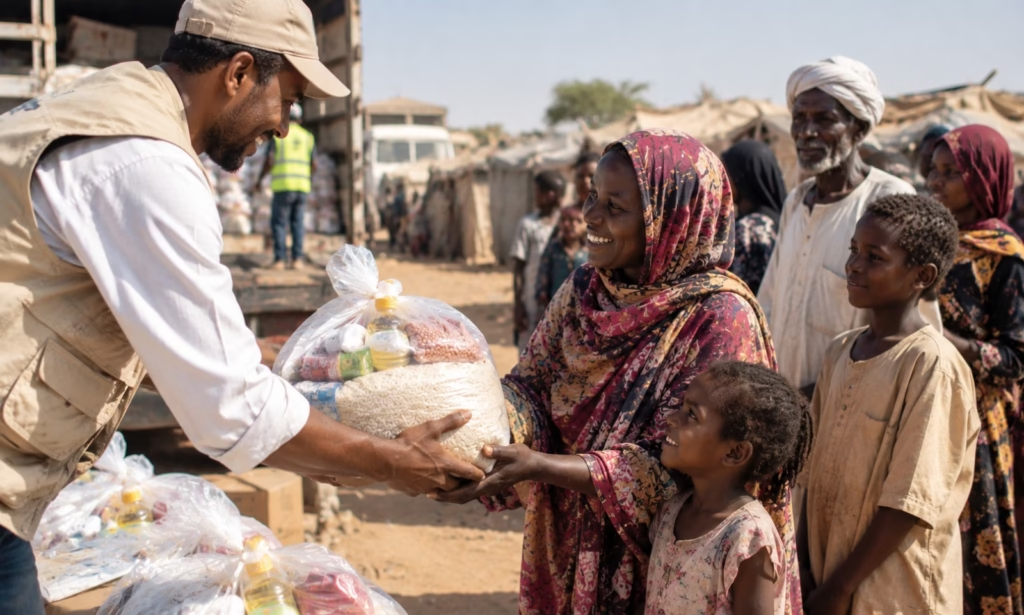
Can Zakat pay for food for families in Sudan?
Zakat may be used to support eligible people who are poor or needy, including people who lack sufficient resources to meet their basic needs.
Food assistance can therefore be relevant when it is provided to people who qualify as Zakat recipients.
However, the important point is who receives the benefit and how the distribution is structured, rather than simply whether the donation purchases food.
When choosing a Zakat appeal, look for information explaining how beneficiaries are identified and how Zakat funds are distributed.
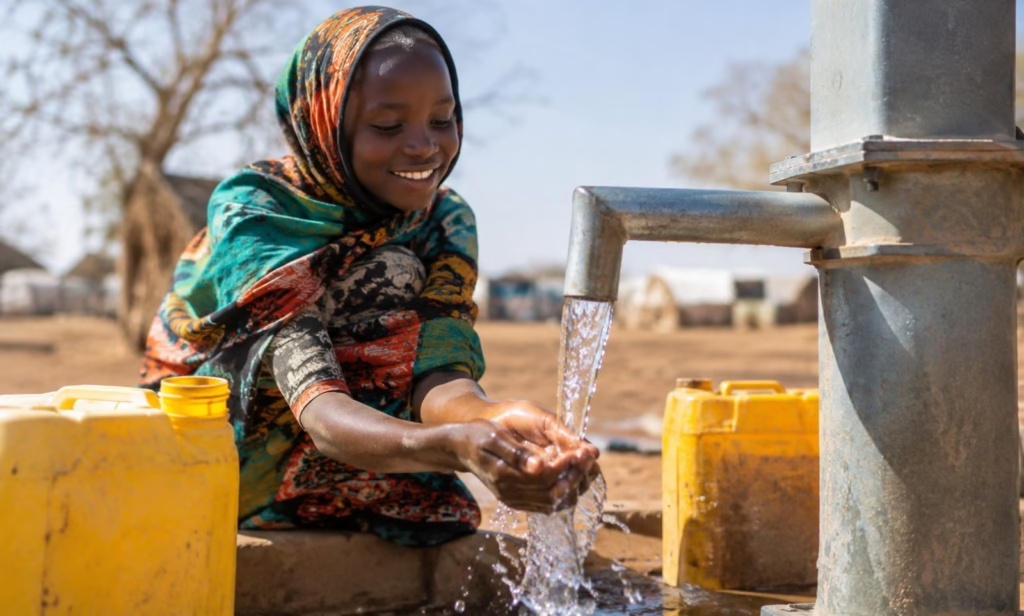
Can I give Zakat for clean water in Sudan?
Clean water is an urgent humanitarian need in many crisis-affected communities. Whether a particular water project can be funded with Zakat depends on how the project is structured, who owns or receives the benefit, and the relevant Islamic ruling.
This is an area where different scholars and organisations may apply Zakat principles differently.
If you specifically want your Zakat to fund a water project, ask the charity whether that particular project is Zakat eligible. If it is not, you may still be able to support water and other essential needs in Sudan through Sadaqah. Learn more about giving Sadaqah to Sudan and the different ways charitable donations can support people affected by the crisis.
Can Zakat be used for medical help in Sudan?
Medical assistance can be particularly important for people affected by conflict, displacement and limited access to healthcare.
Whether Zakat can fund a particular medical programme depends on the eligibility of the beneficiaries and the way the assistance is provided.
For example, if Zakat is being given to an eligible poor or needy person to meet an essential need, the circumstances may differ from a general donation towards the operating costs of a medical facility.
If you want your donation to be specifically used for medical assistance, check the charity’s Zakat policy before donating.
Can I give Zakat to displaced people from Sudan?
Displacement by itself does not automatically determine Zakat eligibility.
A displaced person may be eligible for Zakat if they fall within one of the recognised categories of recipients—for example, because they are poor, needy, in debt or qualify under another applicable category.
This means charities should consider the financial circumstances and eligibility of beneficiaries rather than assuming that every displaced person automatically qualifies.
For donors, it is useful to choose an organisation that can explain how it identifies eligible Zakat recipients.
Is it better to give Zakat or Sadaqah to Sudan?
Zakat and Sadaqah are different forms of Islamic giving.
Zakat is an obligatory act of worship for Muslims who meet the relevant conditions, and it must be distributed according to Islamic rules.
Sadaqah is voluntary charitable giving and generally provides greater flexibility in how it can be used.
If you are paying your obligatory Zakat, make sure the donation is directed towards an eligible Zakat programme.
If you want to support needs that may not qualify for Zakat, such as certain general operational or infrastructure costs, Sadaqah may be more appropriate depending on the specific programme.
Some charities therefore provide separate options for Zakat and Sadaqah.
How do I donate Zakat to Sudan?
If you want to donate Zakat to Sudan, start by choosing a charity with an established Sudan appeal and clear information about its Zakat policy.
Before donating, check:
- Whether the Sudan appeal accepts Zakat
- How Zakat-eligible beneficiaries are identified
- How Zakat funds are separated from other donations
- What types of assistance Zakat can support
- Whether the charity provides information about its Zakat policy
- How the charity reports on its humanitarian work
You can then calculate the amount of Zakat you owe and donate that amount through the charity’s designated Zakat channel.
If you are uncertain about your calculation or whether a particular type of aid is Zakat eligible, seek advice from a qualified scholar.
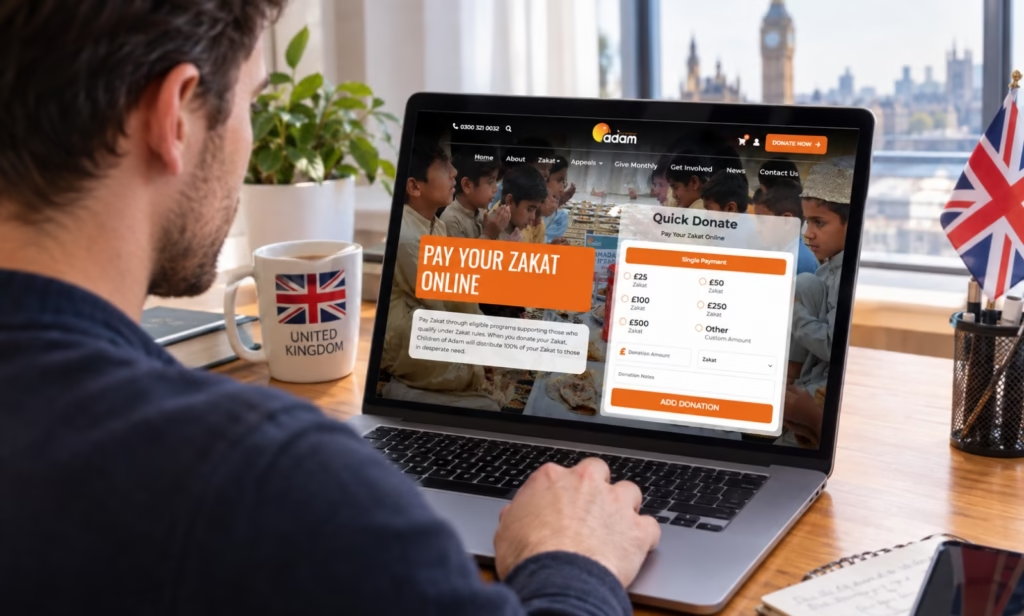
Can I give my Zakat to Sudan through Children of Adam?
Children of Adam provides a Sudan Emergency Appeal for people who want to support humanitarian assistance in Sudan.
The organisation also provides Zakat donation options as part of its Islamic charitable giving. If you want to give Zakat specifically towards Sudan, check the current appeal and donation options to ensure you select the appropriate giving category.
You can visit the Children of Adam Sudan Emergency Appeal to see the current options.
If you have a question about whether a particular Sudan project is suitable for Zakat, it is best to confirm this with Children of Adam before making your donation.
How much Zakat should I give to Sudan?
The amount of Zakat you should pay depends on your own financial circumstances and the assets that are subject to Zakat.
For many forms of wealth, Zakat is commonly calculated at 2.5% of the relevant Zakatable wealth, provided the applicable conditions and Nisab threshold are met. The exact calculation can depend on the type of assets you own and the method of calculation you follow.
For example, if your relevant Zakatable wealth after applicable deductions is £10,000, 2.5% would be £250.
This is only an illustration, not a calculation of your personal Zakat liability.
If your finances include investments, business assets, pensions, property or other complex assets, consider using a reliable Zakat calculator or asking a qualified scholar for guidance.
Can I give Zakat to Sudan during Ramadan?
Yes. Muslims may choose to pay their Zakat during Ramadan, and many people use the month as a time to increase their charitable giving.
However, Zakat does not automatically become due simply because Ramadan begins. The timing of your Zakat depends on your circumstances and the rules you follow regarding your Zakatable wealth and Zakat anniversary.
You can also give Sadaqah during Ramadan and throughout the year.
If your Zakat is already due, you do not need to wait until Ramadan to fulfil the obligation.
What should I look for in a Zakat charity?
When choosing a charity for Zakat, look for transparency about how the organisation collects, manages, and distributes Zakat.
Useful questions include:
- Is the organisation registered?
- Does it clearly explain its Zakat policy?
- Does it identify eligible beneficiaries?
- Does it distinguish Zakat from other donations?
- Does it provide information about its programmes?
- Does it provide financial or impact reporting?
- Can it answer questions about the religious eligibility of its appeals?
A clear Zakat policy can help donors understand how their contributions are being handled.
Give Zakat to eligible people affected by the Sudan crisis
If you want to use your Zakat to support people affected by the Sudan crisis, make sure the beneficiaries and programme meet the relevant Islamic requirements.
Humanitarian needs in Sudan are extensive, but not every form of humanitarian expenditure is automatically a valid use of Zakat. Understanding the distinction between Zakat and voluntary Sadaqah can help you make an informed decision about your giving.
Frequently Asked Questions (FAQs)
Can I give Zakat to Sudan?
Yes, Zakat can be given to eligible people in Sudan who fall within the categories of Zakat recipients identified in Islamic teachings. Their location alone does not determine eligibility; their circumstances and the way the donation is distributed are important.
Can Zakat be used to help Sudanese refugees and displaced people?
Potentially, yes. Displaced people may qualify for Zakat if they meet one of the recognised categories, such as being poor or needy. Displacement itself does not automatically make someone eligible for Zakat.
Can I give Zakat for food in Sudan?
Zakat may support food assistance provided to people who are eligible to receive Zakat. Check that the charity’s food programme is specifically set up to receive and distribute Zakat.
Can I give Zakat for water projects in Sudan?
It depends on the structure of the water project and the Islamic ruling being followed. Ask the charity whether its specific Sudan water programme is Zakat eligible. If it is not, Sadaqah may be an alternative.
Can I give Zakat for medical treatment in Sudan?
Potentially, where medical assistance is provided to eligible Zakat recipients. However, not every medical project or healthcare expense is automatically eligible, so check the charity’s Zakat policy before donating.
Is Zakat better than Sadaqah for helping Sudan?
They serve different purposes. Zakat is obligatory for Muslims who meet the relevant conditions and has specific distribution requirements, while Sadaqah is voluntary and generally more flexible. If you owe Zakat, ensure it is given through an eligible Zakat programme.
Where can I give Zakat to Sudan from the UK?
You can give Zakat through a UK charity that has an appropriate Sudan appeal and clearly explains its Zakat distribution process. Children of Adam provides a Sudan Emergency Appeal and options for Islamic charitable giving. Check the current appeal information before donating to ensure your chosen donation category is appropriate.