
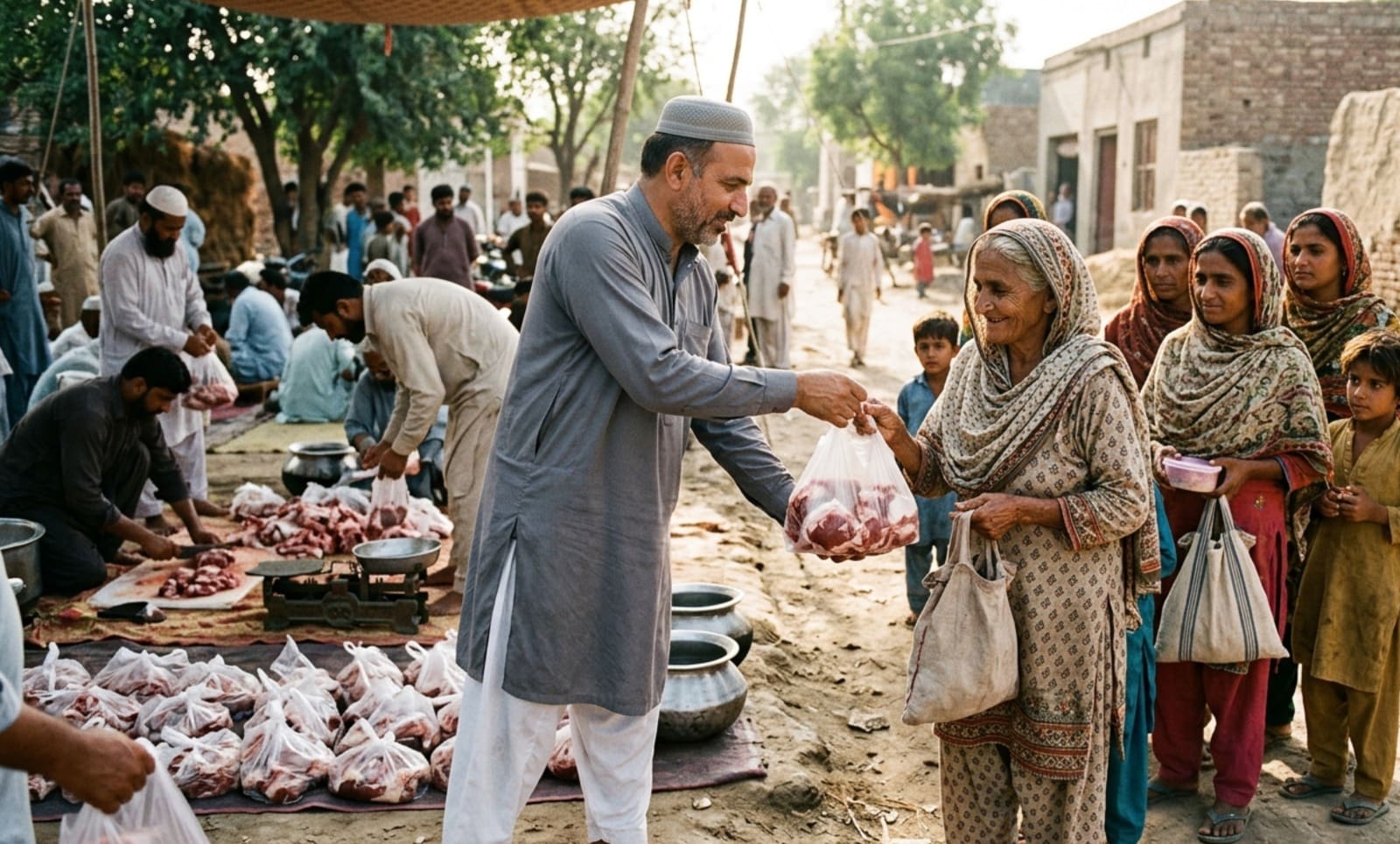
The act of Qurbani, or Udhiyah, is one of the most sacred traditions in the Islamic faith. It commemorates the unwavering devotion of Prophet Ibrahim (AS) and his willingness to sacrifice his son for the sake of Allah (SWT). However, every year as the month of Dhul Hijjah approaches, many Muslims find themselves asking a fundamental question: is qurbani compulsory for me?
Understanding the qurbani obligation is essential for every Muslim household. Whether you are a student, a working professional, or a head of a family, knowing whether the sacrifice is a mandatory requirement or a voluntary act helps you prepare spiritually and financially. In this comprehensive guide, we will break down the rules of Fiqh to clarify is qurbani mandatory in islam and who exactly needs to fulfill this duty.
1. Is Qurbani Mandatory in Islam? The Scholarly Perspectives
When determining is qurbani compulsory, it is important to look at the different schools of Islamic jurisprudence (Madhahib). While all scholars agree that the act is highly virtuous, they differ slightly on its legal status.
The Hanafi School: Is Qurbani Wajib?
According to the Hanafi school of thought, Qurbani is considered Wajib (obligatory). This means it is a mandatory duty for every Muslim who meets the specific criteria of age, sanity, and wealth. The evidence used for this is the hadith where the Prophet (PBUH) said: “He who has the means but does not offer a sacrifice, let him not approach our place of prayer.” (Ibn Majah). For followers of this school, the answer to is qurbani farz or wajib is a definitive yes for those with the means.
The Shafi’i, Maliki, and Hanbali Schools
In these three schools of thought, Qurbani is generally classified as Sunnah Mu’akkadah (an emphasized Sunnah). While it is not strictly “mandatory” in the sense that skipping it would be a sin, it is strongly encouraged. The Prophet (PBUH) never missed his sacrifice, and scholars emphasize that skipping such a powerful prophetic tradition without a valid excuse is a missed opportunity for immense reward.
2. Who Has to Give Qurbani? The Wealth Threshold (Nisab)
To determine who needs to give qurbani, we must look at the financial status of the individual. The obligation of sacrifice is linked to the concept of Nisab.
Unlike Zakat, which requires you to hold a specific amount of wealth for an entire lunar year, the qurbani obligation is determined by your wealth during the three days of Eid ul Adha (10th, 11th, and 12th of Dhul Hijjah).
How is Nisab Calculated for Qurbani?
If a person possesses wealth equal to or greater than the value of 612.36 grams of silver or 87.48 grams of gold, they are considered to have met the threshold. This wealth includes:
- Cash in hand or in bank accounts.
- Gold and silver jewelry.
- Business assets and stocks.
- Surplus property or items beyond one’s basic personal needs (such as a second car or a second home not used for living).
If your net assets exceed this value during the days of Eid, then who should give qurbani becomes clear: you are religiously obligated to perform the sacrifice.
3. Eligibility Criteria: Who is Qurbani Wajib On?
Financial standing is not the only factor. There are several other conditions that must be met to determine who has to give qurbani:
- Muslim: The individual must be a follower of Islam.
- Adult (Bulugh): One must have reached the age of puberty. At what age is qurbani farz? Generally, once a child reaches adulthood in Islam, they are responsible for their own obligations.
- Sanity: The person must be of sound mind.
- Resident (Muqeem): In the Hanafi school, a traveler (someone traveling a certain distance for a certain duration) is exempt from the obligation of Qurbani, though they may still choose to perform it for the reward.
4. Household Rules: Who Should Give Qurbani in a Family?
A common area of confusion is whether one sacrifice covers an entire household. The answer depends on your financial arrangement.
Individual Responsibility
In the Hanafi school, the qurbani obligation is individual. This means if both a husband and wife have wealth that exceeds the Nisab, they must both provide a share. For example, a wife who owns enough gold to meet the Nisab threshold is responsible for her own Qurbani, even if her husband is also performing his.
The Family Share
In other schools of thought, a single animal (like a goat) or one share in a large animal (like a cow) can be performed by the head of the house on behalf of the entire family. At Children of Adam, we offer a “Shares” system that makes it easy for every eligible member of your family to fulfill their individual duty or for a family to pool their resources for a larger animal.
5. What Happens if You Miss the Sacrifice?
If someone was eligible but failed to perform the sacrifice during the days of Eid, the obligation does not simply disappear. In Islamic law, this is known as Qaza.
If the days of Eid pass and you did not perform your Qurbani, you are required to give the equivalent value of a Qurbani animal as charity (Sadaqah) to the poor. This does not carry the same reward as the actual sacrifice, but it fulfills the financial obligation you owed to the needy. This highlights why tracking the dates and ensuring you have made your qurbani donation in time is so vital.
7. Why Fulfilling Your Obligation Matters
Beyond the technicalities of is qurbani wajib, the act is a profound expression of gratitude. Allah (SWT) says in the Quran: “It is neither their meat nor their blood that reaches Allah, but it is your piety that reaches Him.” (22:37).
When you fulfill your qurbani obligation through Children of Adam, you are turning a mandatory duty into a lifeline for others. We facilitate sacrifices in regions where poverty is extreme, ensuring that your “Wajib” act provides high-quality nutrition to orphans, widows, and refugees in Palestine, Yemen, Pakistan, Kenya, and Nepal.
8. Conclusion: Be Prepared for the Days of Sacrifice
Knowing who should give qurbani is the first step toward a successful Eid. If you meet the criteria of wealth and status, then performing the sacrifice is your opportunity to show obedience to Allah and compassion for the “Children of Adam” across the globe.
Don’t wait until the last minute to determine if you are eligible. Review your assets, set your intention, and ensure that your sacrifice is performed in a way that is both Shariah-compliant and impactful.
Are you ready to fulfill your obligation? Secure your Qurbani share with Children of Adam today and ensure your sacrifice reaches those who need it most.
Frequently Asked Questions (FAQs)
Is Qurbani mandatory for a student?
If a student has personal wealth (savings, jewelry, or investments) that meets the Nisab threshold, then yes, it is mandatory. If they rely entirely on their parents and have no assets of their own, they are not obligated.
Can I give Qurbani if I am in debt?
If your debts are immediate and would reduce your wealth below the Nisab threshold if paid back today, then you are not obligated. However, if you have long-term debts (like a mortgage) but still have surplus cash and assets above the Nisab, the obligation remains.
Who needs to give qurbani if I am retired?
Eligibility is based on current assets, not employment status. If a retiree has a pension or savings that exceed the Nisab, they must perform the sacrifice.
Is Qurbani wajib on a child?
In the Hanafi school, if a child is wealthy (e.g., through an inheritance), some scholars say the guardian should perform Qurbani from the child’s wealth, while others say it is only for those who have reached puberty. Most modern families choose to perform it on behalf of their children to instill the tradition.