The Elite Vanguard of Islam
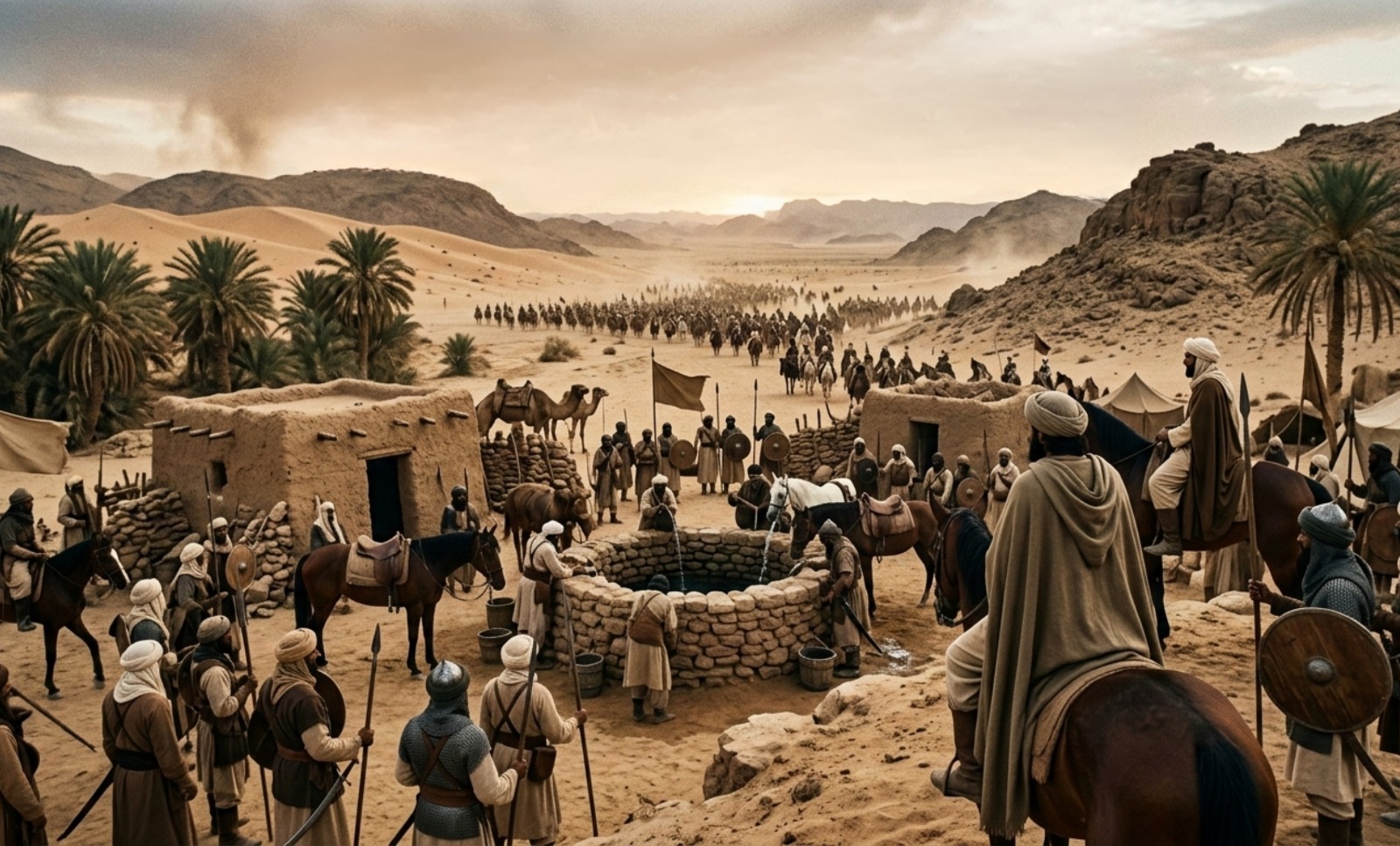
In the annals of Islamic history, there is no group held in higher esteem than the “Badriyun”—the companions who stood with the Prophet Muhammad (PBUH) at the Battle of Badr. While the Ummah grew to hundreds of thousands in later years, these 313 individuals were the foundation. They were the ones who stepped forward when the future of the faith was most precarious. To be a “Badri” was a title of the highest honor; even years later, in the councils of the Caliphs, the opinions of those who fought at Badr were given special weight.
These 313 men were not a professional standing army. They were a diverse group of Muhajirun (emigrants from Makkah) and Ansar (helpers from Madinah). They lacked sufficient horses, armor, and weapons, with many sharing a single camel between three people. Yet, what they lacked in material resources, they possessed in spiritual conviction. They were the “Unsung Heroes” who proved that the strength of a community is measured by its heart, not its armory.
The Bravery of the Youth: Mu’adh and Mu’awwidzh
One of the most stirring incidents of the Battle of Badr involves two young brothers from the Ansar, Mu’adh ibn Amr and Mu’awwidzh ibn Afra. Despite their young age, they were determined to protect the Prophet (PBUH) and confront the greatest enemy of the Muslims at the time, Abu Jahl.
During the heat of the battle, they approached Abdur Rahman ibn Awf (RA) and asked him to point out Abu Jahl. When asked why, they replied that they had heard he used to insult the Messenger of Allah (PBUH) and they had made a pact with Allah to either eliminate him or perish in the attempt. Their youthful courage was so intense that they managed to strike down the leader of the Quraysh, proving that age is no barrier to faith and sacrifice. Their story is a reminder to organizations like Children of Adam that the youth are often the catalysts for the greatest changes in society.
The 14 Shuhada: The First Martyrs of the Great Battle
While Badr was a decisive victory, it came at a price. Fourteen noble souls achieved the station of Shahada (martyrdom) on that day—six from the Muhajirun and eight from the Ansar. These were the first blood-witnesses to the truth of the Prophetic mission on a formal battlefield. Among them was Ubaydah ibn al-Harith (RA), a cousin of the Prophet (PBUH), who was mortally wounded during the initial duels. As he lay dying, he asked the Prophet (PBUH), “Am I not a martyr?” to which the Prophet (PBUH) replied in the affirmative.
Another notable martyr was Harithah ibn Suraqah (RA). When his mother came to the Prophet (PBUH) after the battle, grieving and asking about her son’s fate, the Prophet (PBUH) comforted her by saying, “O mother of Harithah, there are many gardens in Paradise, and your son has attained the highest Firdaws.” These Shuhada did not die for land or gold; they died to ensure that the call of “La ilaha illallah” would continue to resonate for generations to come.
The Bond of Brotherhood Between Muhajirun and Ansar
Badr was the first real test of the “Muwakhah” (brotherhood) that the Prophet (PBUH) had established in Madinah. The Muhajirun were fighting against their own kinsmen, sometimes their own fathers and brothers, for the sake of their new faith. This required a level of psychological strength that is difficult to comprehend. Sa’d ibn Mu’adh (RA), the leader of the Aws tribe, gave a famous speech before the battle, assuring the Prophet (PBUH) that the Ansar would follow him even if he plunged into the sea.
This unity was the “secret weapon” of the Muslims. While the Quraysh were divided by internal rivalries and tribal ego, the Muslims were a single body. They shared their meager rations, they shared their mounts, and they shared a single vision. This model of collective responsibility is the blueprint for modern humanitarian work. When the global community acts as “one body” to help the oppressed, the spirit of the 313 is revived.
Lessons in Sacrifice for the Modern World
The story of the 313 Sahabah is not just a historical account; it is a call to action. It teaches us that a small, dedicated group of people can overcome systemic problems that seem insurmountable. In 2026, we face the “Goliaths” of global hunger, disease, and lack of education. To many, these problems look too big to solve.
However, the “Badri” spirit tells us otherwise. It tells us that when a small group of donors, volunteers, and supporters come together with sincerity, Allah puts “Barakah” (blessings) in their efforts. Just as the 313 were sufficient to change the course of history, the dedicated supporters of Children of Adam are sufficient to bring hope to thousands of orphans and families in need. We honor the heroes of Badr by continuing their legacy of standing up for the weak and establishing justice on earth.
Frequently Asked Questions (FAQs)
Who were the 313 Sahabah?
The 313 Sahabah were the companions of the Prophet (PBUH) who participated in the Battle of Badr. They consisted of approximately 80-86 Muhajirun (emigrants from Makkah) and the remainder were Ansar (helpers from Madinah).
How many Muslims were martyred at the Battle of Badr?
A total of 14 Muslims achieved martyrdom at Badr. This included 6 from the Muhajirun and 8 from the Ansar. They are remembered as the first Shuhada of a major Islamic battle.
What was special about the youth who fought at Badr?
Young companions like Mu’adh and Mu’awwidzh showed incredible bravery by taking on the leaders of the opposition. Their participation highlighted that the defense of Islam was a responsibility shared by all, regardless of age.
Why is the title “Badri” so important in Islamic history?
Being a “Badri” (a participant of Badr) was considered the highest honor because these individuals stood firm when the survival of Islam was most at risk. They are promised special rewards in the Hereafter and were highly respected by all later generations.
How can we honor the heroes of Badr today?
We honor them by embodying their values: absolute faith in Allah, unity among the believers, and the courage to sacrifice our resources for the benefit of the oppressed and the needy through charitable work.