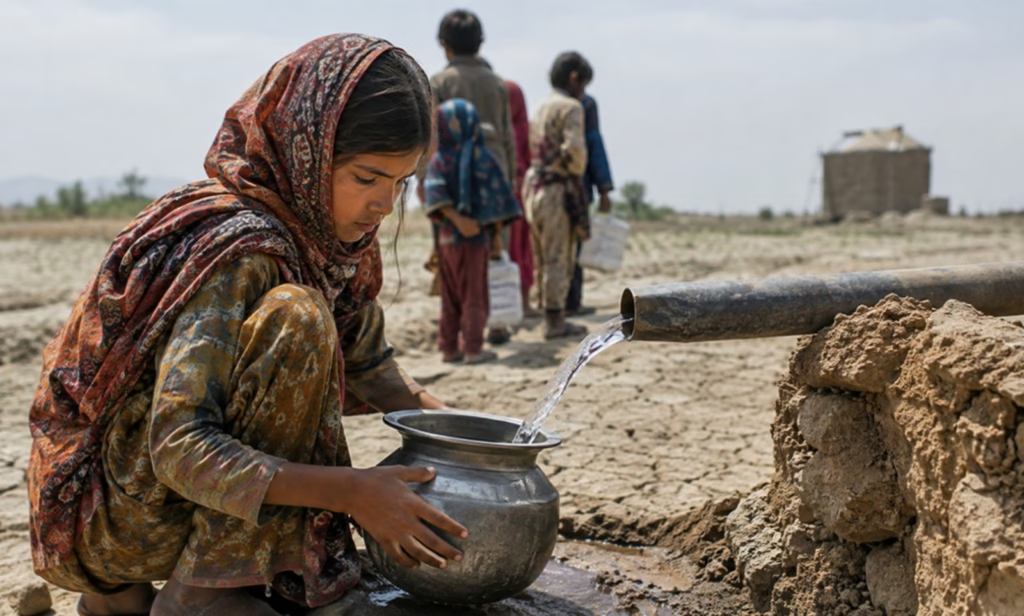

Imagine a remote village suffering from a drought. A charity truck arrives, filled with thousands of plastic water bottles. For a day, or perhaps a week, the thirst is quenched. The children are hydrated, and the families are relieved.
But then the truck leaves. The bottles are empty. The plastic begins to pile up as rubbish. And the thirst returns.
This scenario highlights the critical difference between “emergency relief” and “sustainable development.” While emergency aid is vital during a crisis like an earthquake or a flood, it is not a permanent fix for poverty.
To truly change lives, we have to look beyond the quick fix. We have to invest in sustainable charity solutions that function long after the aid workers have gone home. This is why organizations like Children of Adam prioritize building water wells and hand pumps over simply distributing water.
Here is why shifting our focus to infrastructure is the only way to build a future where aid is no longer needed.
The Difference Between “Aid” and “Development”
There is an old saying: “Give a man a fish, and you feed him for a day. Teach a man to fish, and you feed him for a lifetime.”
This philosophy is the foundation of effective charity.
- Short-Term Aid (The Bottle): This creates dependency. If a village relies on a water truck coming every week, they are vulnerable. If the truck breaks down or the funding stops, the village is in crisis again.
- Long-Term Development (The Well): This creates self-sufficiency. When a deep water well is installed, the village owns the source. They are no longer dependent on outsiders for their survival. They have control over their own future.
How a Well Sparks an Economic Revolution
A water well doesn’t just provide a drink; it acts as an engine for the local economy.
In many water-scarce regions, agriculture is impossible. You cannot grow crops if you don’t have enough water to drink. Families are trapped in a hand-to-mouth existence, unable to plan for tomorrow.
When a reliable, continuous source of water is introduced, everything changes.
- Agriculture: Families can start kitchen gardens. They can grow vegetables like spinach, tomatoes, and onions.
- Livestock: They can keep goats and cows healthy, providing milk and meat.
- Income: Surplus food can be sold at local markets.
Suddenly, water has turned into income. This is one of the most effective community development projects available. It transforms a village from a place of scarcity into a place of production.
The Gift of Time (and Education)
One of the biggest barriers to development is the loss of time. In many parts of the world, the burden of fetching water falls on women and children. They often walk for hours every single day to find a water source, which is often dirty.
This daily trek destroys their future. Women cannot work or start businesses, and children—especially girls—miss school.
By building a well in the center of the village, we give them back their time.
- The hours spent walking are now hours spent in a classroom.
- The energy spent carrying heavy pots is now spent on studying or playing.
This creates a long-term aid impact that spans generations. An educated child grows up to get a better job, lifting their entire family out of hardship.
Health is Wealth
You cannot build a strong community on a foundation of sickness. Dirty water is the leading cause of deadly diseases like cholera, typhoid, and dysentery.
When a community relies on a stagnant pond or a river shared with animals, they are in a constant state of health crisis. Parents spend their meager savings on medicine instead of food or school fees.
A clean water well cuts this off at the source. Healthier families are more productive, more energetic, and more resilient. Providing clean water is the first and most important step in breaking the cycle of poverty.
Moving from Charity to Dignity
Ultimately, the goal of sustainable charity solutions is to make charity unnecessary.
Handing out bottles is a transaction. Building a well is a partnership. It involves the community in the maintenance and care of the pump. It gives them ownership and pride.
While sending a truck of water is a kind gesture, digging a well is a legacy. It is an investment in a village’s independence.
If you want to be part of a solution that lasts for decades, not days, consider supporting our Water Aid projects. By building a well, you aren’t just quenching thirst today; you are watering the seeds of a self-reliant tomorrow.